A Journey Through the
Lands of Sun and Spice
Bologna · Rome · Marrakech · the Imperial Cities of Morocco · and across the Strait into Andalucía
Some links in this chronicle are affiliate links. If you book through one, I may earn a small commission at no extra cost to you.
This is the account of thirty days and six nights of trains, three crossings of water, two continents, and more plates of pasta than any reasonable chronicle ought to record. The traveller departed Sydney in the first days of September — a solo Australian, unencumbered by agenda, thoroughly encumbered by appetite — and traced a great southward arc through the ancient heart of the world: from Bologna, Jewel of the Red Towers, through the eternal weight of Rome, across the straits to Morocco's imperial cities, and finally into the warm arms of Andalucía. It is a route that existed before roads had names.
The journey may be understood as three acts. The first: Italy, where food is philosophy and the train runs on time. The second: Morocco, where the medina swallows you whole, spits you out changed, and the mint tea flows until courtesy and commerce become indistinguishable. The third: Andalucía, where the Moorish world ends and begins simultaneously, and the wine is cold, and the evenings last forever.
Throughout, a companion — Bruna — appeared and disappeared like a figure in the middle chapters of a good book, joining the story in Bologna, departing after Rome, and reappearing in Seville. There is a particular alchemy to travelling with someone who arrives rather than departs with you: it sharpens the solo days, and makes the reunion sweeter.
What follows is both chronicle and guide. The narrative is true. The restaurants are real. The costs are what was actually paid. The road is ever onward — but it helps to know where to eat along it.
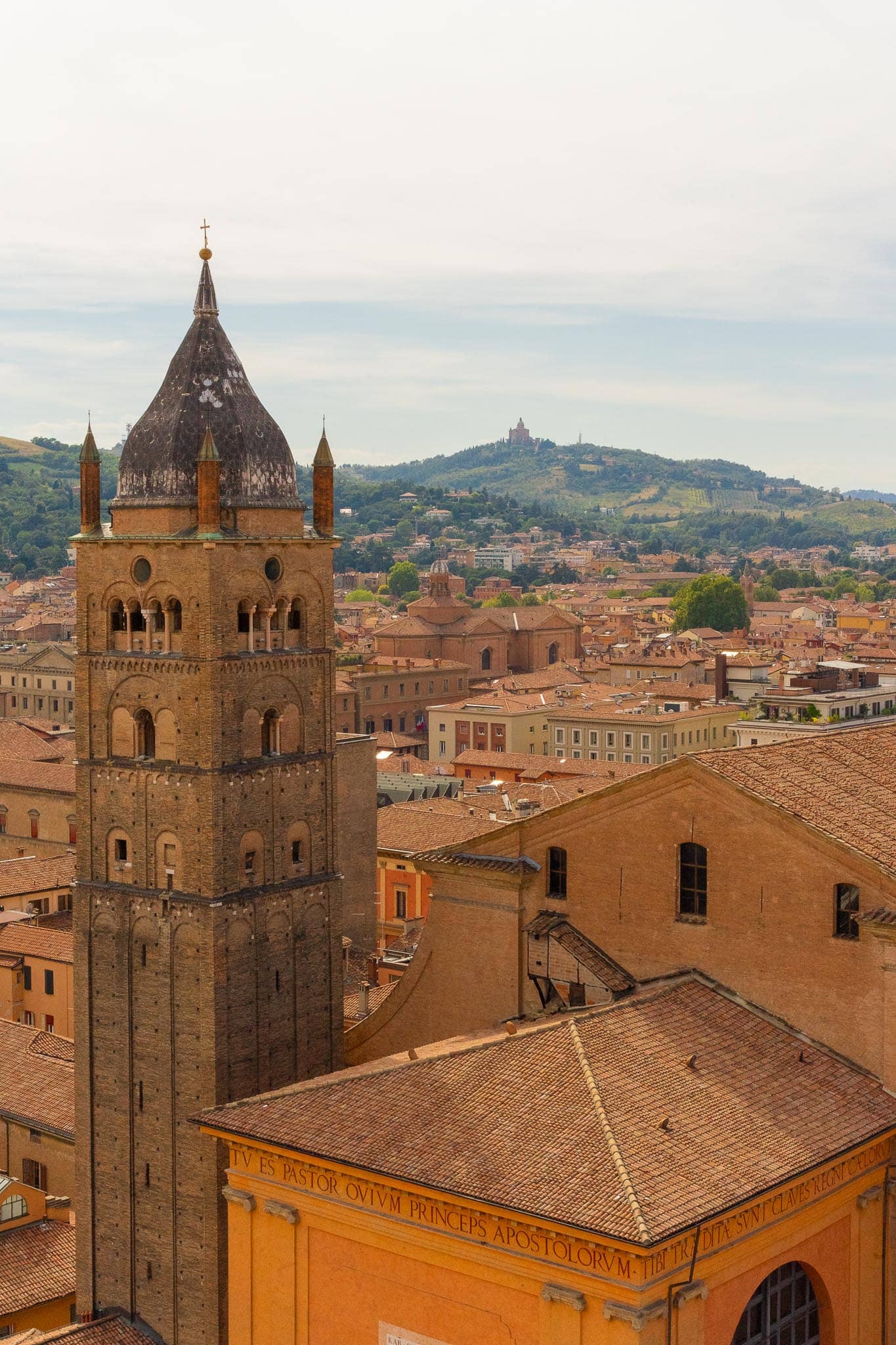
Bologna
La Rossa, La Grassa, La Dotta — the Red, the Fat, the Learned
On the sixth day of the ninth month of the mortal calendar, the traveller's steel serpent arrived beneath the vaulted glass ceiling of Bologna Centrale at thirteen minutes before the second hour of afternoon. They had come a long way. They were hungry in the manner that only the anticipation of a particular city can produce — not the empty hunger of an empty stomach, but the hunger of someone who has read too much about a place and must now see whether the reading lied.
It had not lied. Bologna is ancient in the manner of things that have earned their age rather than merely accumulated it. The porticoes — forty kilometres of covered walkways sheltering Bolognese feet since the twelfth century — give the city a quality of perpetual shade and perpetual readiness, as though it is always half a step from indoors. The towers of Asinelli and Garisenda lean into the sky like weary sentinels who have been standing their post too long to care much about standing straight.
But it is to the table that all roads lead in Bologna, and the traveller arrived on the evening of their first day to Osteria Bartolini on Via della Zecca — a seafood house operating under the audacious proposition that the landlocked capital of Emilia-Romagna shall serve fish as though the Adriatic were a short walk away. The proposition proved sound. Il Mare a Bologna — the sea in Bologna — was the ordering imperative, and the dish delivered. Bruna arrived from her own journey, and the table for two became a council of equals, united in purpose.
Sunday brought the Mortadella Lab for lunch — a small, focused operation dedicated to the proposition that Bologna's great cured meat deserves a cathedral of its own — and Sfoglia Rina for dinner, where the pasta is made on the premises in the manner that pasta has been made here for centuries. On the third day came San Marino, that improbable microstate perched atop Mount Titano like an argument for independence that has outlasted every empire surrounding it; then Cantina di Bacco for lunch and Al Sangiovese for dinner, the latter a temple to Sangiovese wine and the kind of cooking that does not need to announce itself.
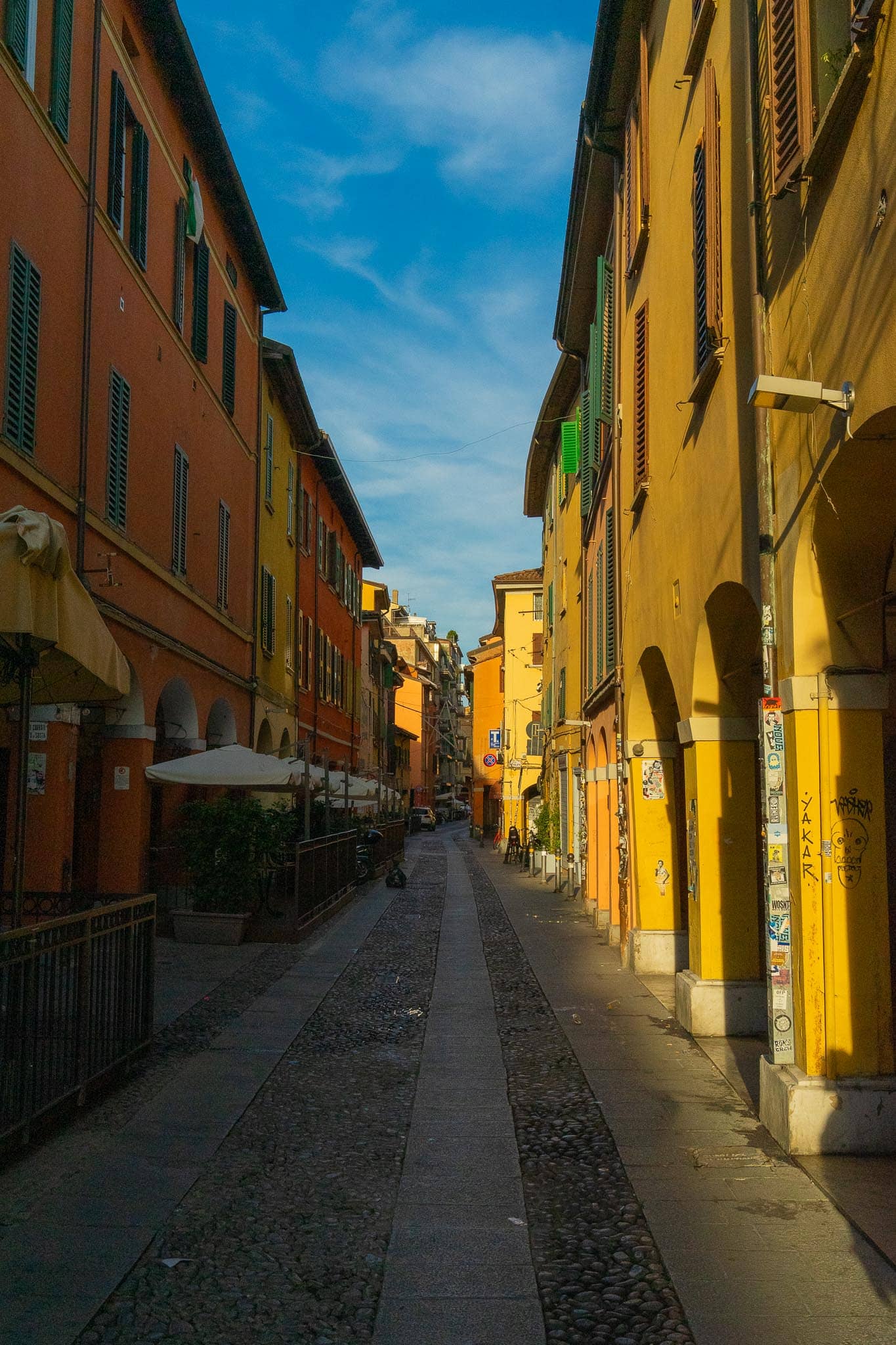
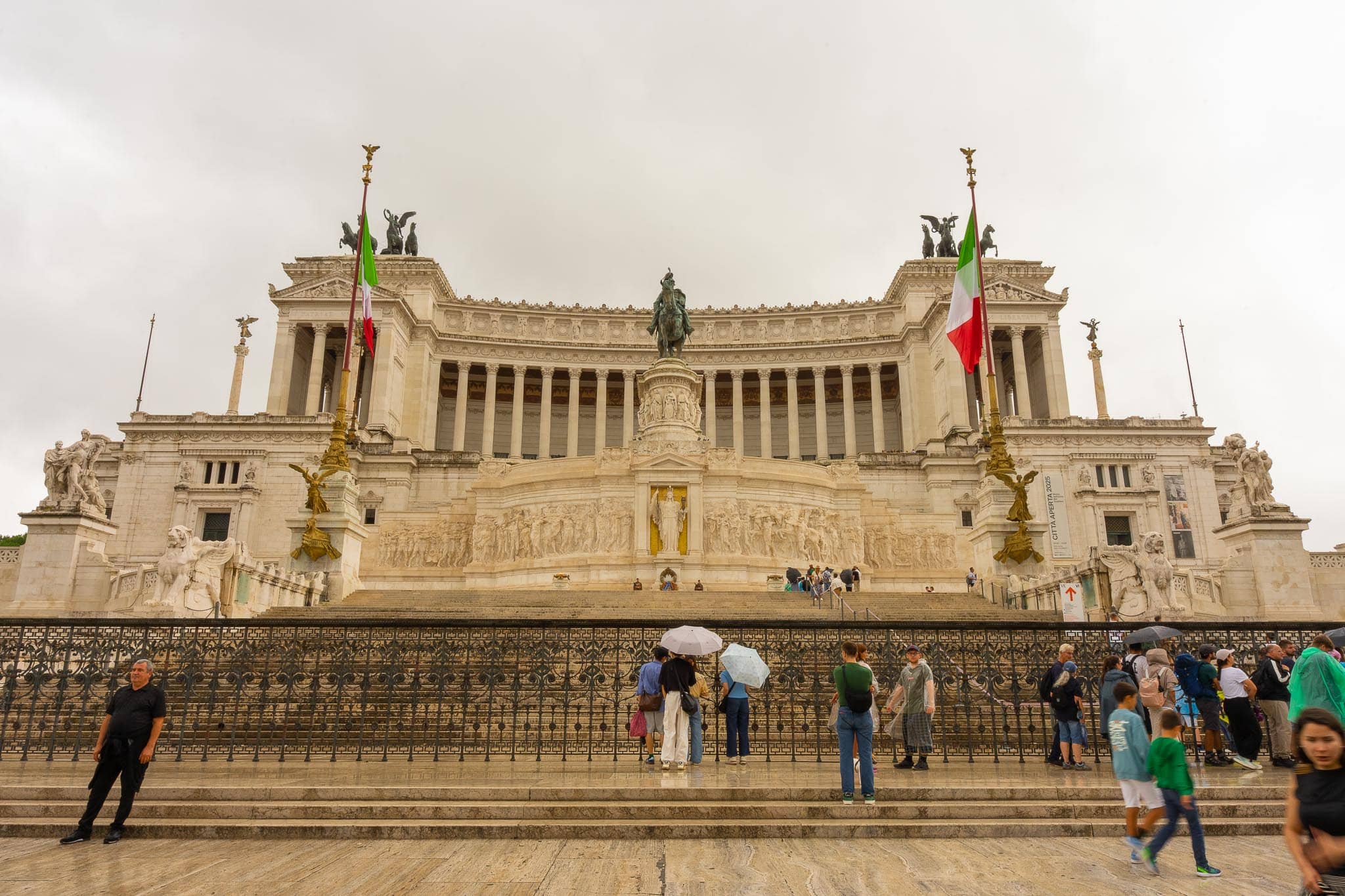
Rome
The Eternal, the Layered, the City That Outlasted Every Idea It Produced
On the ninth day, at forty-seven minutes past ten in the morning, a further steel serpent departed Bologna for the south, and the traveller descended into Rome two hours later at Roma Termini. Rome receives all travellers with the same expression: a kind of patient disdain, as though it has seen empires come and go and finds individual arrivals beneath specific comment.
The traveller had five days. There are those who claim five days is insufficient for Rome. There are those who claim a lifetime is insufficient for Rome. The truth is more complicated: five days is sufficient if you stop trying to see everything and start trying to understand a few things well. The traveller ate at Pizzarium on the evening of arrival — the famous pizza al taglio of Gabriele Bonci, sold by weight from long Roman trays — and understood immediately that they were not in the north anymore.
The days accumulated their own logic. Fuorinorma for lunch — a newer establishment doing Roman classics with precision and without the tourist premium. Grappolo d'Oro for dinner in the Campo de' Fiori quarter. On the third day, the ritual morning coffee at Caffè Greco on Via Condotti — founded in 1760, served to Casanova and Goethe, still doing the service with appropriate ceremony — and then I Goliardi Roma for lunch, and Trattoria Settimio for dinner, an institution that does not need your approval and does not seek it.
On the fourth day: Edoardo II for lunch, and Roma Sparita for dinner in Trastevere, where the cacio e pepe arrives in a bowl made from a fried wheel of parmesan — one of the more persuasive arguments for the existence of a benevolent universe. The fifth day: Rhinoceros Rooftop at midday for the long view over the Aventine, and then Roscioli Salumeria con Cucina for dinner, a deli-restaurant of such considered excellence that it renders all further commentary redundant. Bruna had returned. The table was complete.
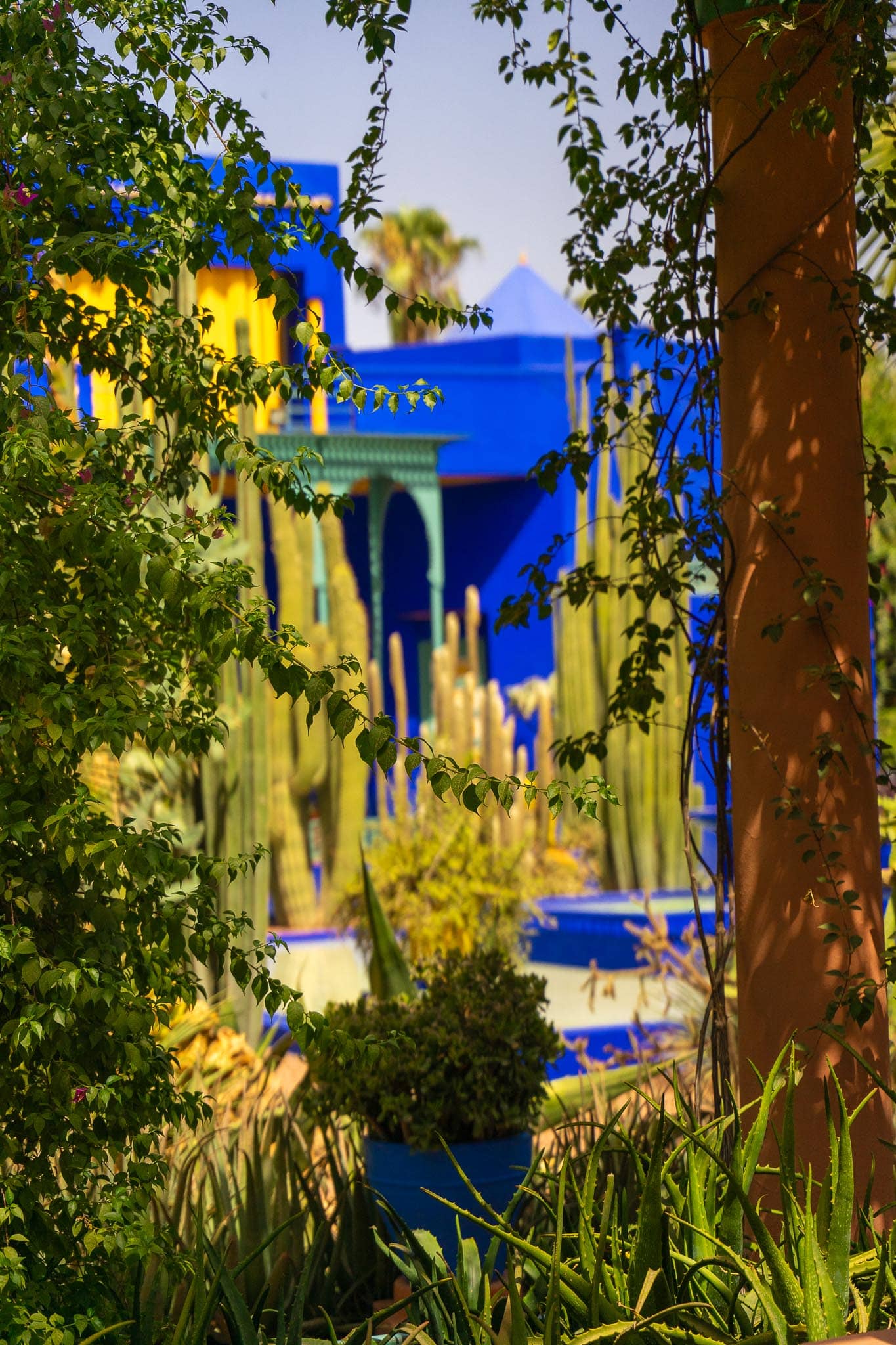
Marrakech
The Rose-Red City, the Medina of a Thousand Turns, the Place Where Time Moves Differently
At forty-five minutes past fifteen on the fourteenth day, the aircraft descended through clear sky into Marrakech Menara Airport, and the traveller was immediately and thoroughly in another world. This is not a metaphor. Morocco operates a genuine discontinuity from the Europe left behind — the light is different, flatter and more total; the air carries cumin and diesel and roses in shifting combinations; the medina, when the taxi deposits you at its edge, does not offer itself to navigation so much as absorption. You do not tour the medina of Marrakech. It tours you.
Restaurant Le Grand Bazaar received the traveller on their first evening — a rooftop establishment with strong views and stronger tagines. Bruna arrived that same night, and the party was reconstituted for a week of extraordinary eating and intermittent disorientation.
The days arranged themselves around expeditions. Ouarzazate, gateway to the Saharan south, where the Atlas mountains step back from their own reflections and the light achieves a quality that explains why every epic filmed in the desert ends up here. Essaouira, the blue-and-white Atlantic city where the wind never stops and the seafood market operates with the focused intensity of a medieval guild. Ouzoud, the great waterfall in the Atlas foothills where the water falls forty metres into red rock and the resident Barbary macaques operate a parallel economy in stolen snacks.
Between expeditions: Le Tanjia for the slow-cooked clay-pot beef that has been feeding Marrakchis for centuries; Black Chic for a contemporary evening; Azar when the Lebanese influences arrived, appropriately, in a city that has always been a crossroads. The medina, by the end of the sixth day, had begun to reveal its internal logic. It is not a maze so much as a living system, its spice souk and leather souk each occupying territory that has not shifted in centuries.
Rabat
The Capital That Keeps Its Own Counsel
On the twentieth day the traveller boarded the ONCF Marrakech–Rabat express — Morocco's national rail service, considerably more comfortable than its reputation in older guidebooks suggests — and three and a half hours later arrived at Rabat Agdal. Bruna's road diverged again; this crossing was made alone.
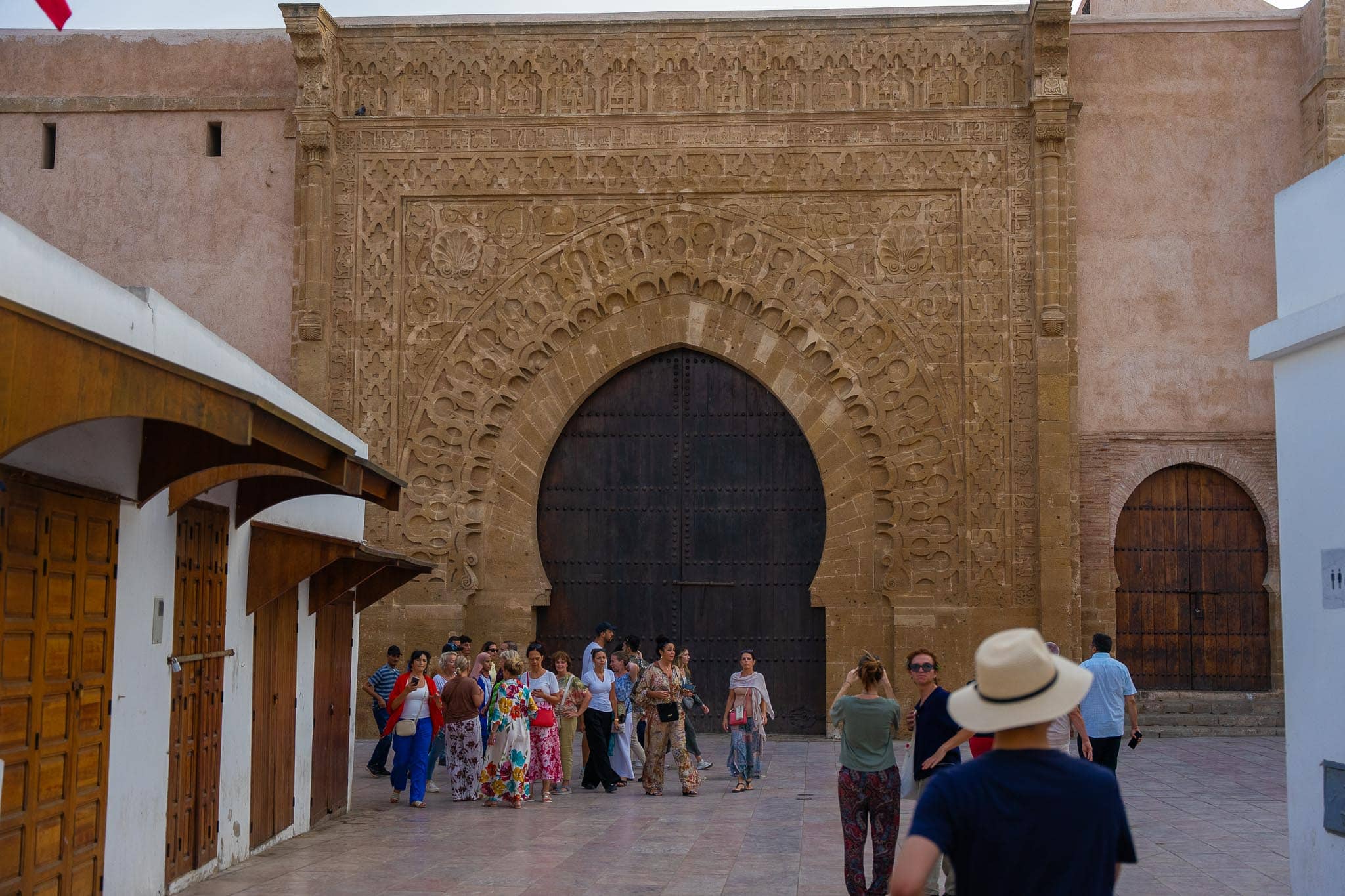
Rabat is a city that does not require your enthusiasm. Unlike Marrakech, which performs constantly, or Fes, which overwhelms, Rabat simply exists in the manner of a capital that has work to do. The Kasbah of the Udayas — a walled Andalusian quarter above the Bou Regreg river, its lanes whitewashed blue, its gardens full of orange trees — carries a quieter beauty than anything on the tourist circuit, because it is not especially on the tourist circuit. Dinner at Amber Bar provided a useful decompression from Marrakech's intensity. The traveller drank one good glass of Moroccan Syrah, and slept deeply for the first time in several days.
Fes
The Oldest Imperial City, the Great Labyrinth, the Place That Refuses Modernisation
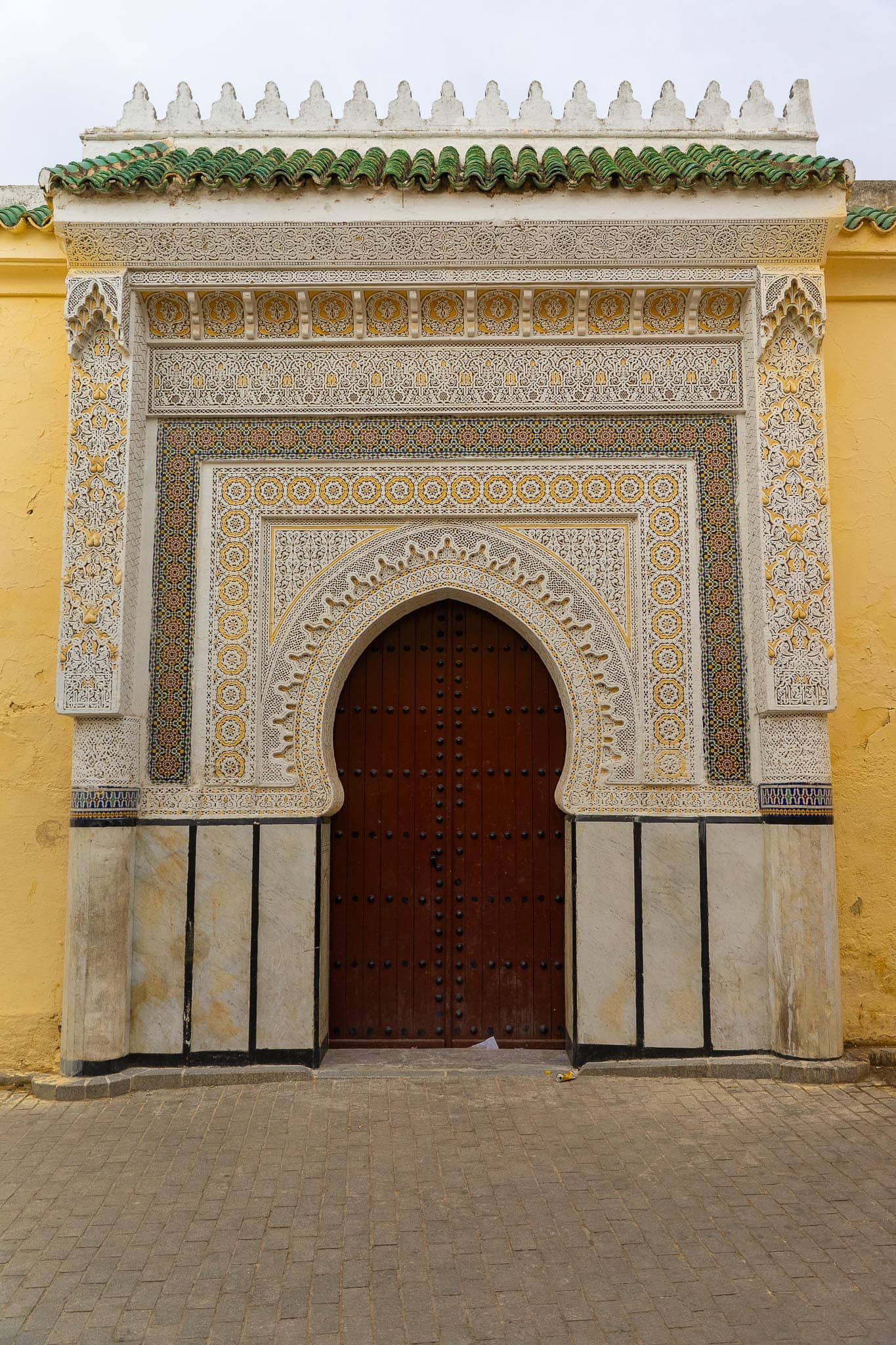
The train from Rabat deposited the traveller in Fes at twenty-seven minutes past one, and the medina of Fes el-Bali received them as it has received visitors for eleven hundred years: without particular ceremony and without particular mercy. Fes is not Marrakech. It does not try to seduce. Its nine thousand streets — nine thousand, in a medina that has not accepted motorised transport into its interior — operate on a logic that predates cartography and postdates it simultaneously. Donkeys are the freight network.
The Chouara tannery has operated continuously since the eleventh century, its great stone vats of colour visible from the leather shops above it, and the smell of it — natural dyes, pigeon droppings used in the curing process, the particular alchemical production of the whole — reaches you well before the sight does.
Mouda Palace on the first evening: a riad-restaurant of considerable ambition, the kind of place that demonstrates what Moroccan haute cuisine looks like when freed from tourist expectation. The following day: Restaurant Ryad Nejjarine for lunch in the shadow of the Nejjarine Fountain, and Dar Roumana for dinner — a riad restaurant of international reputation, its tasting menus updating the Fassi culinary tradition without abandoning it. One left Fes feeling that one had witnessed rather than visited — the city had permitted observation without conceding proximity.
Tangier
The City Between Seas, Gateway and Threshold, Where Africa Looks North
On the twenty-third day the train from Fes arrived at Tangier-Ville station, and the traveller walked out into the sea wind of the north — that particular wind carrying simultaneously the smell of the Atlantic and the Mediterranean, and the improbable awareness that two continents are, at this point, less than fourteen kilometres apart. Tangier has always been a city between things — between empires, between faiths, between literary myths and mundane reality. Paul Bowles lived here. The ghosts are thick on the Petit Socco.
El Contacto on the first evening — a contemporary restaurant in the new town representing Tangier's aspirations toward the cosmopolitan future its geography has always half-promised. Then the expedition to Chefchaouen, the blue city nestled in the Rif Mountains, every surface painted in shades that produce, in combination with the mountain light, a quality of visual enchantment that photographs describe but do not quite convey. Dinner at Saveur de Poisson — a Tangier institution with a famously fixed menu and famously no menu card. You sit, you eat what comes, the fish is the freshest in the city, and the entire enterprise costs approximately what a middling sandwich would cost elsewhere in the world.
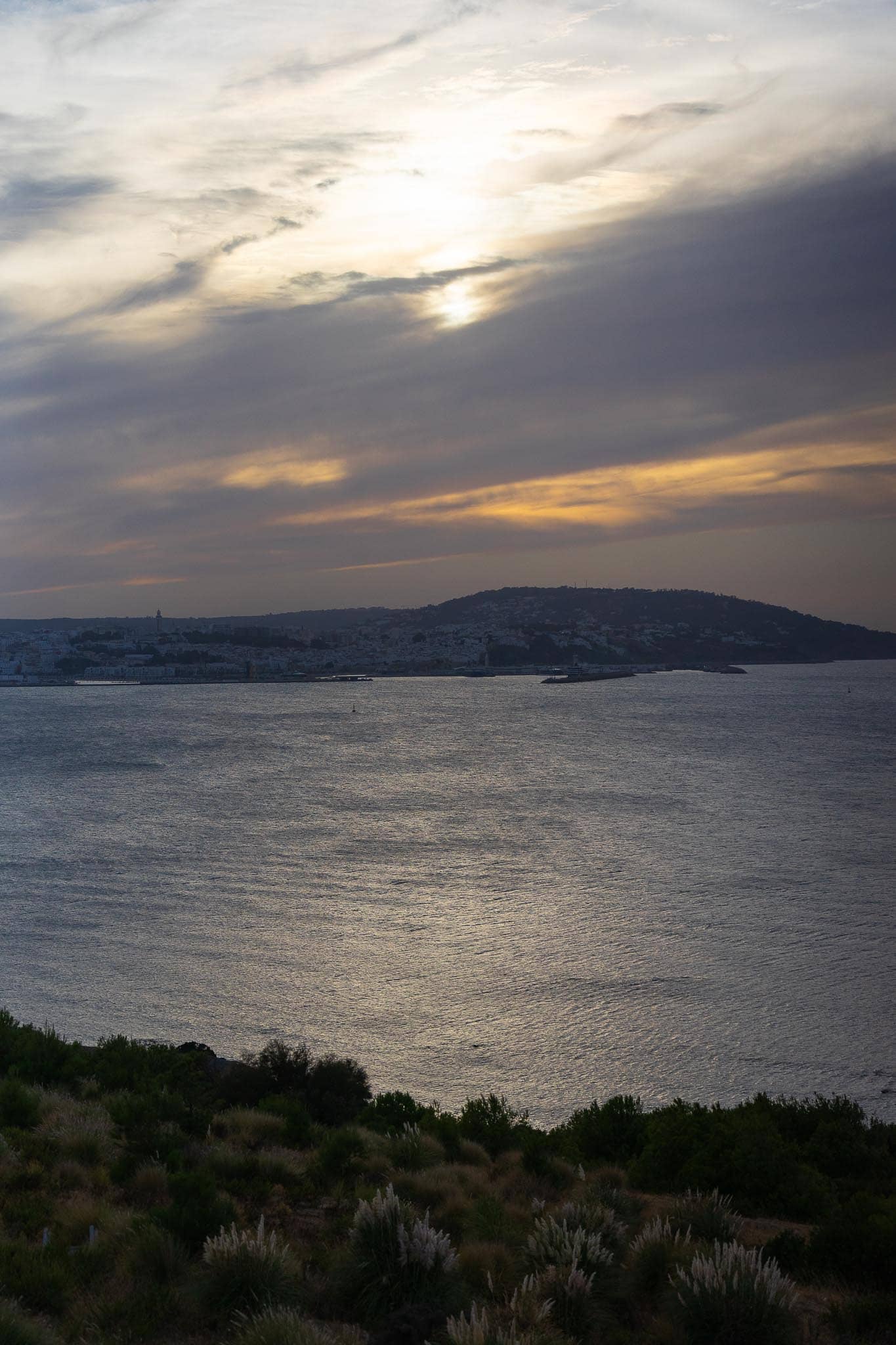
The final full day in Africa: Restaurant Walili for lunch, and Al Achab for dinner in the medina. Outside, through the narrow window, the lights of Spain were visible across the water — twelve miles and fourteen centuries away.
Seville
The City of Orange Trees and Flamenco Heels, Where the Moorish World Becomes Spain
On the twenty-sixth day, at ten o'clock in the morning, the traveller walked aboard the FRS fast ferry at Tangier-Med port. Thirty-five minutes later they walked off the other side at Tarifa — the southernmost town in continental Europe, where the Atlantic meets the Mediterranean and kite surfers ride the perpetual wind between them. By bus to Algeciras, by train to Seville: arriving at eighteen minutes past six, stepping out into the warm amber light of an Andalusian evening, feeling the shift as something physical.
Seville is not Morocco's opposite. It is, rather, Morocco's consequence — a city built by people who had been subjects of the same Umayyad empire, who shared the same architectural grammar, the same fondness for inner courtyards and the same understanding that a city exists, at its best, as a theatre for human encounter. The Alcázar, with its mudejar tilework, is not a Spanish building wearing Moorish decoration; it is the continuation of a conversation the Strait of Gibraltar interrupted but did not end.
The traveller had ten days. Bruna arrived on the second day, and the rhythm changed once more. The first evening: Eneko Basque Kitchen. Then the Sevillian calendar unfolded: Taberna la Autentica Regina for the long Sunday lunch; Ispal for the contemporary Andalusian evening; Restaurante Realcázar in the shadow of its namesake palace; Eslava for dinner, one of the city's most beloved tapas bars where the waiting is part of the experience rather than merely the price of admission.
Day trips to Córdoba — where the Mezquita-Catedral stands as architecture's most eloquent argument about the relationship between conquest and continuity — and to Granada, where the Alhambra watches over the city with the patient authority of a building that has seen everything and expects nothing. Each meal in those final days was, in the manner of all good meals taken at the end of long journeys, slightly more than a meal.
On the fifth day of the tenth month of the mortal calendar, the traveller rose before dawn in the city of orange trees and carried their bags to the station. The journey home would take the better part of two days — and for a while it would feel, as the return always does, like an undoing. As though the trip were being rolled backwards.
But the places do not leave. Bologna's porticoes remain in the memory as a particular quality of shade; Rome's evening light at the Campo de' Fiori as a certain colour of gold. The medina of Fes endures as a sense of navigated labyrinth, the way out found by instinct rather than reason. Marrakech persists as heat and cumin and the call to prayer bouncing between riad walls at dawn. Seville as the long slow warmth of an Andalusian afternoon, and the particular contentment of a city that knows the evening has not yet begun.
For what is travel, if not the art of gathering stories to warm the cold winters of ordinary time?
Is Morocco safe for solo travellers?
Morocco is generally safe. The main irritants are persistent touts in medina areas — annoying rather than dangerous. A polite but firm "la shukran" usually suffices. Solo female travellers should dress conservatively in medina districts and project confidence.
How many days do you need in Seville?
Five to seven days is the sweet spot. Ten days works beautifully if you're using it as a base for Córdoba and Granada day trips. Three days is the minimum to see the Alcázar, Cathedral, Barrio Santa Cruz, and eat properly.
How do you get from Morocco to Spain?
The most efficient crossing is Tangier-Med to Tarifa via FRS or Baleària fast ferry — about 35–45 minutes, running multiple times daily. From Tarifa, bus to Algeciras (20min) then train to Seville (~2.5hrs). Total door-to-door is around 4–5 hours.
How far ahead do you need to book the Alhambra?
Months. The Nasrid Palaces sell out weeks or months ahead during peak season. Book the moment your dates are confirmed at alhambra-patronato.es. Arriving without a ticket means you see only the gardens and Alcazaba — missing the heart of the complex.
What is the best order to visit Morocco's imperial cities?
The logical circuit is Marrakech (entry, most tourist infrastructure), then north by train: Rabat, Fes, Tangier (exit to Spain). This moves from the most accessible city to the most traditional (Fes) to the most outward-looking (Tangier). Reversing works equally well if entering from Spain.