The Imperial Circuit:
Morocco in 14 Days
Marrakech to Rabat to Fes to Tangier — a standalone journey through Morocco's old capitals, with the road running from red walls and desert light to medina shadow, Atlantic wind, and the northern strait.
Some links in this chronicle are affiliate links. If you book through one, I may earn a small commission at no extra cost to you.
There are journeys that unfold by monument, and others by mood. Morocco, at least in this form, unfolds by intensification.
The traveller entered through Marrakech — through red walls and rooftop smoke and the great open lung of Djemaa el-Fna — and moved northward through older and more inward worlds: the composed quiet of Rabat, the tightening gravity of Fes, and at last Tangier, where Africa loosens itself toward Europe and every street seems to belong to more than one century at once. The road is not vast by continental standards, yet it feels large. The country changes its character so completely between cities that each arrival seems not a continuation, but a fresh argument about what Morocco is.
What makes the circuit work is not simply that these are important places. It is that they correct one another. Marrakech would be too much if it stood alone. Fes, by itself, might feel too enclosed. Tangier without the south behind it would lose some of its force. But taken in sequence, each city deepens the last. The traveller is first dazzled, then pressed inward, then released again to air, sea, and distance.
That is the road this journey takes: red city first, then the capital pause, then the inward kingdom, and at last the lifting of the walls at the northern edge of the sea.
Marrakech
The red beginning — spectacle, heat, old walls, and the first great shock of the road
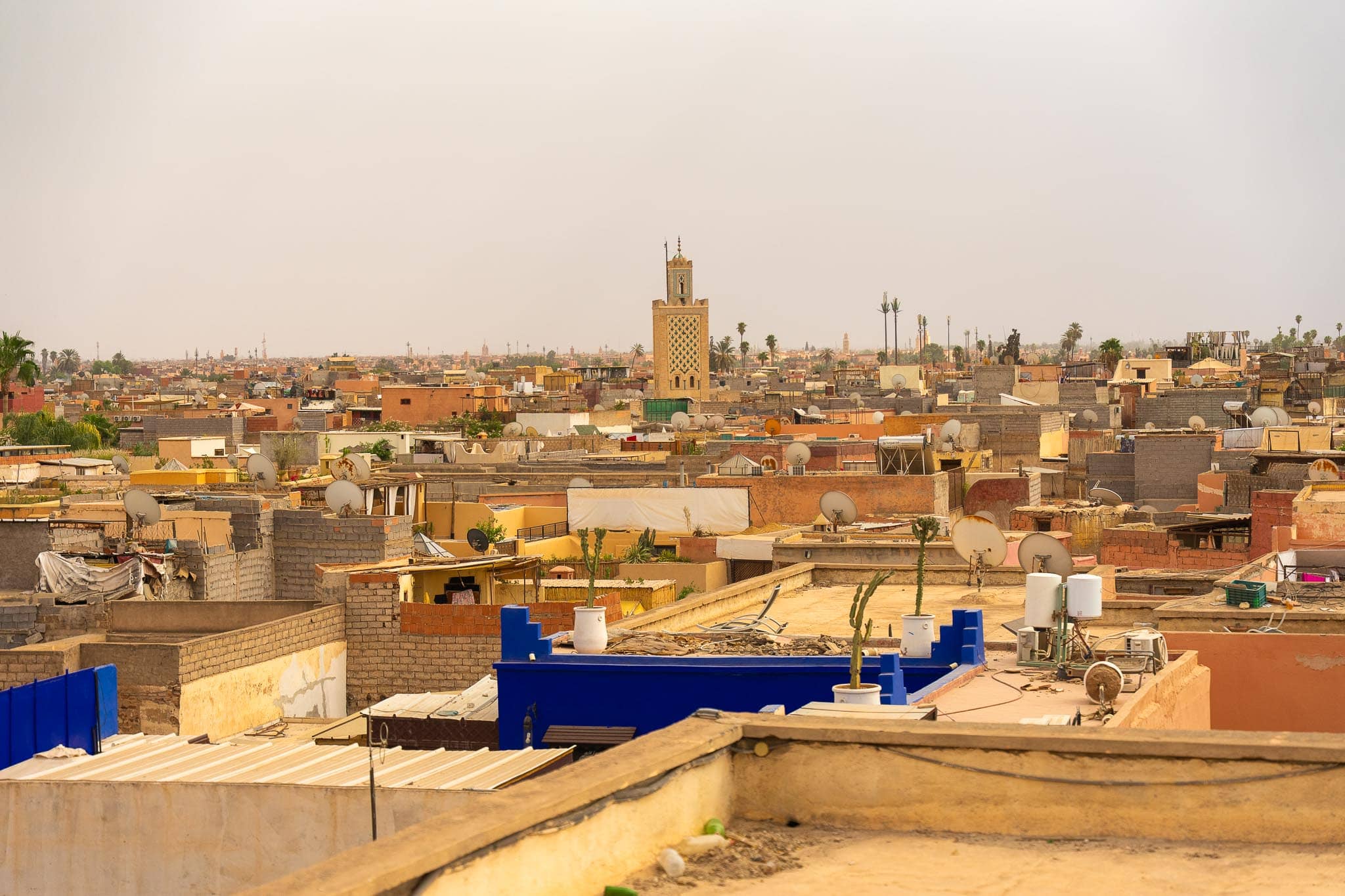
Marrakech is where Morocco chooses to announce itself without restraint. The traveller entered through Menara Airport in the evening, found the riad on Rue Bahia Bab Mellah, and began with dinner at Restaurant Le Grand Bazar — a gentle opening only in theory. Even a restrained first night in Marrakech feels like crossing into a brighter, dustier, more insistent version of the world. The city does not wait for the traveller to be ready. It simply begins.
And once it begins, it keeps unfolding. There was the long outward pull south toward Ouarzazate and Aït Ben Haddou — three hours through the High Atlas via the Tizi n'Tichka pass, where the mountains fold like old paper and the valleys below run in threads of green through ochre and grey. The kasbah at Aït Ben Haddou rose from its hillside the colour of the earth it was made from: still standing, still inhabited in its lower reaches, still indifferent to the centuries watching it. The return brought dinner at Fluffy, where the cooking is home-style and the welcome genuine — the right kind of quiet after a long and dramatic day.
Then the dense cultural reckoning: Majorelle Garden in the morning cool, the Berber Museum, the Musée Yves Saint Laurent, the Photography Museum, Ben Youssef Medersa — where the tilework and carved plaster of a fourteenth-century theological college press upon the visitor with the accumulated weight of ten thousand students who sat beneath that same geometry and read — and then the souk and L'Envers Bar for the evening. Later came the westward road to Essaouira, the wind city, where the Atlantic turns the light silver and the harbour smells of salt and cedar and grilled fish. Dinner on return at Terrasses des Arts.
The older-city day moved through Kasbah Mosque, the Saadian Tombs, Dar Si Said, the ruins of El Badi Palace, lunch at Le Tanjia — where the city's signature slow-cooked dish arrives in the clay vessel that gives it its name, fragrant with preserved lemon and cumin, as it has arrived for centuries — then the Jewish Quarter, Bahia Palace, the souk again, and dinner at Blackchich, where the rooftop looks out over the Mellah and the cocktails are strong and the night air carries the smell of woodsmoke and orange blossom from somewhere in the dark below. Then the road opened one final time to Ouzoud Waterfall — the falls dropping 110 metres through red rock gorge into spray that turns the air cool even in September — before dinner at Azar, and the departure morning gathered itself with Koutoubia and Menara Gardens and the station north.
This is a great deal of city, but Marrakech can bear a great deal. It is red wall, dust, tile, orange light, fruit stall, traffic, heat, and commerce in near-constant motion. Even when standing still the city seems to vibrate. Djemaa el-Fna sits at the centre of that spell like a public fever: by day a square of motion and opportunism, by night an illuminated republic of smoke, music, meat, performance, juice, persuasion, and risk. The traveller ate there on multiple evenings and it was different every time, which is the square's great talent.
Yet Marrakech would become exhausting if it offered only spectacle, and it is saved from that by its hidden rooms. Majorelle restores order and shade. Ben Youssef restores geometry and silence. Bahia reveals luxury hidden behind plain walls. El Badi gives ruin instead of ornament, absence instead of fullness. Even the souk, after enough time inside it, ceases to be merely market and becomes a test of the eye: how much colour, repetition, brass, cloth, spice, and human insistence can be absorbed before delight gives way to fatigue — and the answer, in Marrakech, is always more than you expect.
Marrakech also teaches the first important truth of the circuit: Morocco is better when occasionally left. After sea air in Essaouira, the medina feels denser. After mountain road and kasbah light, the red walls feel redder. After open country, the city's compression becomes part of its pleasure. Marrakech is not weakened by excursions. It is made legible by them.
Rabat
The capital pause — quieter, necessary, and all the stronger for its restraint
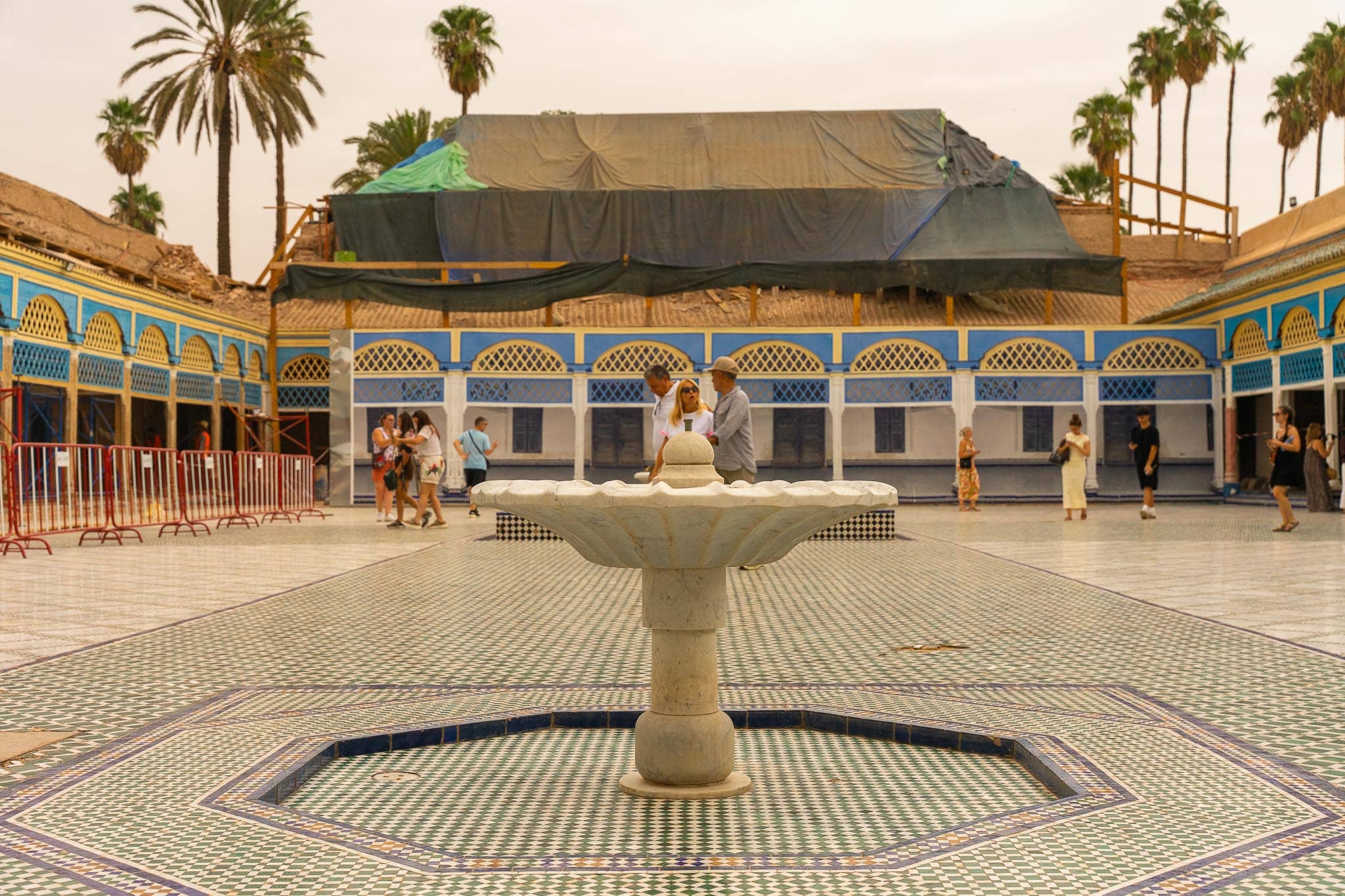
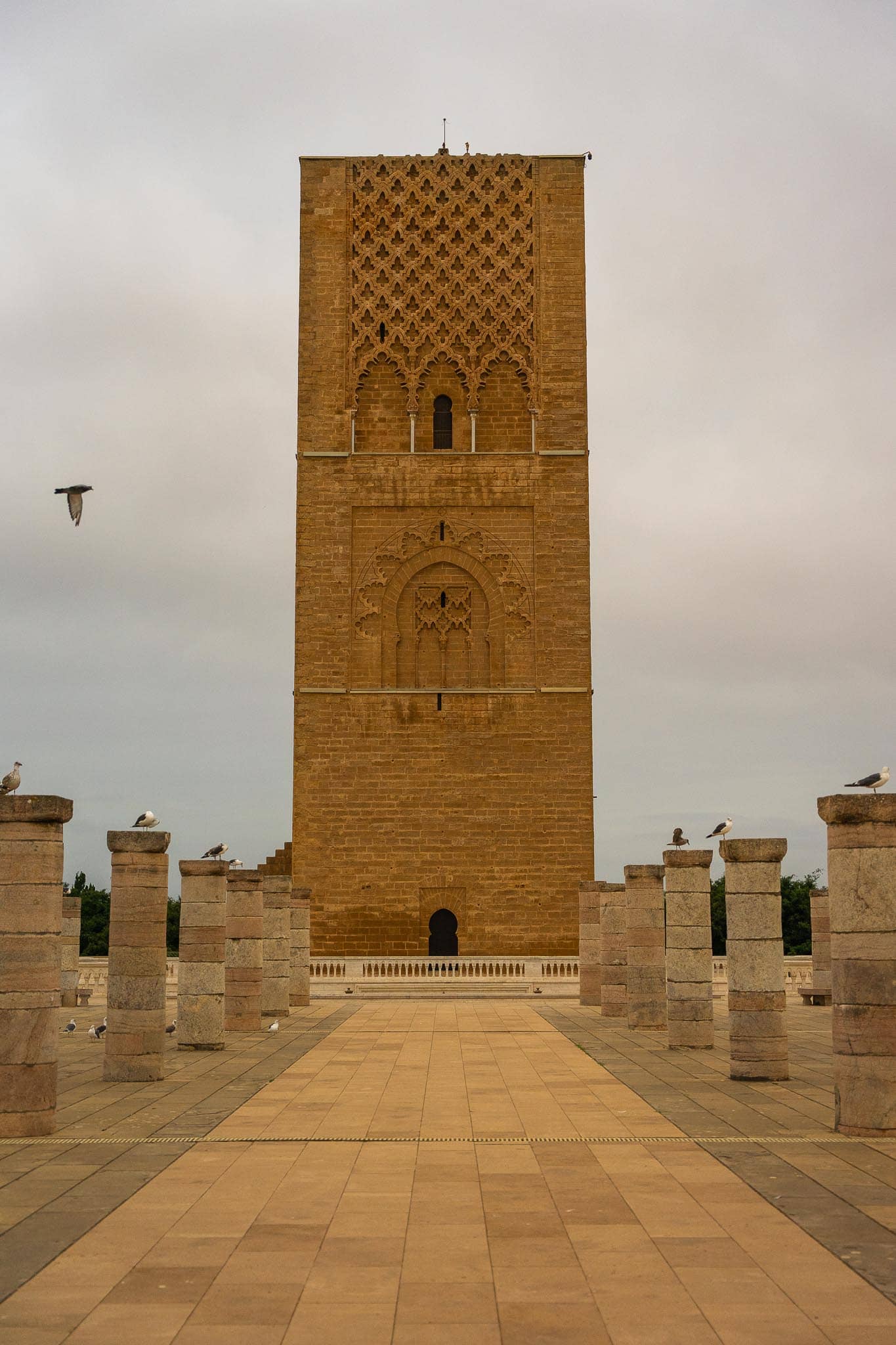
The train north from Marrakech took three and a half hours, and Rabat arrived through the window with the mild, composed dignity of a capital that does not need to prove anything. It is the seat of government, the home of the king, and the most quietly underrated city on the circuit — which is precisely why it works so well as a hinge.
After the pressure and spectacle of Marrakech, Rabat belongs to a different register. It is not the city of sensory assault, nor the city of labyrinthine surrender. It is the city of pause — the breath between intensities, quieter in temperament, more composed in manner. The traveller walked the Kasbah des Oudayas in the late afternoon, the old Andalusian fortress at the mouth of the Bou Regreg river where the white lanes glow gold at dusk and the ramparts look out over the Atlantic with something close to contentment. Dinner at Amber Bar, where the Moroccan wine is served without apology and the food is serious. The traveller sat late over a good bottle and thought about the morning's train and the older city waiting ahead.
Some journeys need one city that does not insist upon itself too loudly. Without such a pause, the circuit becomes one long intensification with no room to breathe. Rabat is that room. It is not the climax of the route, but the city that allows the next chapter to land more deeply.
Fes
The inward kingdom — gates, madrasas, tannery air, and the old gravity of scholarship
The train from Rabat to Fes took two and a half hours, and the city received the traveller in the manner it receives everyone: through a threshold. To enter Bab Bou Jeloud — the great blue gate — is to cross from the modern world into something that operates by an older logic. The lanes narrow immediately. The light changes. The air thickens with mint and tannin and woodsmoke. A mule appears from somewhere behind and the traveller presses against a wall tiled in geometric blue and the mule passes and the city closes back around like water over a stone.
The first afternoon was spent not by plunging immediately into the medina but by circling its edges — Jardin Jnan Sbil, Bab Dekkakin, the Royal Palace, the Mellah — before dinner above it all at Palais de Mouda, where the rooftop looks across the medina's lit hillside and the pastilla arrives in its sweet-savoury pastry crust dusted with sugar and cinnamon: one of those dishes that makes you understand why a city has endured twelve hundred years.
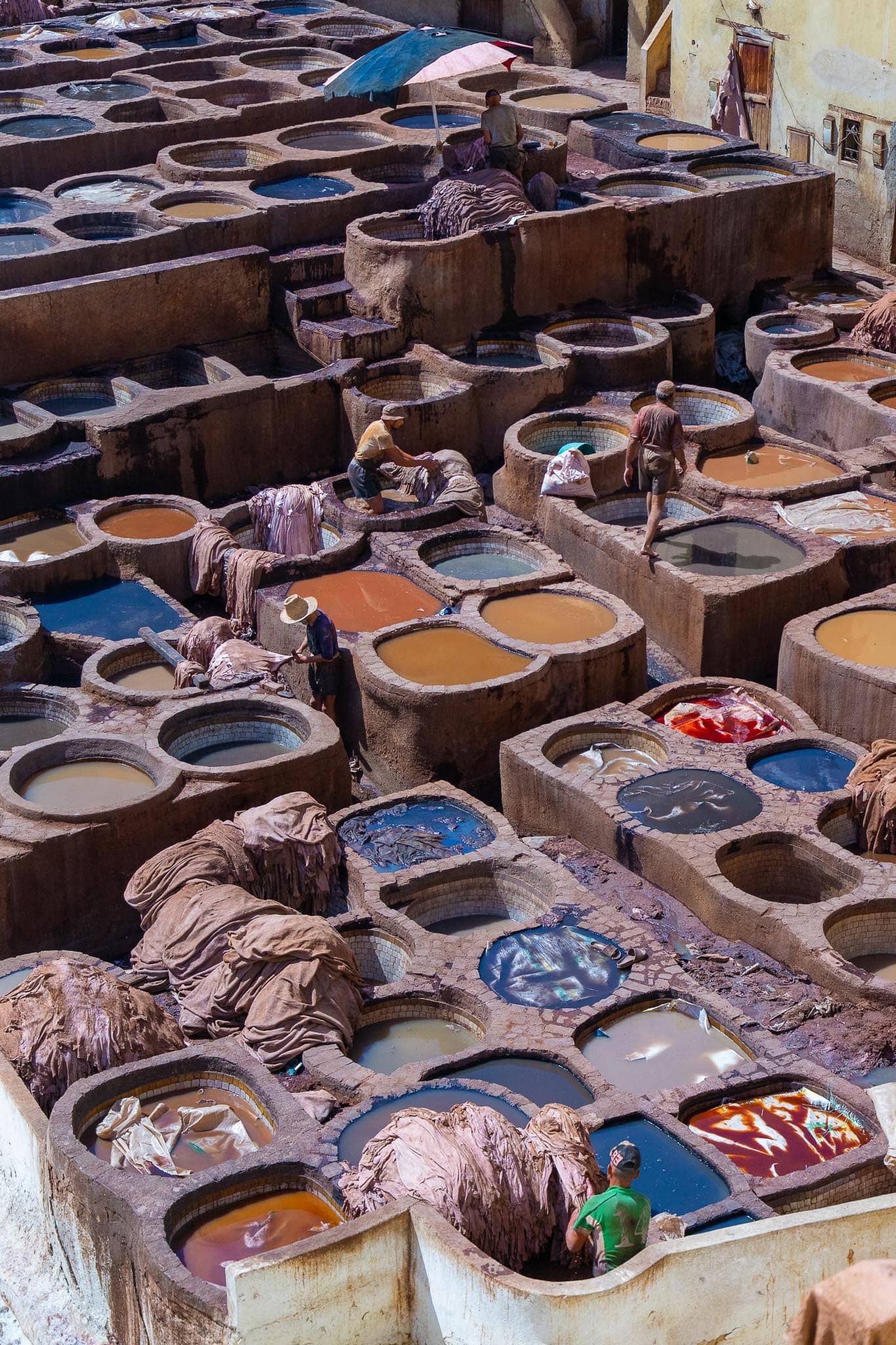
Then depth arrived. The true Fes day moved through Al-Attarine Madrasa, Fontaine Nejjarine, the Museo Nejjarine, lunch at Restaurant Ryad Nejjarine in the shade of its carved cedar square, then Al-Qarawiyyin Mosque — the oldest continuously operating university on earth — the tannery viewed from the leather shop balconies above, where the great vats of saffron and indigo and poppy red glow like something older than colour, Place Seffarine where the coppersmiths have been hammering for centuries and do not appear to be stopping, Bou Inania Medersa, Bab Boujloud, the Zaouia of Moulay Idriss II, the Marinid Tombs on the hill above the medina at last light — and then dinner at Dar Roumana, one of Fes's finest tables, where contemporary Fassi cooking meets a stillness that feels earned.
This is not a city arranged for easy admiration. Fes does not dazzle in the manner of Marrakech. It encloses. Its beauty is tighter, older, less interested in the traveller's comfort. Streets narrow as you go deeper. Texture thickens. Stone and cedar and tile feel less decorative than structural — as though they are not there to charm the outsider, but to continue an order of life that predates the outsider entirely.
The madrasas, fountains, workshops, and religious precincts do not merely decorate the old city. They explain its seriousness. Fes still feels, more than anywhere else on the route, like a place shaped by learning, devotion, and trade in equal measure. The tannery presents itself not as theatre but as labour that has become legend by persisting long enough. One does not drift through Fes. One is drawn through it.
Where Marrakech dazzles, Fes endures. Where the south performs, the old north quietly insists.
Tangier
The lifting of the walls — sea wind, pastry counters, terraces, and the strait
After Fes, Tangier feels like windows being opened. The train took four hours through the Rif foothills and arrived at Tanger Ville in the mid-afternoon, and the traveller moved almost immediately into the city's outward-facing character: Musée Dar Niaba, Petit Socco, Terrasse des Paresseux — the terrace of the idle, where the strait is visible on clear days and the light has a quality not found in any inland city — dinner at El Contacto, a medina restaurant with a fine fish kitchen and a wine list that leans Spanish, as befits a city that has always looked both ways across the water, and then the medina by night.
Then came the mountain interruption of Chefchaouen — three hours south into the Rif by grand taxi, a town so thoroughly painted in shades of cobalt and sky and faded indigo that it functions less as a place and more as a continuous act of aesthetic intention. The traveller arrived early, walked the medina before the midday crowds, climbed to the Spanish mosque for a view that encompasses the whole bowl of the valley, and returned to Tangier in time for dinner at Restaurant le Saveur de Poisson: no menu, no choices, the owner feeds you what he has decided, course after course of fish dishes that are exceptional and strange, in a room so covered in mirrors and trophies and certificates that the experience feels like being briefly adopted by a benevolent eccentric. It costs what it costs. It is worth considerably more.
The great Tangier day began at Café Place de France — the old grand café, the city in miniature, where the morning passes in coffee and newspaper and the particular pleasure of watching a city arrange itself around a square — then moved to the Kasbah, the Tomb of Ibn Battouta, Patisserie Bab Medina, Librairie des Colonnes (the famous bookshop that has sold Bowles and Burroughs and Mrabet since 1949 and smells accordingly), lunch at Restaurant Walili, then the Kasbah Museum, the Phoenician Necropolis, Plage de Merkala, Café Hafa on the cliff above the strait — where the tea comes with a view of Spain and the afternoon becomes theoretical — St. Andrew's Church (Anglican, 1894, with Arabic inscriptions inside the chancel arch, a detail that says more about Tangier than any guidebook), and dinner at Al Achab, where the rooftop looks out at the strait at last light and the lights of Tarifa begin to appear on the far side of the water.
Few itineraries reveal a city so fully. Tangier appears as what it has always been: port, threshold, compromise, dream, and residue. Arab and European at once. Sacred and cosmopolitan. Crumbling and self-aware. Ibn Battouta and St. Andrew's in the same afternoon. Pastries and necropolis. Kasbah and bookshop. Café and church and sea. It is a city of overlap, and that overlap is its true atmosphere.
That is what gives Tangier its peculiar aftertaste at the end of the circuit. It does not resolve the route; it loosens it. Marrakech had pushed the traveller into Morocco. Fes had pulled inward through old scholarly and devotional density. Tangier opens the body back out again — to sea wind, café terraces, neglected grandeur, and the permanent suggestion of departure. By the time the traveller reached the port on the final morning, the city had done exactly what a last city should do: it had widened the story instead of closing it.
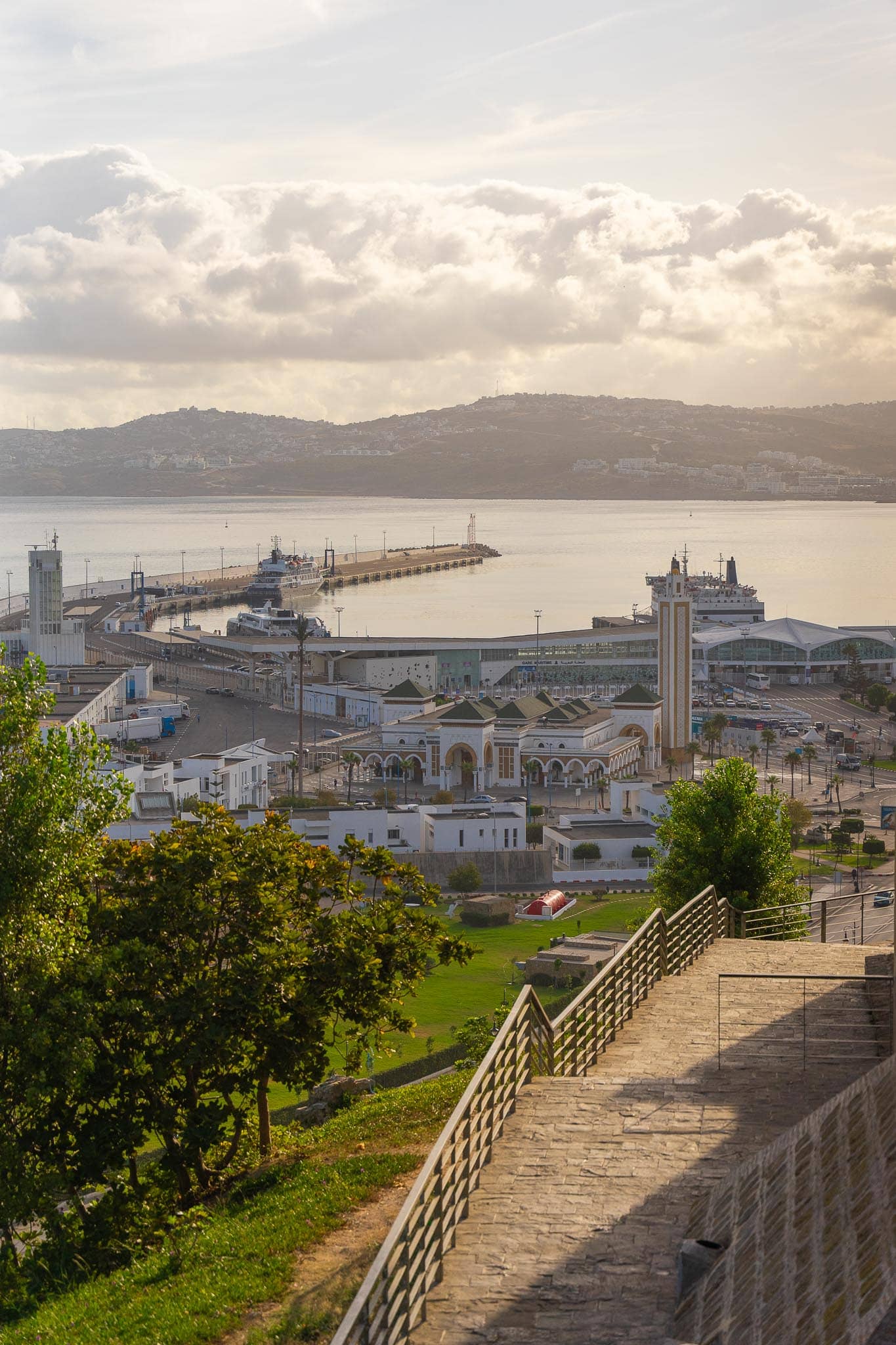
What remains from this route is not one image of Morocco, but several, each correcting the last: red walls at dusk in Marrakech; the square alive after dark; a madrasa courtyard in stillness; the density of Fes pressing inward through its thousand lanes; a rooftop dinner above the medina at the end of a long day of tannery and tile and old prayer; a blue mountain town three hours south into the Rif; and Tangier looking at once toward Africa and away from it, the strait barely eight miles wide and the lights of Spain already visible at the last dinner.
That is why the imperial circuit works. It is not merely a run of famous cities. It is a sequence of changing atmospheres, each one necessary to the next. The traveller does not leave with a single Morocco, neatly explained. They leave with a country of overlapping worlds: southern heat, imperial enclosure, Atlantic light, medina shadow, mountain blue, old devotion, and public theatre, all in fourteen days.
That is much nearer the truth of the place.
The road begins in red dust and ends in sea wind, and between the two, Morocco keeps changing the shape of the traveller's gaze.