5 Days in Port:
The City the River Built
Five days in the city that turned a river into an industry — granite and gold, the climb up from Ribeira, port across the water, and a sunset for every evening.
Some links in this chronicle are affiliate links. If you book through one, I may earn a small commission at no extra cost to you.
The city reads downhill. Step out of São Bento into the noise of the Baixa and everything — the cobbles, the trams, the gulls, the smell of grilling sardines and the colder smell of the water underneath it — slopes away from you toward the Douro, and the river is the thing the whole place is arranged around. Porto does not sit beside its river the way Lisbon sits above its estuary, at a polite distance. Porto leans into the Douro, tips its houses down the gorge toward it, stacks them in pastel tiers on both banks until the last row has its feet in the working quay. The river made the city. It floated the wine down from the terraces upstream, carried the barrels to the lodges, paid for the gold inside the churches and the granite of the bridges, and then sat at the bottom of every view as the reward for the climb.
Because there is always a climb. The traveller learns this on the first evening, hauling a bag up from Ribeira to a room in the old town, lungs working, and learns it again every day after — that Porto charges a tax in altitude on everything worth seeing, and pays it back in the view from the top. Five days in the city, plus two long days out to Galicia and the Douro vineyards, and the shape of it never changes: up through granite and azulejo, down to the water, across to the port, and a sunset somewhere high to close the account.
The pilgrim earns Santiago. In Porto, the traveller earns the river, one staircase at a time.
The Climb
The upper town — Clérigos, Lello, and the tiled vertical city
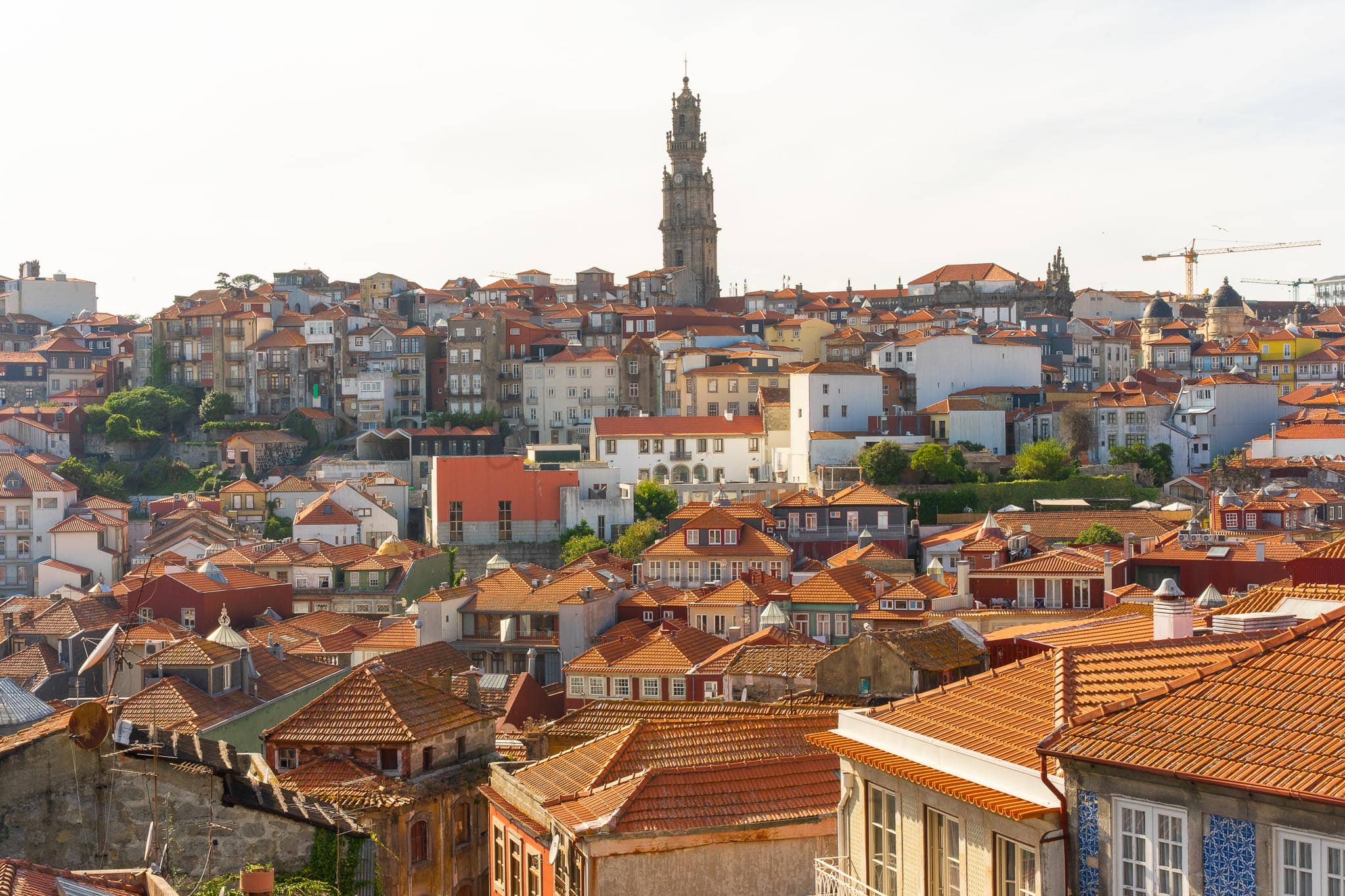
Porto is a vertical argument. The old town climbs from the quay in a tangle of lanes that were never planned so much as worn, and the monuments stand at the top of them like prizes. The Torre dos Clérigos is the plainest statement of the city's logic: Nicolau Nasoni's baroque bell tower, seventy-six metres of granite, two hundred and forty steps, built in the eighteenth century as the tallest thing in Portugal and used for two centuries as the landmark ships steered by coming up the river. The traveller climbs it for the same reason the sailors trusted it — from the top the whole city resolves at once, the red roofs and the bridges and the silver bend of the Douro, and the geography that felt like punishment at street level suddenly makes sense.
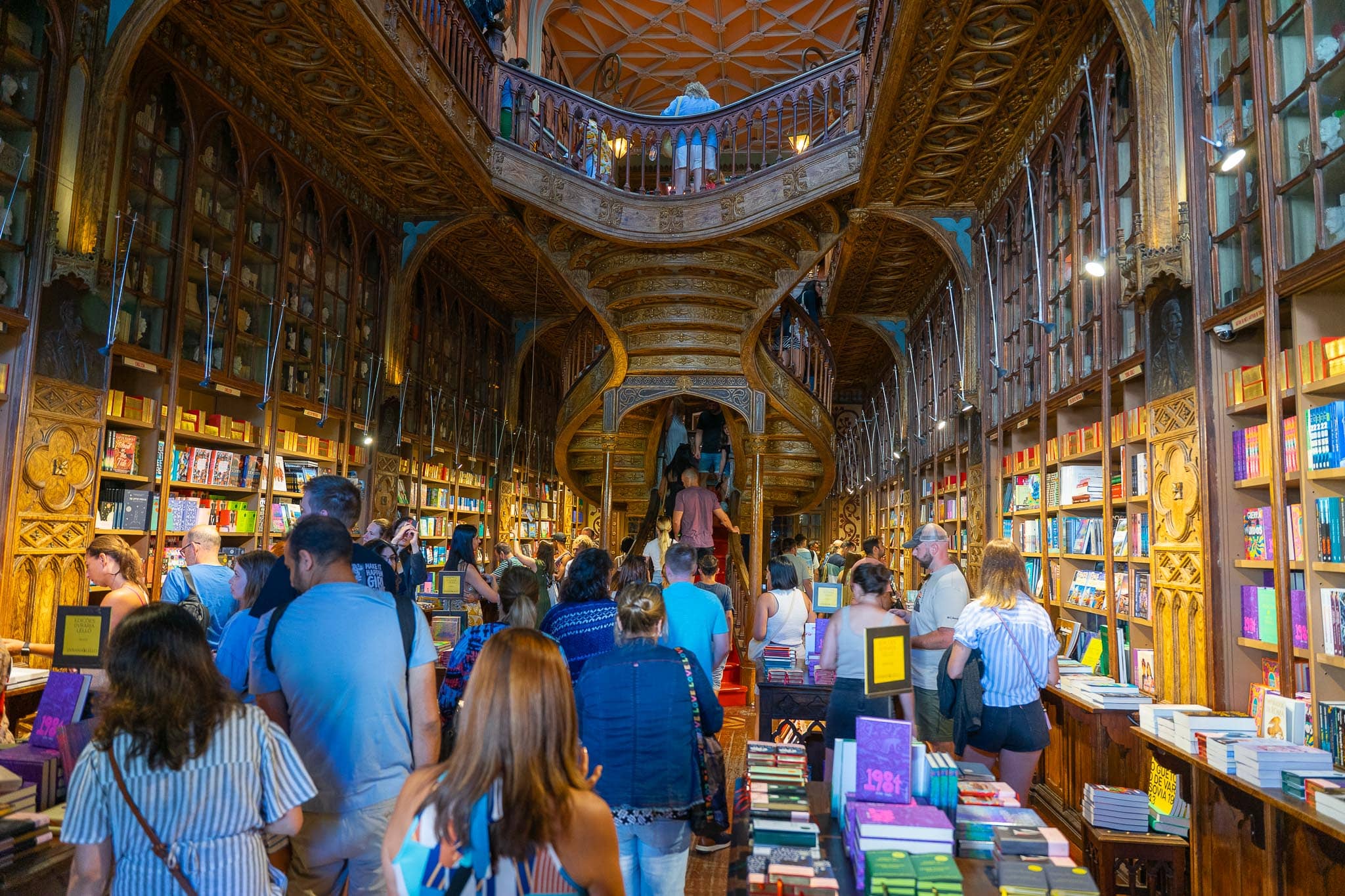
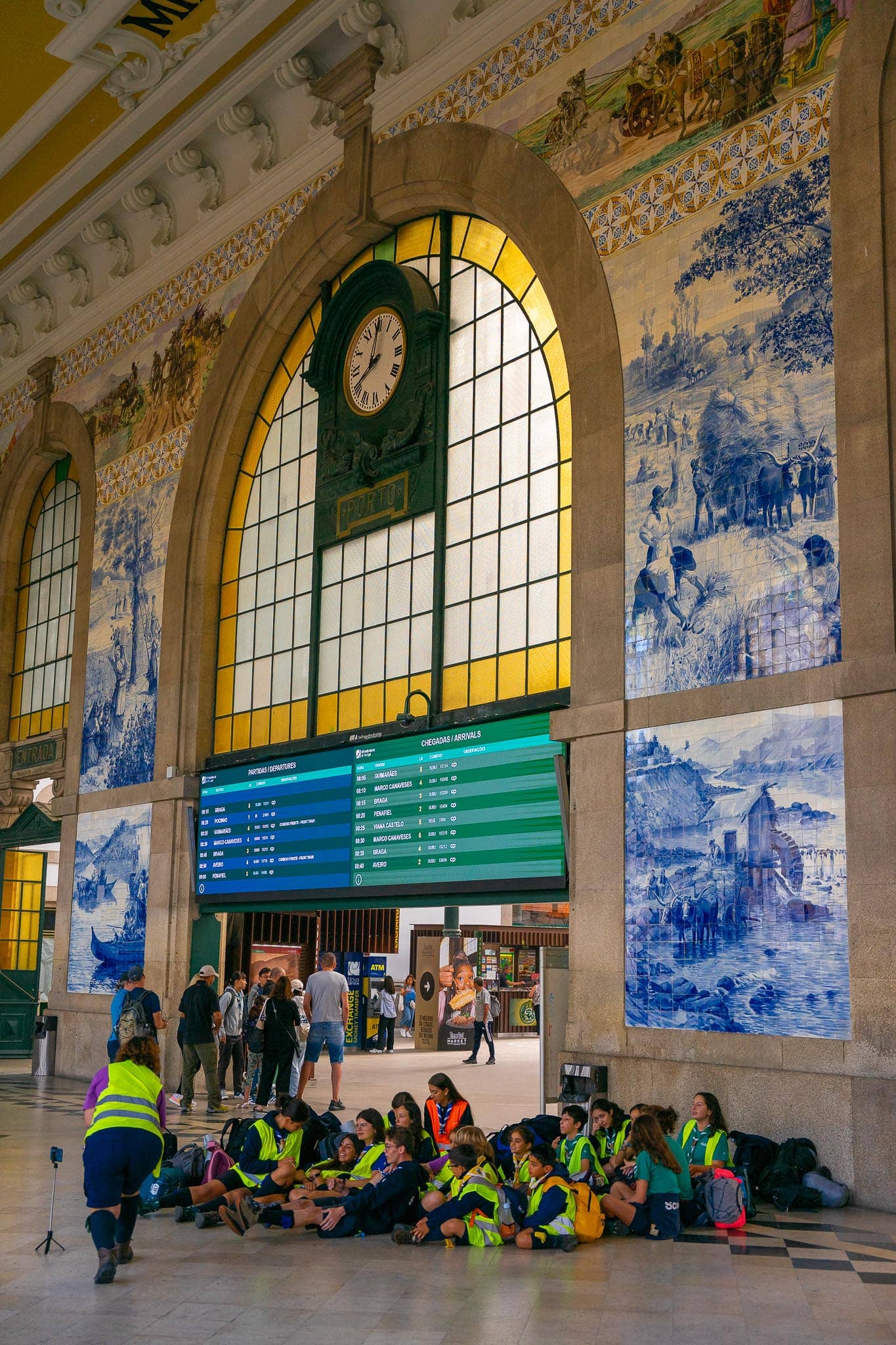
Down the hill is the Livraria Lello, the 1906 bookshop that the queue outside has turned into a chore and the inside still, somehow, redeems: the crimson staircase that splits and rejoins under a stained-glass ceiling, the wooden shelves, the rumour of Harry Potter that the shop neither confirms nor denies. The five-euro ticket comes off the price of a book, which is the honest way to treat it — buy something, and it stops being a museum of itself. A few streets east the Capela das Almas wears its sermon on the outside, sixteen thousand blue-and-white azulejo tiles wrapped around a street corner, and São Bento station does the grander version indoors — twenty thousand tiles narrating the country's battles and harvests across the concourse walls, so that the busiest room in Porto is also one of its best galleries. Between them the Mercado do Bolhão trades fish and flowers and dried cod under its iron roof, and the Avenida dos Aliados runs its beaux-arts slope up to the town hall, wide as a Parisian boulevard and twice as steep.
The Gold
The churches — São Francisco, Santa Clara, and the Arabian Room
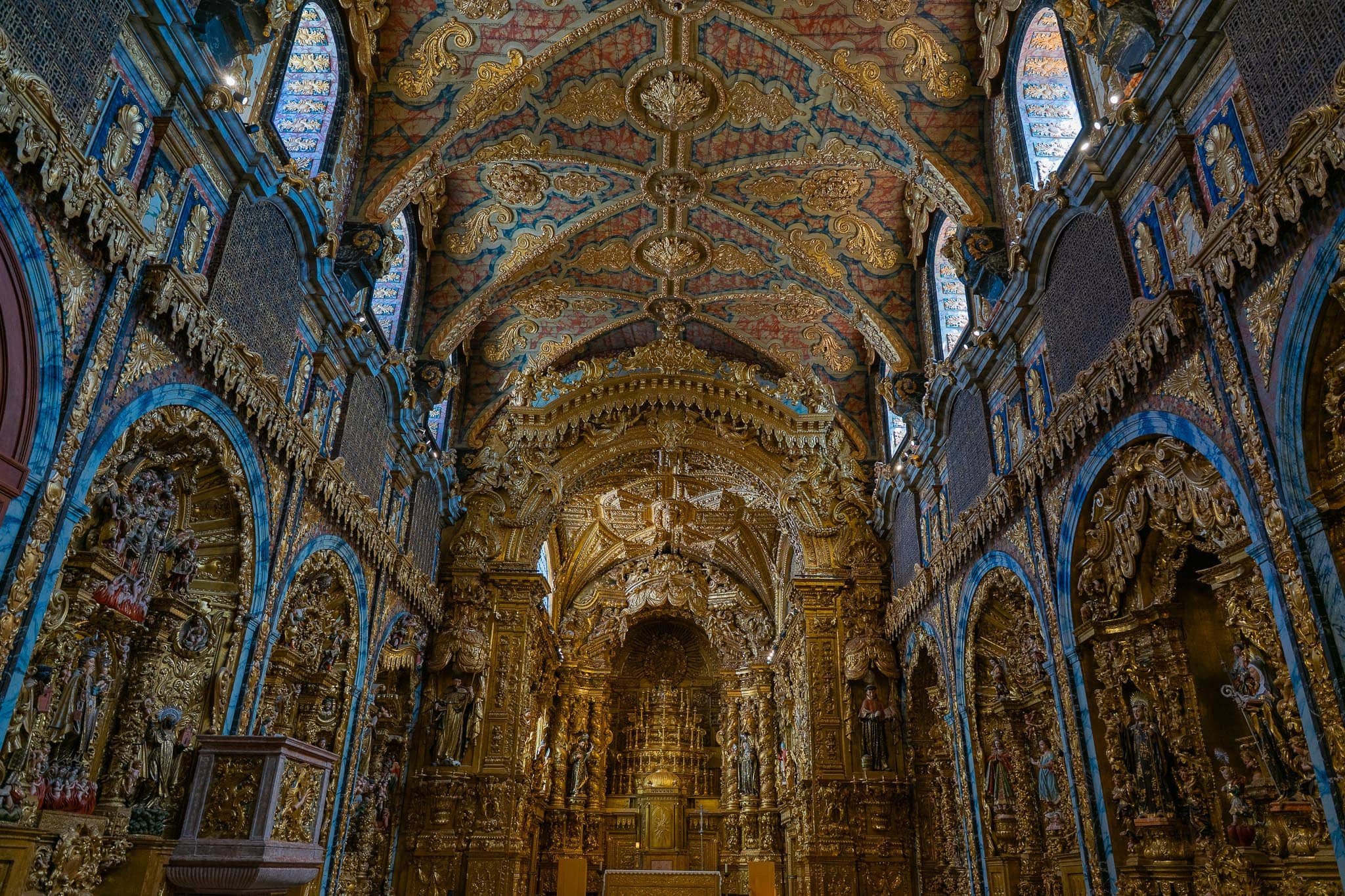
The plainest doors in Porto open onto the most extravagant rooms in Portugal. The Igreja de São Francisco keeps a sober Gothic face to the street and hides behind it the Igreja do Ouro, the Church of Gold: an interior where every carved vine, cherub and rose garland has been smothered in gilded woodwork, and the Tree of Jesse climbs one wall tracing Christ's lineage in glittering branches. The figure is half a tonne of gold leaf, give or take, and the effect is not beauty so much as vertigo — a forest of money grown indoors. Up the hill the Igreja de Santa Clara does the same trick in a quieter setting, the talha dourada packed so densely it reads, at first, as a single golden surface until the eye picks out the saints and angels buried in it.
Not all the wealth is sacred. The Palácio da Bolsa, the old stock exchange, built its argument for commerce in stone: a glass-domed Hall of Nations ringed with the coats of arms of every country Porto traded with, and, deeper in, the Arabian Room — a Moorish-revival fantasy modelled on the Alhambra, twenty years in the making, its every surface gilded and inscribed, a merchant city's idea of magnificence. The Sé, the fortress cathedral up on its rock where Henry the Navigator was baptised, is the oldest note in the chord and the most austere, its azulejo cloister the one indulgence it allows itself. Together they are the spent form of the river's wealth — the port money turned to gold and stone and held up to the light.
Down to the Water
Ribeira, the bridge, and the crossing to Gaia
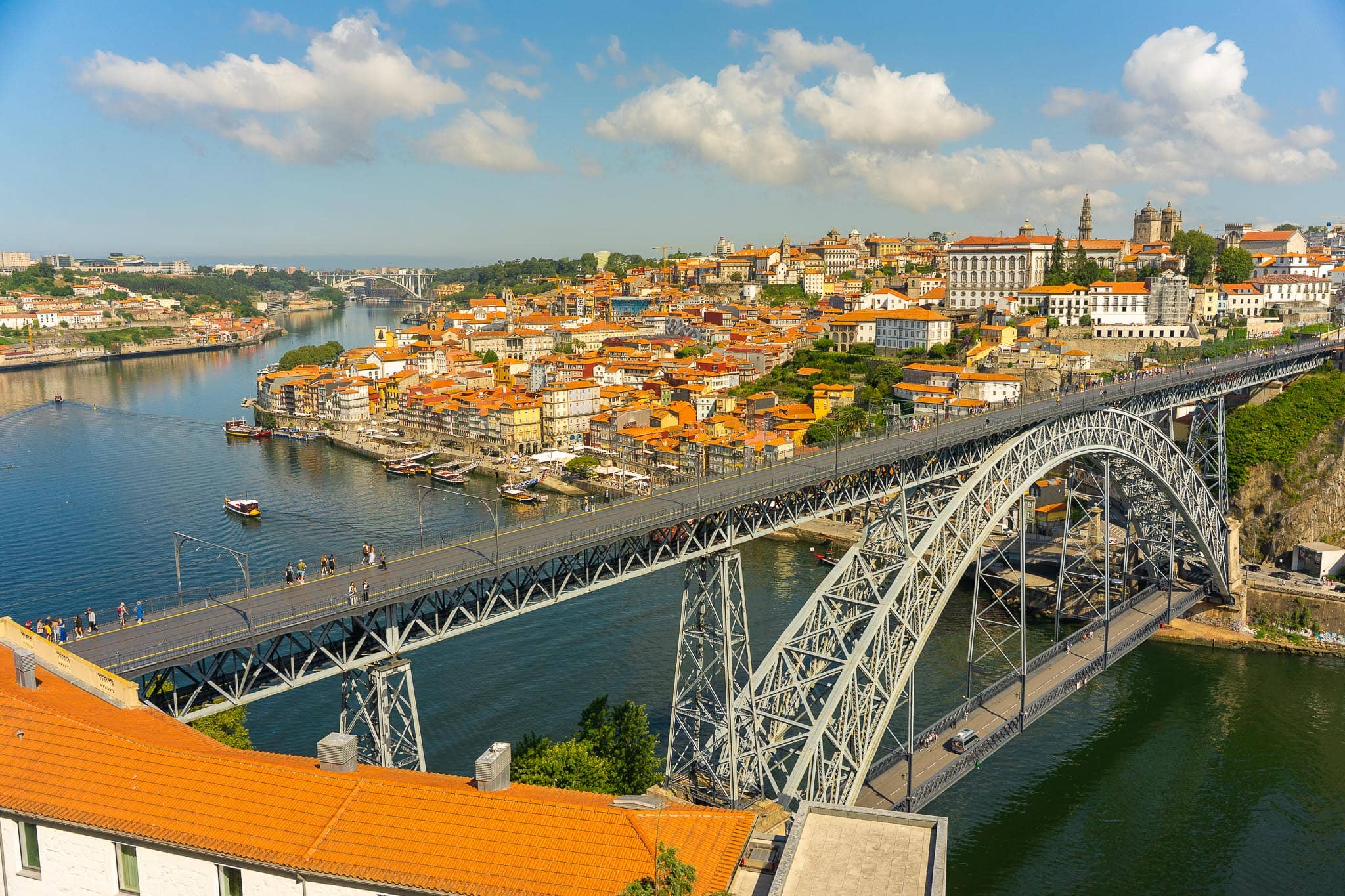
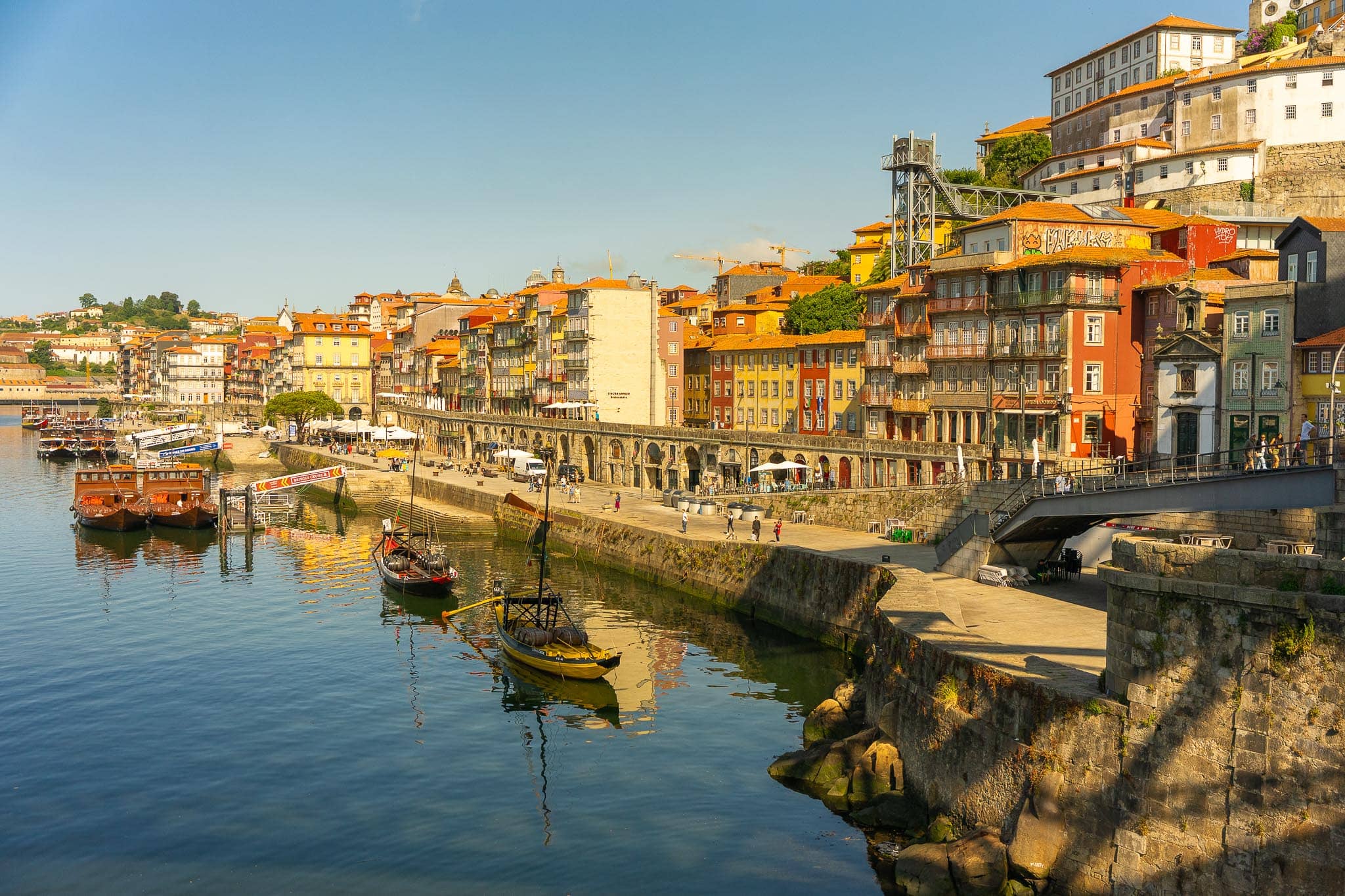
Everything in Porto eventually falls to the Ribeira. The lanes of the old town pour down through arches and washing lines to the quay, where the pastel houses lean over the water in their picturesque dilapidation and the cafés put their tables out along the river wall. It is the most photographed corner of the city and, by evening, the most crowded, and it is still worth the descent — to stand on the quay among the rabelo boats that once carried the wine, with the Ponte Dom Luís I arched overhead and the lodges glowing across the water, is to see the whole machine of the city laid out at once.
The bridge is the city's signature: Téophile Seyrig's double-deck iron arch from 1886, designed by a partner of Eiffel's and, briefly, the longest of its kind in the world. The traveller crosses on the upper deck, on foot, beside the metro, with the river dropping away forty metres below and the whole of Porto and Gaia spread on either side — one of the great free walks in Europe. On the far bank a short steep climb leads to the Mosteiro da Serra do Pilar, its round church and circular cloister unique in Portugal, and to the miradouro beside it, which holds the postcard view: the bridge, the river, the stacked city, all of it at once. The funicular dos Guindais will spare the legs one of the climbs back, for a couple of euros; the traveller takes it once and walks the rest, because Porto is best understood as a thing earned on foot.
The Lodges
Vila Nova de Gaia — port, the cellars, and the long evening light
The wine that named the city is not made in it. Across the river in Vila Nova de Gaia the port lodges line the south bank, their names painted in white on the dark roofs — Cálem, Taylor's, Graham's, Sandeman — and inside them the fortified wine sleeps in cool barrel halls smelling of oak and dark fruit, brought down from the Douro terraces to age in the river's even temperature. Caves Cálem, the nearest to the bridge, runs the easy version: a walk through the cellars, the story of the demarcated region, and a tasting of a white and a ruby at the end, with a fado show some evenings for the price of lingering. Taylor's, founded in 1692 and still independent, sits higher up the hill and pours its Chip Dry white and an LBV on a terrace that holds the best long view back across the water to the city.
And the city, from here, in the last hour of light, is the reason to have crossed. The traveller takes a glass out onto the terrace or up to the Esplanada do Teleférico, and Porto stacks itself gold and pink across the gorge, the Dom Luís bridge a black filigree against it, the river going molten below. Every evening in Porto ends like this somewhere — at the Miradouro da Vitória over the old town, in the gardens of the Palácio de Cristal with the peacocks, here on the Gaia bank with the port in hand. The sunset is not a bonus. In a city built on a gorge, it is the daily dividend the climb pays out.
What stays with the traveller about Porto is not a single monument — not the gold church or the iron bridge or the tiled station, fine as they are — but the grain of the place: granite and water, the smell of the river under the smell of the food, the way the whole city is built on the effort of getting from the top of it to the bottom and back. It is a working city that happened to become beautiful, and it wears the beauty the way it wears the azulejo on the station walls — as a surface over something that was always about labour, and trade, and the river that paid for all of it.
The port lodges will still be pouring across the water; the bridge will still be the best free walk in Europe; the sunset will still find the traveller somewhere high with a glass in hand. Porto gives generously, but never for free — it asks for the climb first, every time. And then, from the top, it hands over the river.