Santiago de Compostela — The End
of the Pilgrim Road
One day north from Porto — the cathedral, the Praza do Obradoiro, the swinging censer, and a Galician lunch at the end of the Camino
Every other person in the square walked here. That is the first thing to understand about Santiago de Compostela, and very nearly the last: it is a city built entirely around the act of arrival, a thousand years of boots ending at one set of cathedral steps. The traveller who comes up from Porto for a single day arrives at the same granite by an easier covenant — a coach seat instead of five weeks of blisters — and spends the day among people for whom the arrival is the end of something the traveller has only borrowed.
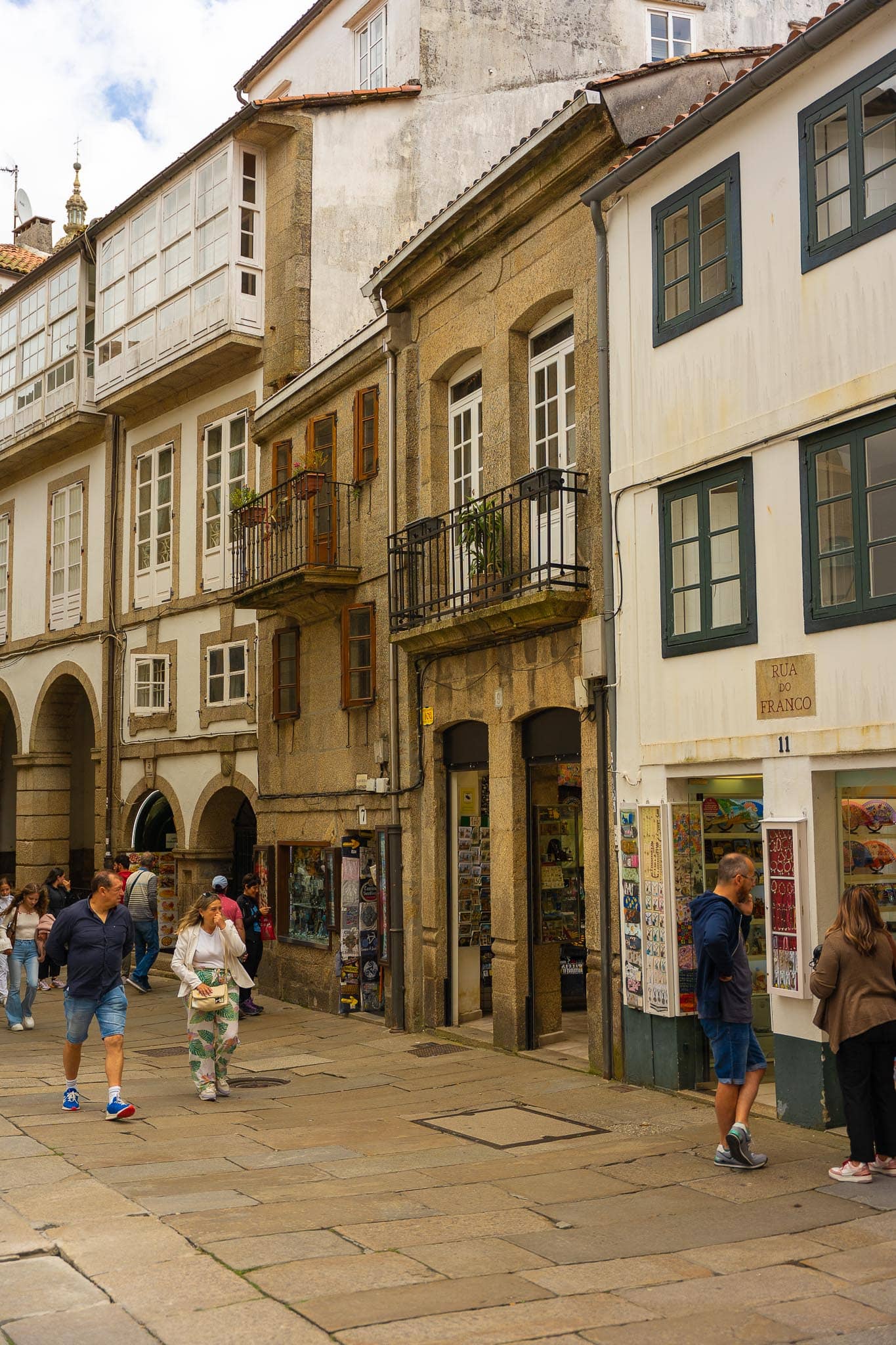
The road north runs for the better part of three and a half hours, out of Porto's tiled density and across the Minho into Galicia, which is Spain only on the map. The land turns wet and green and Celtic; the eucalyptus drips; stone granaries stand on mushroom-shaped stilts in the fields, and the rain that the rest of Iberia spends the summer praying for falls here without being asked. By the time the old town's lanes close in — granite underfoot, granite overhead, the smell of rain on warm stone — the traveller has crossed not a border but a climate.
The pilgrim earns the city across five weeks. The traveller is given it before lunch.
The Road North
Porto to Galicia — across the Minho, into the wet green of Spain's north-west
The coach leaves Porto in the eighth hour, while the city is still deciding whether to be awake, and points itself north up the spine of the Portuguese coast. For an hour the country is familiar — vineyards, red roofs, the Atlantic somewhere off to the left — and then comes the Minho, the river that has been the border between Portugal and Spain for longer than either has had its present name, and on the far bank everything is subtly wrong in the way that only neighbouring countries can be.
Galicia does not behave like Spain. It rains here the way it rains in Ireland, which is the comparison the Galicians themselves reach for; the hills are green to the point of insolence, the food comes from the cold Atlantic rather than the hot plains, and the language on the road signs — gallego, halfway between Portuguese and Castilian — reads like a thing the traveller almost understands. The hórreos stand in every yard, those long stone granaries raised on legs against the damp, topped with a cross at one end and a pagan finial at the other, hedging their bets the way this whole corner of Europe has always hedged them.
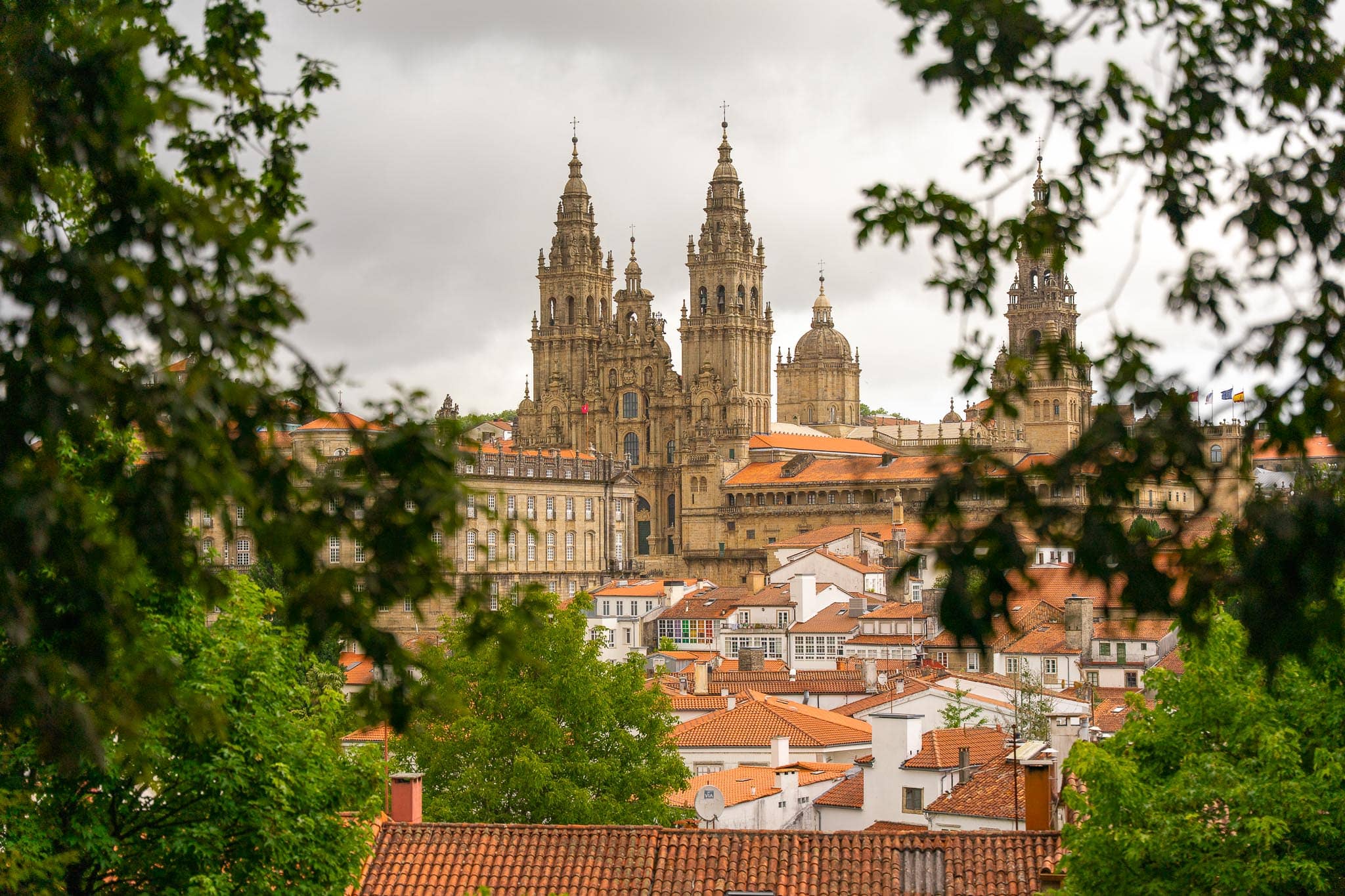
The road tightens toward the city through low forested hills. There is no dramatic first sight of Santiago, no skyline announcing itself; the cathedral hides until the last moment inside its old town, the way the relic it was built around hid for eight hundred years in the soil. The traveller is set down at the edge of the medieval centre and walks the rest, which is the only correct way to enter a city whose entire meaning is the approach on foot.
The Square
Praza do Obradoiro — the threshold every Camino empties into
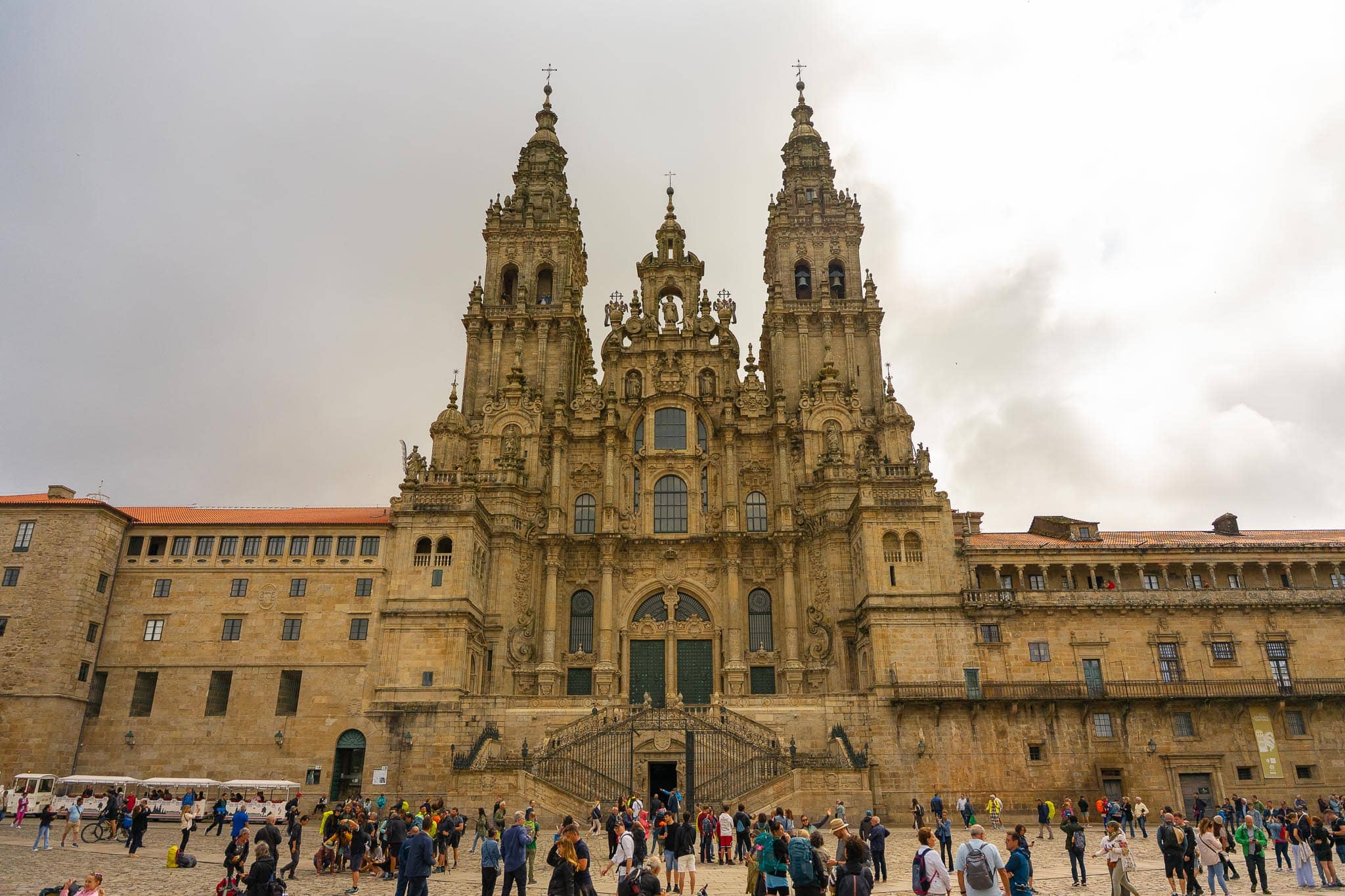
The old town funnels the traveller downhill through lanes barely wider than a cart, and then, under the dark arch beside the archbishop's palace, a piper is almost always playing — the Galician gaita, a bagpipe that insists on its Celtic cousins to the north — and the sound spills out into the open at the exact moment the square does. The Praza do Obradoiro is one of the great arrival spaces of Europe, and it earns the title the hard way: by being the place a thousand kilometres of every Camino route finally stop.
The cathedral's western face climbs the eastern side of the square in Baroque granite gone gold and black with three centuries of lichen and rain, a wild upward scramble of stone that looks less built than grown. Below it, on the bare paving, pilgrims arrive in ones and twos and small ragged groups — packs dropped, boots off, some of them flat on their backs on the stones looking up at the towers, the particular stillness of people who have stopped walking after weeks of doing nothing else. There is no performance in it. They have simply arrived, and arrival, here, is a physical event.
Inside, past the queue, the Pórtico da Gloria waits: Master Mateo's Romanesque triple doorway from the twelfth century, recently cleaned back to the faded polychrome it wore when the first pilgrims saw it, two hundred carved figures of prophets and elders and a smiling Daniel, the whole Last Judgement rendered by a sculptor working eight hundred years before the word masterpiece was cheapened. For most of those centuries arriving pilgrims pressed a hand into the central column until they wore five finger-holes into the marble. The column is roped off now. The traveller understands why, and regrets it anyway.
The Censer
Inside the cathedral — the tomb, the noon Mass, and the great swinging thurible
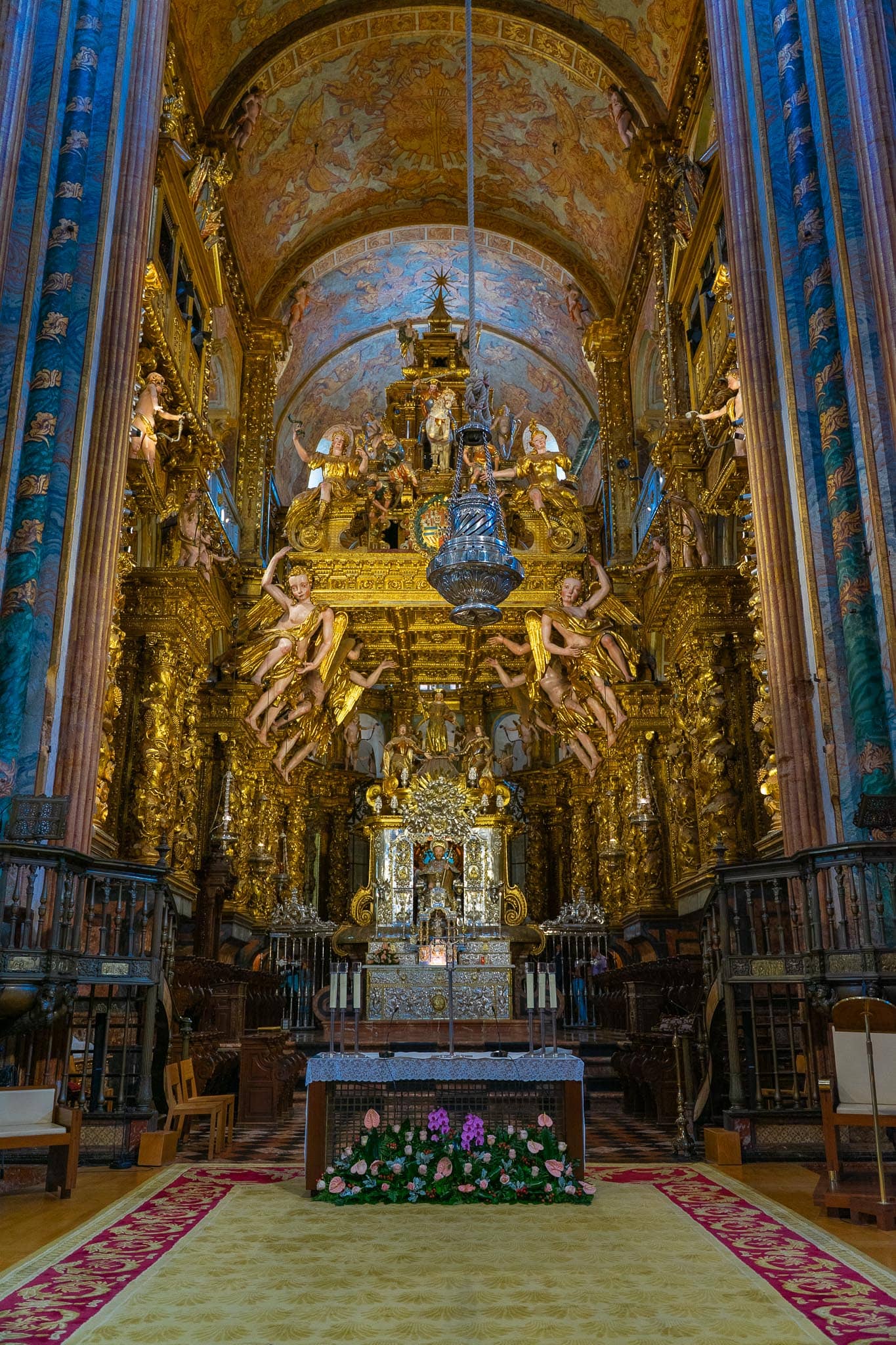
Beneath the high altar, down a narrow stair, is the reason for all of it: a silver casket said to hold the bones of Saint James the Apostle, Santiago, whose supposed rediscovery in a Galician field in the ninth century built first a chapel, then a cathedral, then a continent's worth of roads leading to its door. Above the altar the gilded statue of the saint sits in reach of a worn stair, and the custom is to climb behind it and embrace it — the abrazo — a thousand-year-old gesture performed now by day-trippers and devout alike, the gold rubbed bright across the saint's shoulders by all the arms that have gone around them.
At noon the Pilgrim's Mass fills the nave, and the cathedral becomes, for an hour, the thing it was built to be rather than the thing it has become. The object everyone watches for is the botafumeiro — a silver censer as tall as a man and very nearly as heavy, hung on a rope from the dome and swung by eight red-robed tiraboleiros in arcs that climb almost to the transept ceilings, a smoking pendulum that began, centuries ago, as a practical solution to the smell of several hundred unwashed pilgrims in a closed stone room. It is the single most theatrical object in any church in Europe. It is also not guaranteed: the great censer flies only on feast days or when a group pays for it, and the day-tripper who arrives on an ordinary Monday may find it stowed in the side chapel and the nave quietly itself. The honest preparation is to hope for it and expect the quiet.
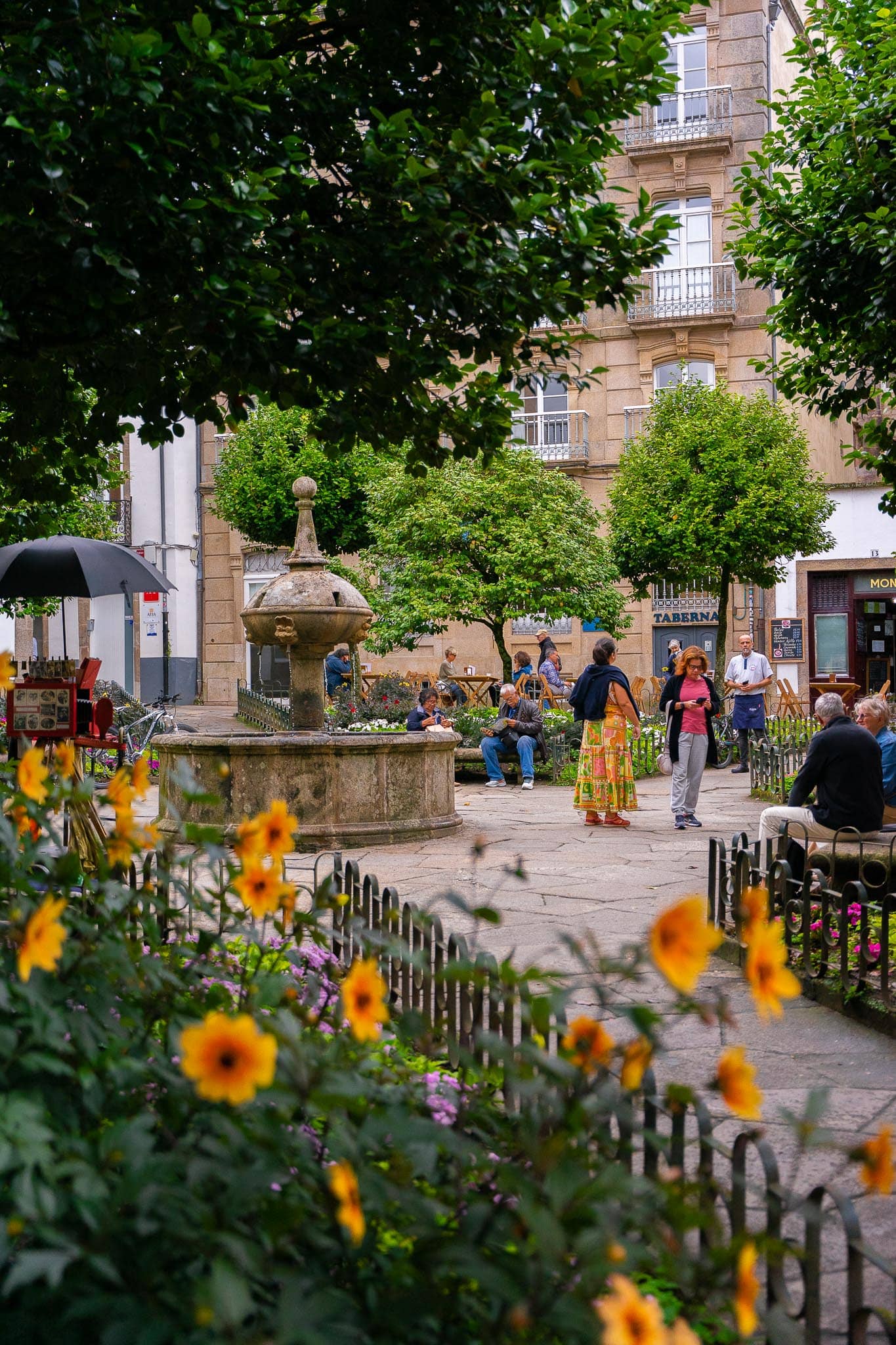
Afterward the city does the other thing it does well, which is lunch. Out along the Rúa do Franco the old tabernas put Galicia on the table without apology: pulpo á feira, octopus boiled soft and scissored onto a wooden plate under coarse salt, sweet paprika and a flood of green olive oil; blistered Padrón peppers, one in ten a small ambush of heat; a cold bottle of Albariño hauled up from the Atlantic vineyards an hour west; and to finish, the tarta de Santiago, a dense almond cake wearing a powdered-sugar stencil of the saint's own cross. It is food built by a cold, wet, sea-facing place, and it tastes like nowhere on the dry side of the Minho.
The road back runs into the dusk, Galicia greying out the coach windows, the Minho crossed again in the other direction, and somewhere around the border the traveller understands what the day actually was. It was not a pilgrimage. The traveller did no penance, carried no pack, earned no certificate, and arrived in a coach seat at a square that other people reached on ruined feet. The day was a borrowing.
But borrowings change the borrower. To stand on the Obradoiro among people for whom the arrival is the end of weeks of walking — to watch them lie down on the stones — is to be handed, free, a small piece of a thing built for those who paid full price. Santiago does not seem to mind. The city has been receiving people who did not quite deserve it for a thousand years, and it receives the day-tripper from Porto in the same wet, golden, indifferent way it receives the footsore from France.
Porto is waiting at the end of the dark with a table booked. The pilgrims sleep in Santiago. The traveller does not — the traveller goes home to dinner, carrying the square in their head like a stamp in a passport they did not earn.