4 Days in Valencia: Where the River Became a Garden
Four days along a missing river — a flood turned into a nine-kilometre garden, Gothic silk at one end and Calatrava's white future at the other, and paella's true home.
Some links in this chronicle are affiliate links. If you book through one, I may earn a small commission at no extra cost to you.
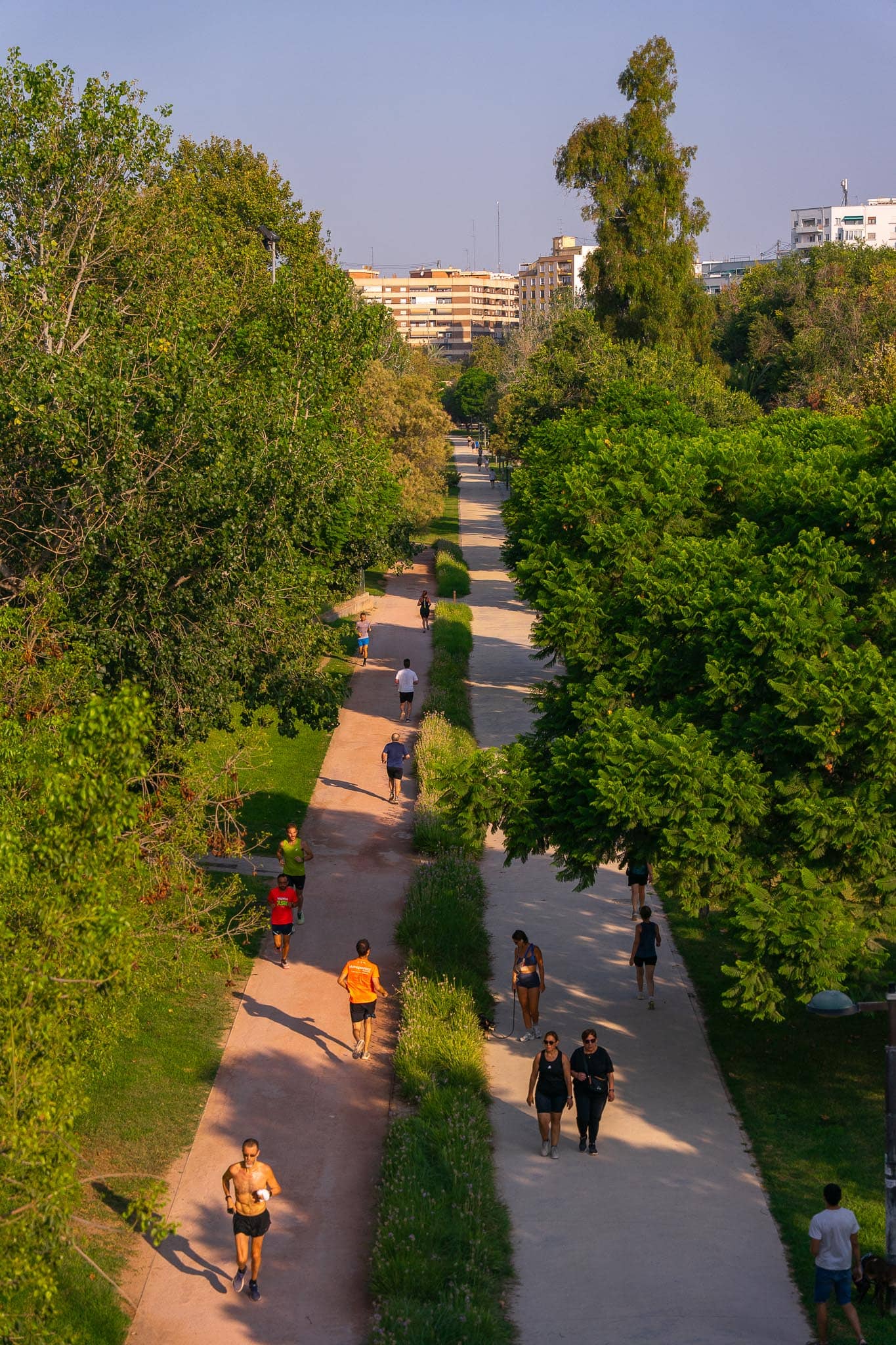
Valencia has a river that isn't there, and that absence is the best idea any Spanish city ever had. The Turia ran through the heart of the city for a thousand years until, in 1957, it rose in a catastrophic flood that drowned the streets and killed dozens. The engineers' answer was drastic: they diverted the entire river around the south of the city, leaving its old bed — nine kilometres of it, curving right through the centre — empty and dry. The plan was to pave it into a motorway. The people of Valencia refused. El riu és nostre i el volem verd, they said — the river is ours and we want it green — and instead of a freeway the city got the Jardí del Túria, a nine-kilometre garden running through its middle where the water used to be: a sunken green ribbon of orange trees, fountains, sports pitches, palm groves and cycle paths, crossed by the same ancient stone bridges that once spanned the flood.
It is the most quietly radical thing in any city on the trip — a place that looked at a disaster and built a park out of the scar. And the garden tells the whole story of Valencia in a single walk: start at the old end, among the Gothic silk-exchange and the markets of the medieval trading city, and follow the green all the way to the far end, where Santiago Calatrava's blinding-white City of Arts and Sciences rises out of the old riverbed like a fleet of landed spaceships. A thousand years of the place, laid end to end along a missing river.
Four days here, and the city sorts itself by that green spine: the old silk town at one end, the white future at the other, the beaches and the rice fields off to the sea, and the garden tying it all together.
The Garden
The Túria — a river turned into nine kilometres of green
The best way to meet Valencia is to get down into the riverbed. The Jardí del Túria sits below street level, in the broad sunken channel the water carved, so that walking or cycling its length is to move through the city in a green trench, the traffic and the noise up on the banks and the garden cool and shaded below. Hire a bike — the city is flat and the garden is a continuous traffic-free path — and ride the whole nine kilometres, passing under the old bridges, through the orange groves and rose gardens and the great Gulliver playground where children swarm over a giant reclining figure. It is where Valencia actually lives: joggers and dog-walkers and families and old men playing pétanque, the daily life of the city poured into the space a flood once filled.
The story under it is the point. A city that suffered a disaster, refused the obvious concrete solution, and chose instead to give the wound back to its people as something green and useful — there are not many better arguments for what a city can be. The garden is free, always open, and the single best thing Valencia has done. The traveller could skip every monument and museum and simply ride the Túria end to end, and would still understand the place. Everything else in the city hangs off this green line like fruit off a branch.
The Silk City
La Lonja, the markets, and the Holy Grail
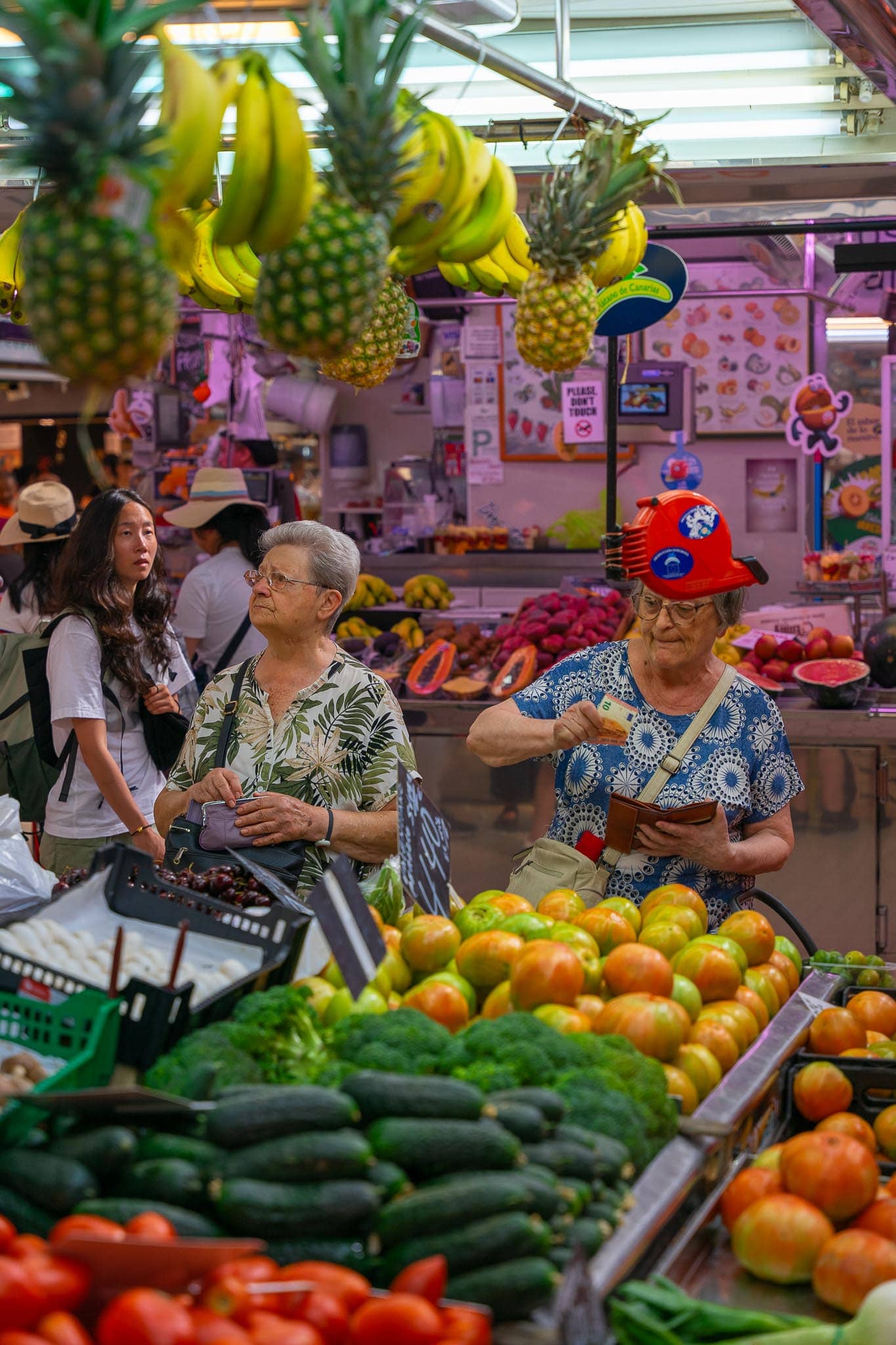
At the old end of the garden is the medieval city that the river once served — Valencia's golden age, when it grew rich on silk and trade. The proof stands in the Lonja de la Seda, the Silk Exchange, a masterpiece of civil Gothic architecture whose great hall of spiralling stone columns, twisting up like palm trunks into the vaults, is one of the most beautiful rooms in Spain and a UNESCO site in its own right. Across the way the Mercado Central carries the trade into the present: a vast Art Nouveau market hall of iron, glass and tile, one of the largest in Europe, where the produce of the huerta — Valencia's famously fertile market garden — is piled in glorious abundance under a ceramic dome. For a more genteel version there is the Mercado Colón, a modernista jewel now full of cafés, the right place for a mid-morning horchata.
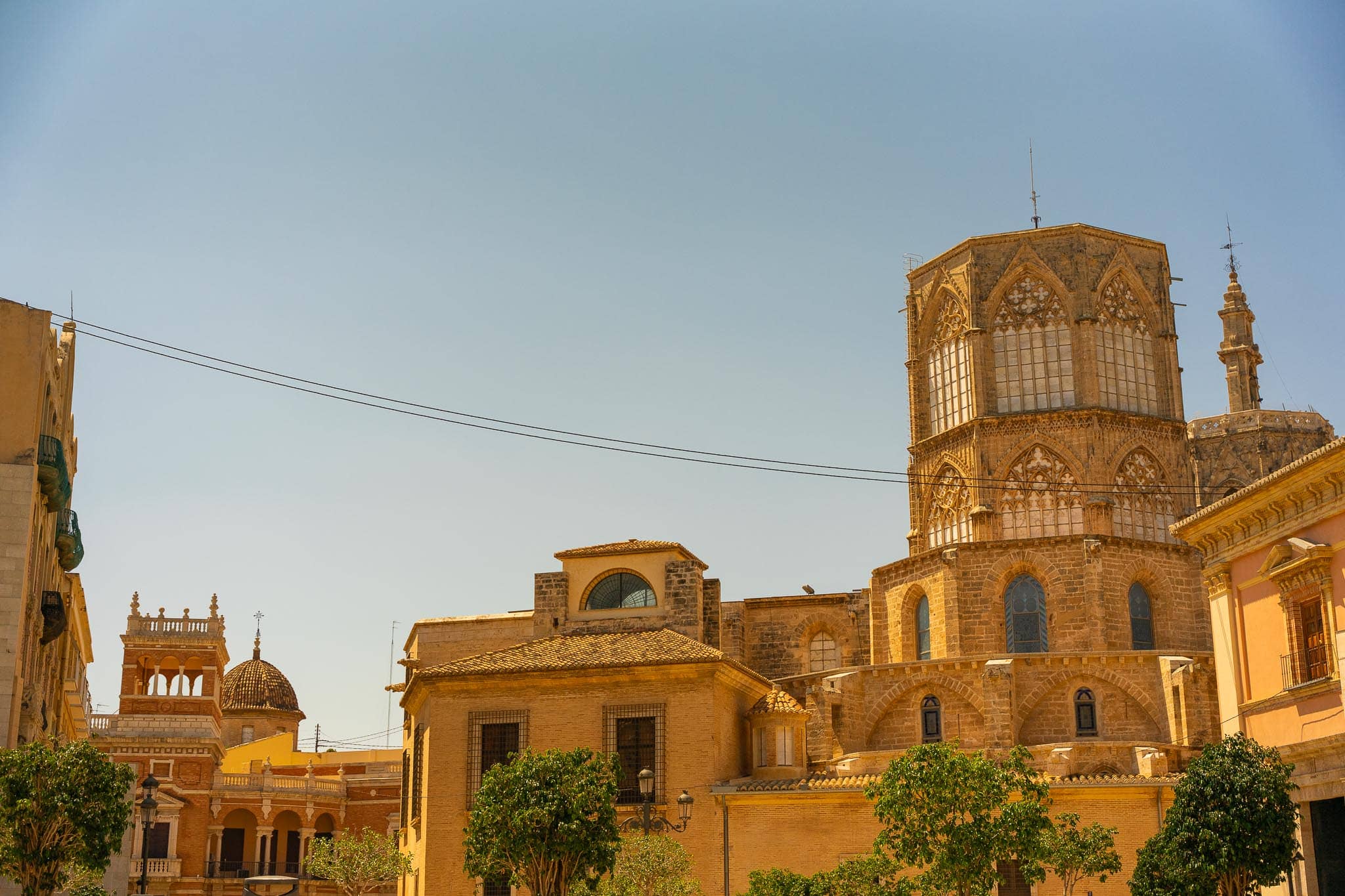
And the Cathedral keeps the city's strangest claim. In a side chapel sits the Santo Cáliz — a plain agate cup that the Church recognises as a serious candidate for the actual Holy Grail, the cup of the Last Supper, brought west and hidden through centuries of war. Whether or not the traveller believes a word of it, there is something quietly extraordinary about a relic of that magnitude sitting almost unremarked in a working cathedral, with the Miguelete bell-tower to climb beside it for the view over the old-town roofs. Gothic silk money, a great market, and maybe the Grail — the medieval city packed all of it into a few walkable blocks at the head of the garden.
The White Future
The City of Arts and Sciences at the other end of the river
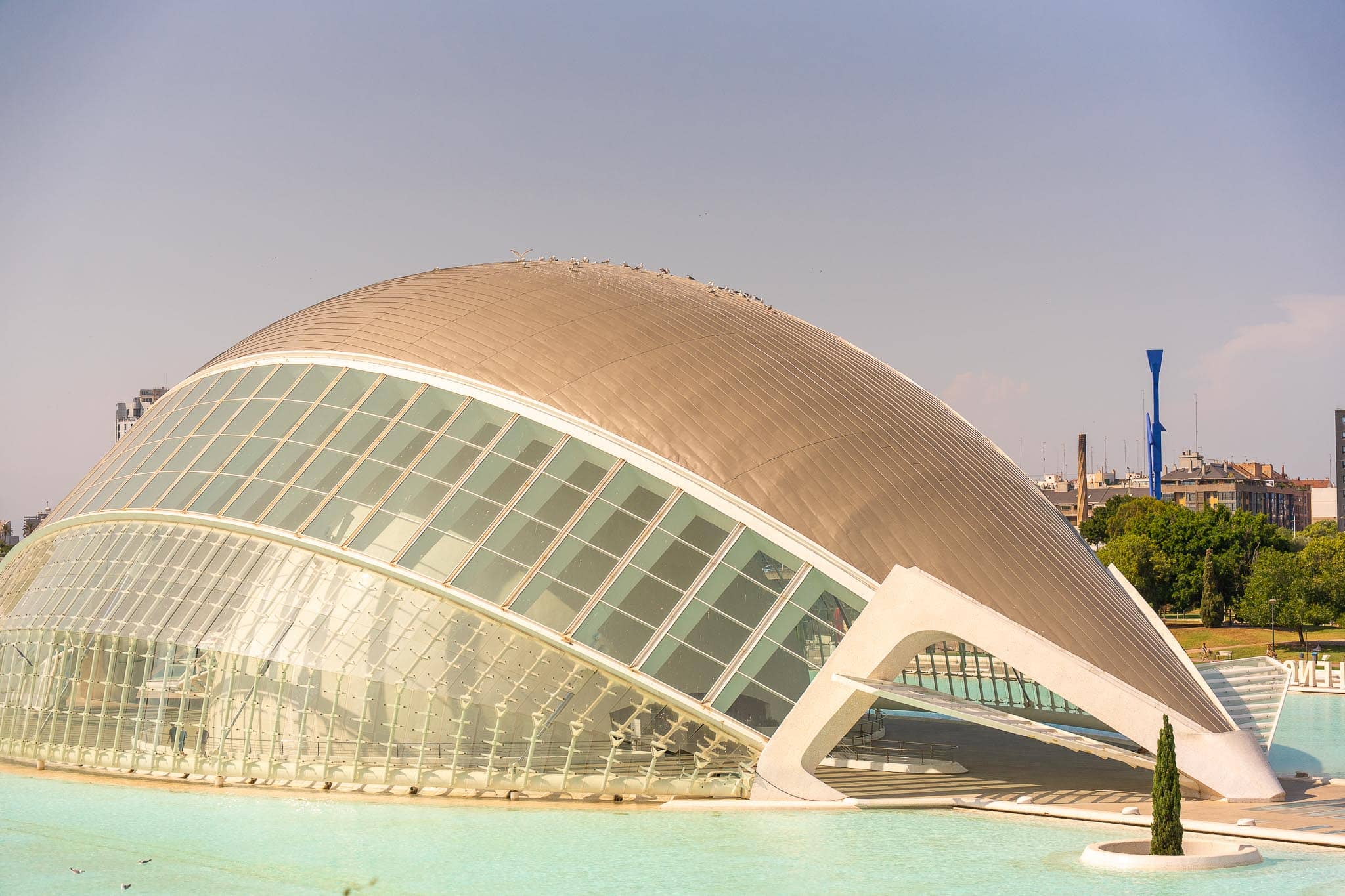
Follow the green the other way and the centuries fall away. At the seaward end of the riverbed, where the Turia once met the Mediterranean, the local architect Santiago Calatrava built the Ciudad de las Artes y las Ciencias — the City of Arts and Sciences — a complex of blinding-white structures set in shallow blue reflecting pools that looks less like a set of buildings than like something that landed. There is the eye-shaped Hemisfèric cinema, the skeletal Museu de les Ciències like the ribcage of a vast beached whale, the Palau de les Arts opera house under its great curved shell, and the long white promenade of the Umbracle. It is theatrical, divisive, expensive, and undeniably spectacular — the same civic ambition that turned a flood into a garden, expressed half a century later in titanium-white concrete.
At the far end sits L'Oceanogràfic, the largest aquarium in Europe, its buildings shaped like water lilies, holding everything from belugas and sharks to a walk-through ocean tunnel — the trip's one big-ticket family attraction, and worth a half-day. To stand in the reflecting pools at dusk, the white shells going pink and the whole thing doubled in the still water, is to see Valencia's defining trait in built form: a city unafraid of a grand gesture, that would rather build something astonishing than something safe. The medieval silk hall and the science-fiction opera house are the same impulse, five hundred years apart.
The Rice and the Sea
Paella's true home, the beaches, and horchata
There is one more thing Valencia is the birthplace of, and it is worth crossing the country to get right: paella. Not the yellow seafood tourist version, but the real paella valenciana, born in the rice paddies of the Albufera lagoon just south of the city — chicken, rabbit, runner beans, garrofó, saffron and short rice, cooked flat over orange-wood fire until the bottom forms the prized crust the locals call socarrat. Valencians are, with total justification, fierce about this; to eat paella where it was invented, made the way it was invented, is one of the trip's great meals. Take a cooking class and shop the Mercado Central for it, or eat it properly at lunchtime (never dinner — paella is a midday dish) out by the Malvarrosa beach, where the barracas have served rice by the sand for a century.
And the sea is right there. The long city beaches of Malvarrosa and Patacona run north from the old fishermen's quarter of El Cabanyal — a grid of low houses faced in bright broken tile, faded and beautiful and slowly being rediscovered. Inland at Alboraya they grow the chufa (tiger nut) that makes horchata, the cold sweet milky drink Valencia invented, best drunk with a sugar-crusted fartón to dip. Between the rice, the beach and the horchata, Valencia turns out to be a city you eat and drink as much as you look at — and then the fast train north, up the coast to Barcelona, and the last stop of the circuit.
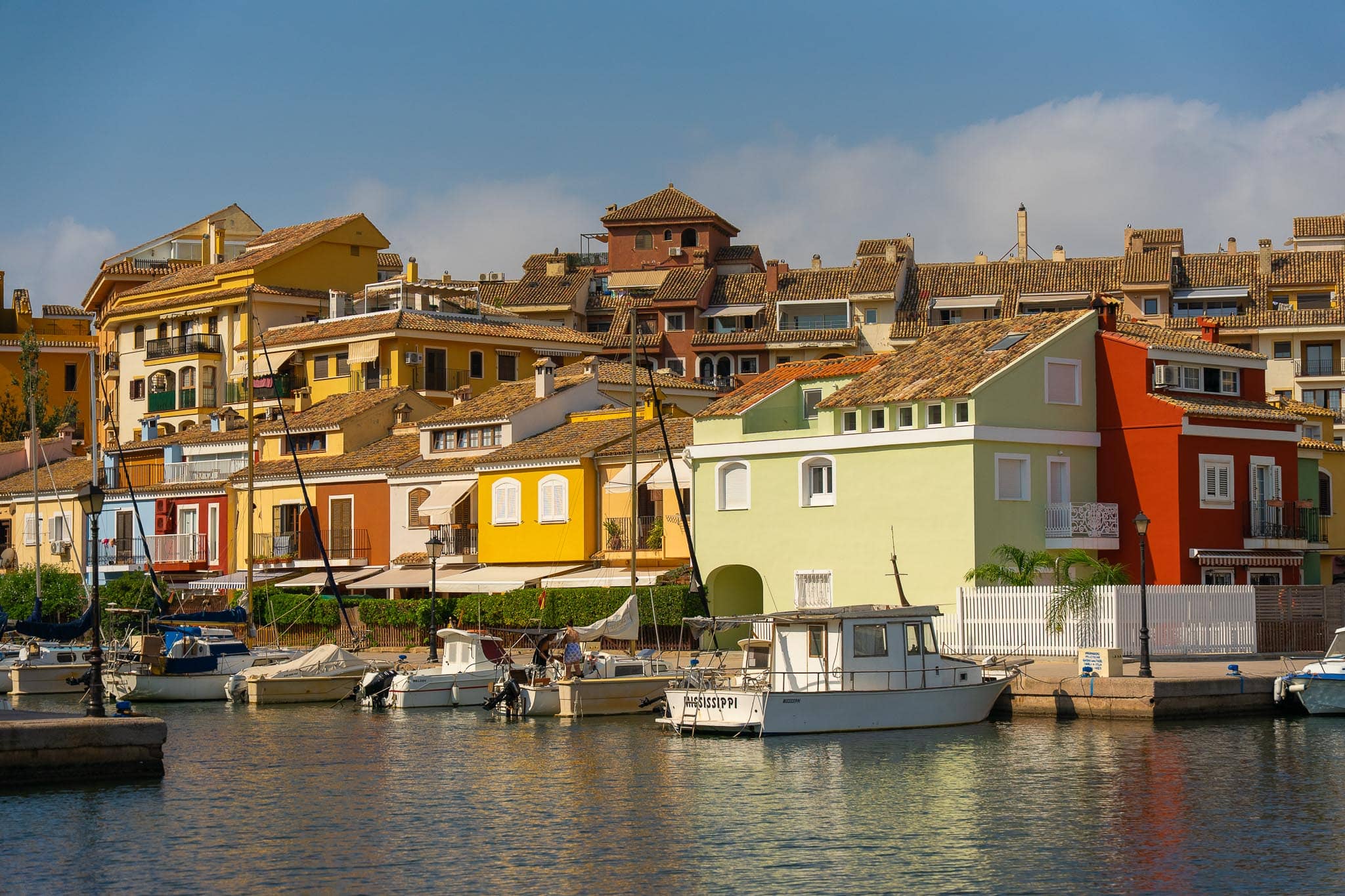
Valencia is the city that turned its worst day into its best feature, and there is something in that the whole trip keeps circling back to — the way a place reveals its character not in its monuments but in what it decides to do with what it's been given. A flood became a garden. A dry riverbed became the spine that holds a thousand years of the city together, with Gothic silk at one end and a white-concrete future at the other and the daily life of Valencia flowing green between them. It is not Spain's most famous city, and it is, quietly, one of its most likeable.
The traveller leaves it well-fed and faintly converted — on a bike returned, with the taste of real paella and cold horchata still about — and boards the last train of the circuit, north along the Mediterranean. Ahead lies Barcelona, the end of the line: Gaudí's unfinished argument, the sea, and the close of a thousand kilometres of overland road.