3 Days in Madrid:
The Capital at Full Volume
Two dense nights in the loudest, hungriest city of the trip — the world's oldest restaurant, a market lunch, the Arab baths, and Guernica in the quiet.
Some links in this chronicle are affiliate links. If you book through one, I may earn a small commission at no extra cost to you.
After the silence of the stones — Évora's bones, Cáceres's storks, the long empty plains of the interior — Madrid hits like a wall of sound. The fast train sets the traveller down in the middle of a city running at full volume: nine o'clock at night and the streets are a river, the bars three deep, the children still out, the dinner not yet started, the whole capital behaving as though sleep were a rumour and the night were the point of the day. Madrid is not beautiful the way Lisbon is beautiful or grand the way Paris is grand. Madrid is intense. It is a city of appetite — for food, for talk, for late hours, for life lived loudly in public — and it makes no apology for any of it.
So the way to read Madrid, on a short two-night stay wedged into a long overland trip, is through the appetite. Skip the obligation to see everything; the Prado and the Royal Palace and El Retiro will keep. Instead let the city show itself the way it most wants to: at the table. Eat at the oldest restaurant on earth, lunch standing up in the great market, drink chocolate at midnight, and judge the place by how seriously it takes its pleasures. Madrid takes them very seriously indeed, and that seriousness turns out to be the most honest thing about it.
But under the noise there is a reckoning, too — one painting in one museum that the whole intense, life-loving city is, in part, built over. The appetite and the wound, side by side. That is Madrid.
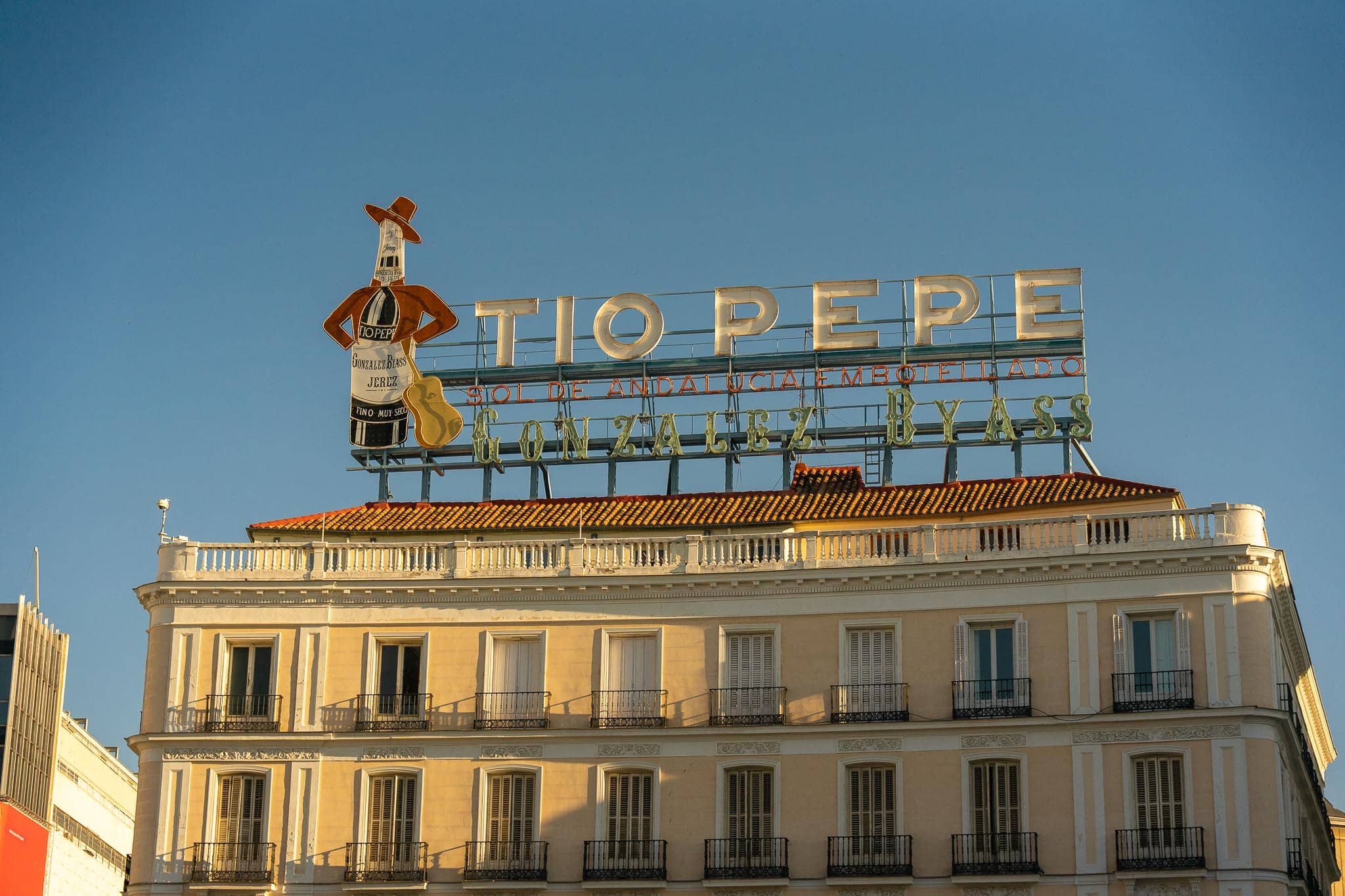
The Appetite
The oldest restaurant, the market, and the midnight chocolate
Begin where Madrid has been beginning dinner since 1725: Sobrino de Botín, certified by Guinness as the oldest restaurant in the world, its wood-fired oven never let go cold for three hundred years. The thing to order is the cochinillo asado — suckling pig roasted until the skin shatters like glass and the meat falls off the bone — eaten in low-ceilinged rooms where Goya is said to have washed dishes and Hemingway set the last scene of The Sun Also Rises. It is touristy, and it does not matter; the pig is extraordinary and the weight of the years in the room is real. This is eating as history, the city's appetite stretched across three centuries and still going.
By day the appetite moves to the Mercado de San Miguel, the beautiful iron-and-glass market beside the Plaza Mayor, now a temple of stand-up grazing — a counter of jamón, an oyster bar, croquetas, vermouth on tap, the whole Spanish larder served in small plates to be eaten elbow to elbow. Out in the tapas bars the city eats in motion, a bite and a drink and on to the next. And then, because Madrid does not believe the night should end, there is Chocolatería San Ginés, pouring thick dark drinking chocolate and crisp churros since 1894, very nearly around the clock — the right way to close a Madrid night is dipping churros into chocolate at midnight with the bars still roaring outside. For something to carry away, La Violeta sells its century-old candied violet sweets in a tiny jewel-box shop. The whole day, dawn to small hours, is organised around the mouth.
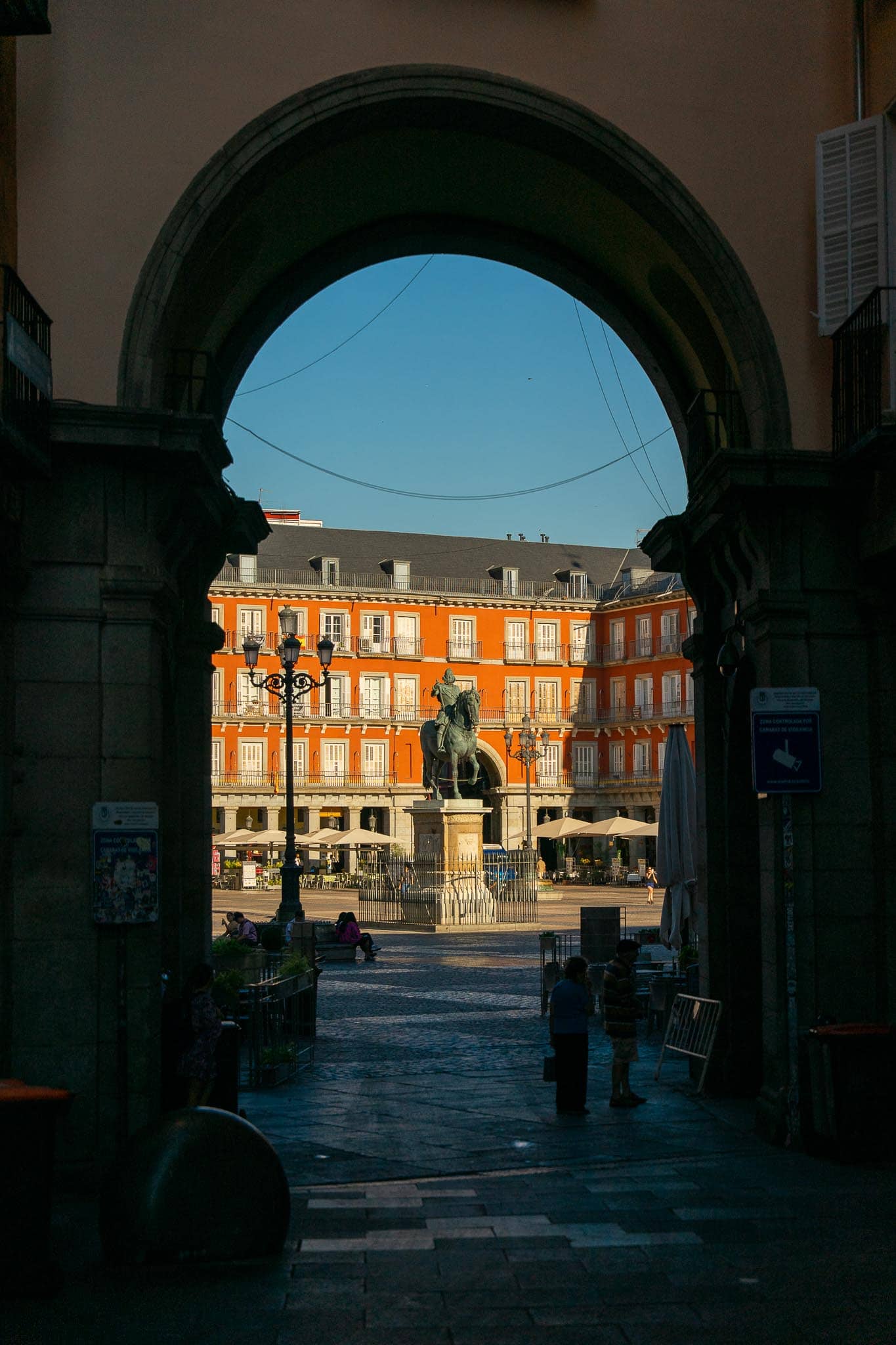
The Painting
Guernica, and the wound under the noise
There is one thing in Madrid that demands to be seen quietly, and it is a single painting. In the Museo Reina Sofía hangs Picasso's Guernica — the vast grey-black-and-white canvas he painted in 1937 in fury and grief after Nazi planes, at Franco's invitation, firebombed the defenceless Basque town of Gernika in an afternoon. The screaming horse, the broken sword, the woman with the lamp, the mother and the dead child: it is the twentieth century's greatest anti-war painting, and standing in front of it — far larger than any reproduction prepares you for — the noise of the appetite-city falls away. Picasso refused to let the work come home to Spain while Franco lived. It arrived only in 1981, after the dictator was dead and the country a democracy again, and there is a sense, still, in which the whole loud life-loving city outside the museum is dancing on a grave it has only recently been allowed to mark.
That is the other half of Madrid, and the trip is honest enough to sit with it. The intensity, the late nights, the appetite for life in public — some of it is the specific exuberance of a society that spent forty years under a dictatorship told to keep quiet, and got the volume back. To understand the joy you have to see the wound. Afterwards the traveller walks it off in the late sun, perhaps out to the Templo de Debod — a genuine ancient Egyptian temple, gifted to Spain and rebuilt stone by stone in a park, where the city gathers to watch the sun go down behind two-thousand-year-old gateways. The capital at full volume, taking a breath.
The Slow Hour
The Arab baths, the bookshops, and a different pace
For all its volume, Madrid keeps a few quiet rooms, and the trip went looking for them. Beneath the streets near Sol, the Hammam Al Ándalus revives the Moorish bathing tradition that Spain spent centuries trying to forget: a candlelit warren of hot, warm and cold pools under horseshoe arches, steam and tilework and silence, where ninety minutes of drifting between the waters does more for the legs of a long overland trip than any amount of sleep. After weeks of buses and trains and cobbled climbs, it is the single most restorative hour of the journey — the hard-driving capital, of all places, offering the deepest rest.
The other quiet pleasure is paper. Madrid keeps a tradition of antiquarian bookshops — names like Miranda and Bardón — dim rooms of old maps, prints and leather spines, where an hour disappears without notice and the city's noise is shut out by the weight of the stock. Between the bath and the books, a Madrid day finds its counter-rhythm: the appetite and the intensity balanced, just, by steam and old paper. And then it is morning, and the short dense stay is over, and the train south to Valencia is waiting — out of the high dry capital, back down toward the Mediterranean light.
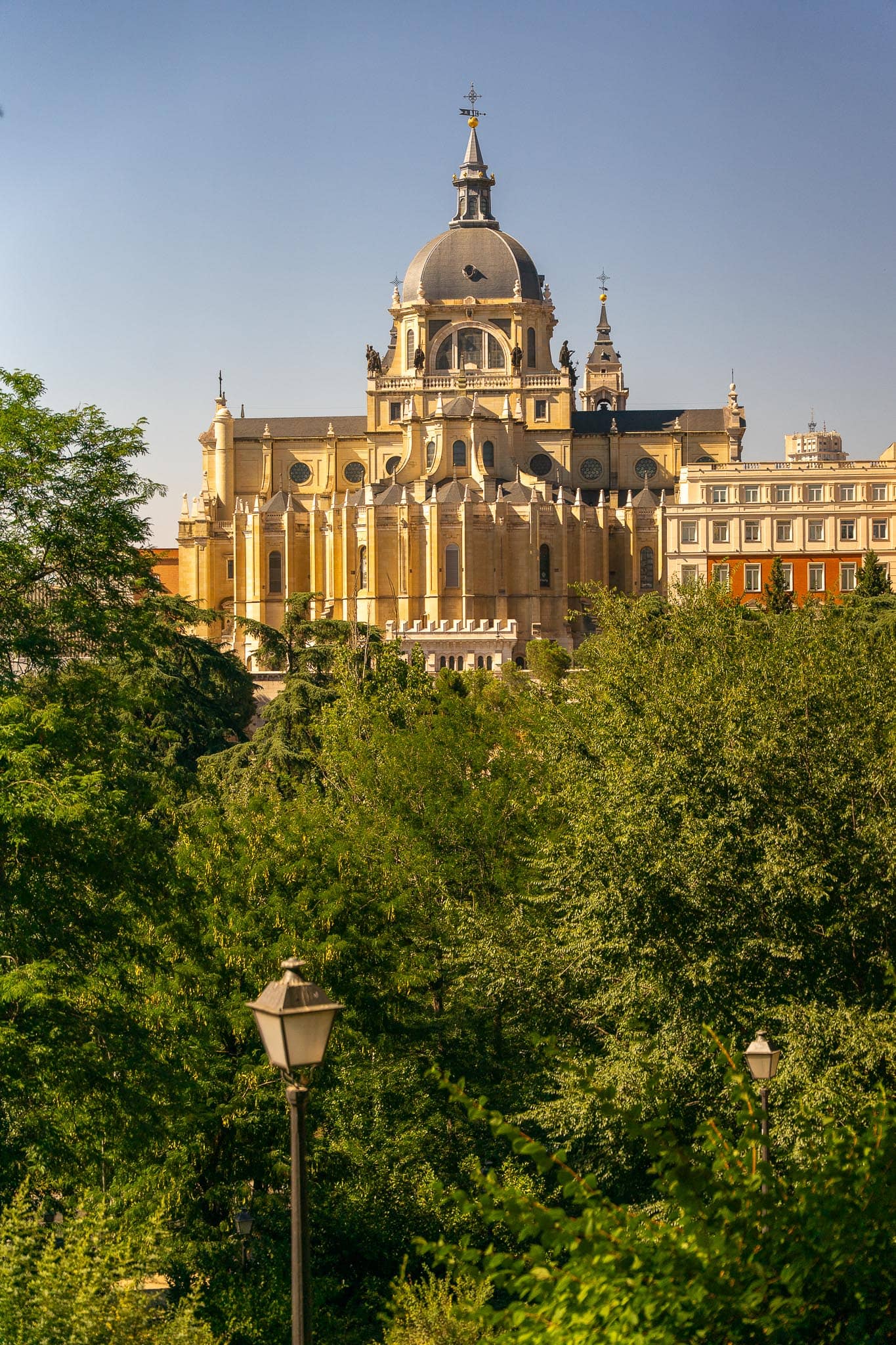
Madrid is the loudest, hungriest, most alive city of the whole trip, and it earns the volume. It is a capital that eats late and talks louder and stays up past everyone, and the easy mistake is to read all that as shallow — a city of pleasure with nothing underneath. But a single grey painting in a quiet museum corrects that fast. The joy is real, and it is hard-won; a society that was told to keep quiet for forty years got its voice back and has been using it ever since. To eat the three-hundred-year-old pig and then stand in front of Guernica is to understand both halves of the same city in an afternoon.
The traveller leaves the capital restored — fed, steamed, and quietly shaken — and takes the fast train down toward the coast. The high dry plateau falls away; the light softens; the Mediterranean is ahead now, and with it Valencia, where the river became a garden and the appetite turns, at last, to rice and the sea.