4 Days Mondim de Basto:
The Detour Into the Mountains
Three nights in a mountain town nobody books — the case for stepping off the circuit, built around a wine festival, under a green summit and a white chapel.
Some links in this chronicle are affiliate links. If you book through one, I may earn a small commission at no extra cost to you.
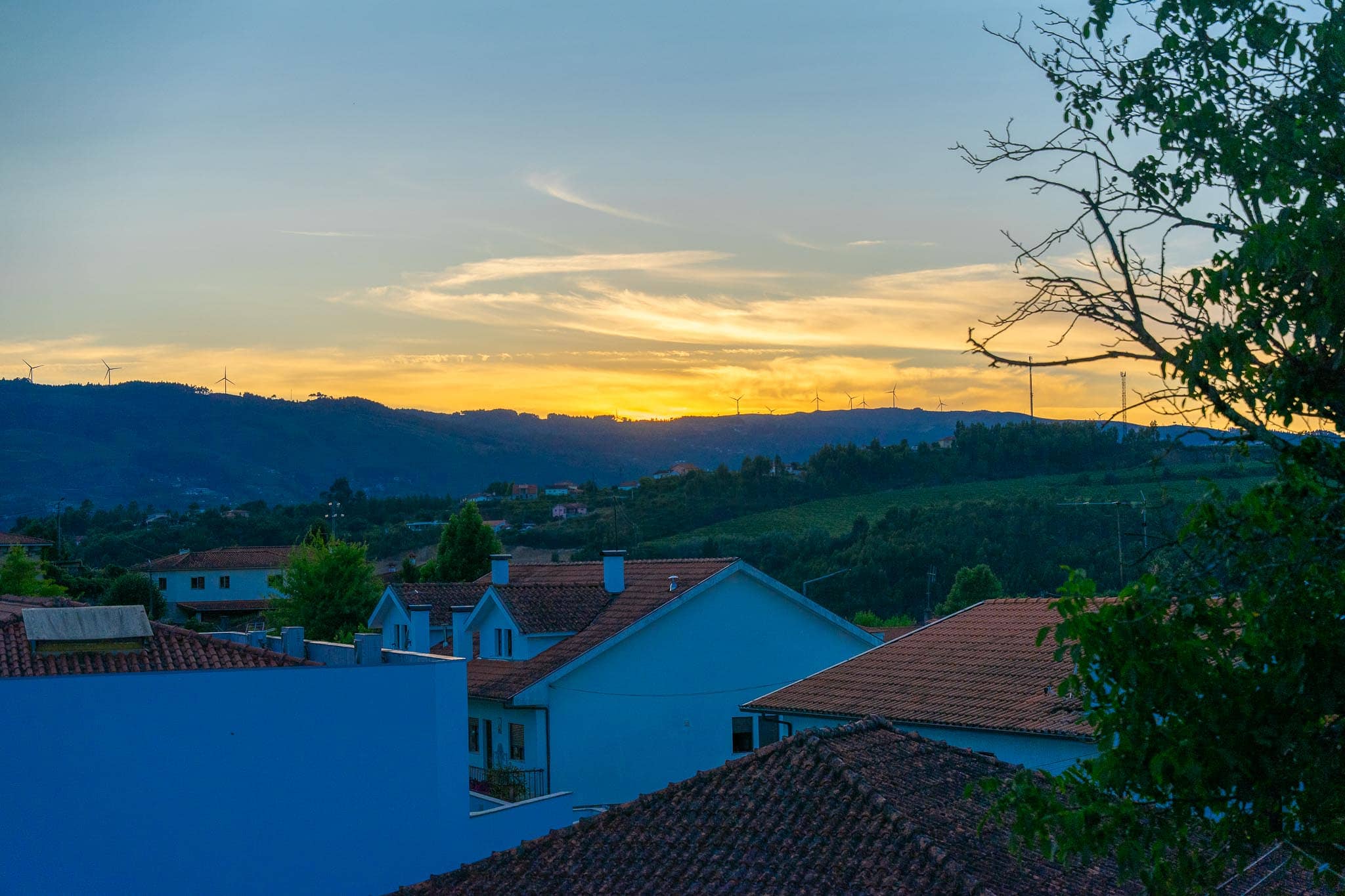
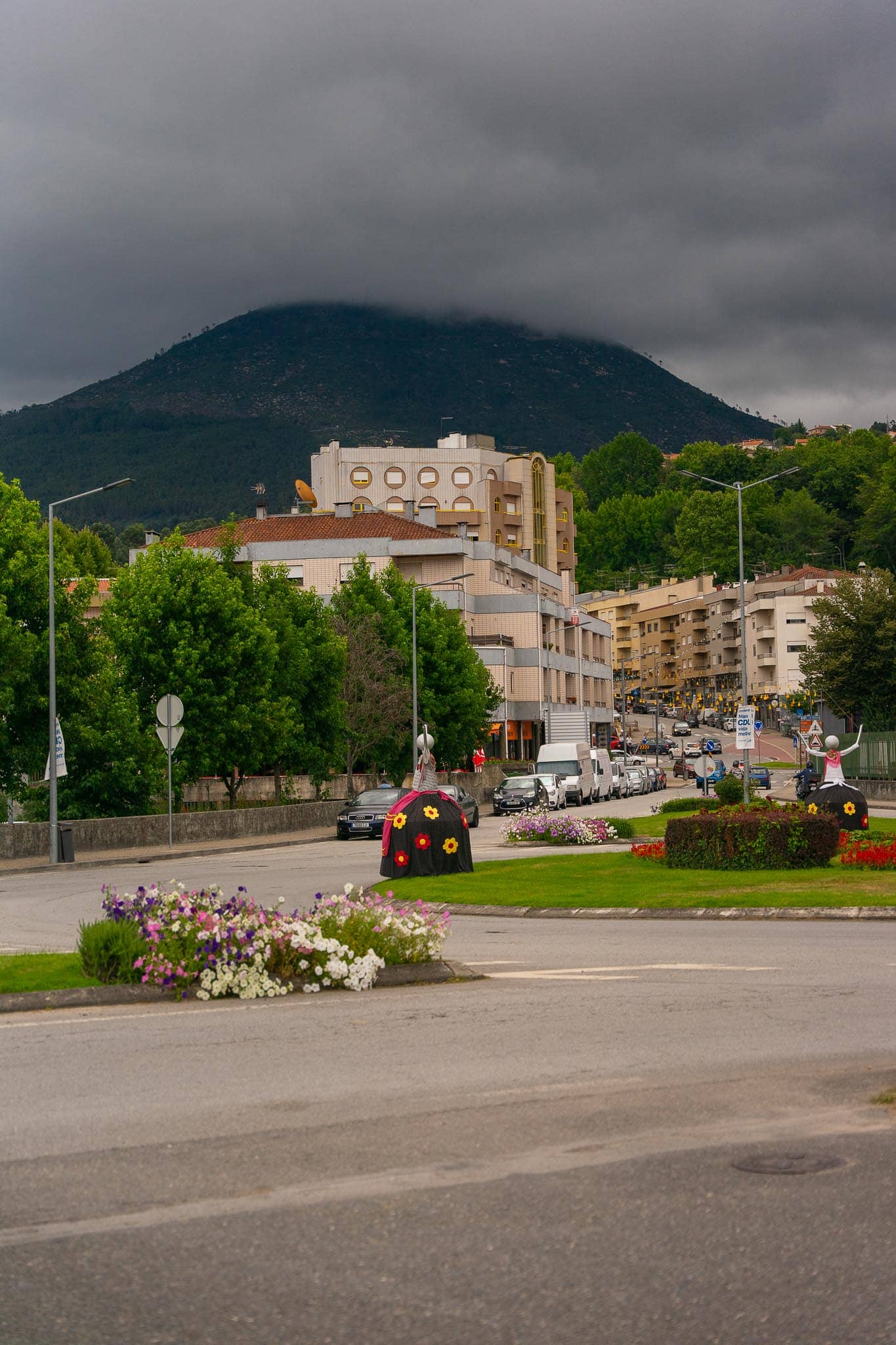
The bus turns off the motorway and the certainty ends. For an hour and three-quarters out of Porto the road has been the easy modern kind — toll plazas, service stations, the country flattening past the window — and then somewhere east of Amarante it tips up into the hills, the Tâmega appears below in its green trench, and the coach starts working its way along a valley where nobody on board, the traveller included, has a single fixed thing to do. Mondim de Basto arrives quietly: a small town of granite and whitewash strung along the river's left bank, a square, a church, a handful of cafés, and behind it all the great green shoulder of Monte Farinha rising nearly a kilometre into the sky with a white chapel pinned to the very top.
There is no queue to join here, no monument with a timed ticket, no version of the day that the town expects the traveller to perform. After Porto's vertical certainty — the climb, the church, the river, the port, repeated — that absence is the whole point. The traveller has come three days out of the way, by a bus that cost less than a coffee in Lisbon, to a place that booked nothing in return.
This is the case for the detour. Most of the trip is built on the circuit's logic — the cities everyone visits, in the order everyone visits them. Mondim is the argument against it.
The Case for the Detour
Why step off the circuit at all
There is a kind of travel that is really just a checklist worn as an experience, and the great cities make it easy to fall into — Porto and Lisbon and Barcelona each hand the traveller a list of things that must be seen, and the days fill themselves, and the satisfaction at the end is the satisfaction of completion rather than of having been anywhere. Mondim de Basto offers none of that, and the lack is a gift. There is nothing here that must be done. The cathedral the traveller does not visit is the one that was never built.
What the town offers instead is the texture of an ordinary Portuguese place going about its ordinary life: old men on the café terraces at ten in the morning, the smell of grilled sardines drifting out of a tasca at lunch, the river running cold and clear under the road bridge, the slow green weight of the Basto countryside pressing in on all sides. It is vinho verde country, the young green wine of the Minho and the Tâmega, and the vines climb every smallholding on their high traditional pergolas. The traveller who stops here is not ticking anything off. The traveller is simply in Portugal, at the pace Portugal actually moves, which is the thing the circuit never quite delivers.
The Festival
Viniculum — the reason the three nights existed
Every detour needs a reason, even a small one, and Mondim's was its wine. The three nights here were built around Viniculum — the town's wine festival, the days when the squares fill with trestle tables and the regional growers come down out of the hills to pour the vinho verde and the heavier reds of the Douro's western edge, and the whole of Mondim turns out to drink, eat and stand about in the warm dark talking. It is not a festival staged for visitors. There is no English-language programme, no entry wristband, no curated authenticity. It is a town being entirely itself on its best nights of the year, and the traveller is welcome to it on exactly the same terms as everyone else: buy a glass, find a table, work out the grilled food by pointing.
This is the quiet luxury of the unbooked place. At a festival in a famous city the traveller is a customer, processed; here the traveller is just one more person in the square, neither courted nor ignored, drinking the local wine in the place it was grown. Three evenings of it — wine, smoke, the church lit up above the rooftops, the mountain a black mass against the stars — and the stop justifies itself many times over. The whole trip will not turn up a better night than a Mondim square in festival, precisely because nobody was trying to give the traveller one.
The Mountain
Monte Farinha, the sanctuary, and the green interior
And there is the mountain, in case the wine and the quiet are not reason enough. Monte Farinha rises almost a thousand metres straight off the valley floor, and on its summit stands the Santuário de Nossa Senhora da Graça, a hilltop sanctuary that draws thousands of pilgrims to its festivals in summer and stands all but empty the rest of the time, offering one of the widest views in northern Portugal — the Tâmega valley below, the ridges of the Alvão and the Marão rolling away east, the green going on as far as the light. The road up is the kind of switchback that the Portuguese, with some justice, like to call one of the country's best drives.
Beyond the mountain the Parque Natural do Alvão keeps its secret: the Fisgas de Ermelo, one of the tallest waterfalls in Iberia, where the Olo river throws itself down a long stepped wall of rock through the forest. None of it is packaged. There is no visitor centre selling the experience back to the traveller, no tour bus idling in a car park — just a small town, a big mountain, a wild river, and three days with nothing on them but the willingness to look. The detour does not perform. It simply waits, in the green, for the traveller curious enough to get off the bus.
The traveller leaves Mondim with nothing to show for it — no ticket stub, no monument photographed from the regulation angle, no box ticked on anyone's list. That is exactly what makes the three nights worth defending. The detour is the part of the trip that resists being a trip; it is the stretch where the traveller stops collecting places and simply spends time in one, at its own unhurried speed, drinking its wine and looking at its mountain.
The great cities will still be there, certain of themselves, waiting with their lists. But the memory that surfaces longest afterward is often the one nobody planned — a square full of strangers and vinho verde, a white chapel on a green summit, a river running cold under a bridge in a town that asked for nothing. Step off the circuit at least once. Mondim de Basto is the argument for why.