2 Days in Évora:
Bones & Roman Stones
A single overnight on the Alentejo plain — two thousand years of empire stacked inside one walled white town, with a chapel of bones at its heart.
Some links in this chronicle are affiliate links. If you book through one, I may earn a small commission at no extra cost to you.
The bus comes in across the Alentejo, and the Alentejo is the part of Portugal that looks least like the postcard: a vast rolling plain of wheat-gold and cork-oak, baked pale by a sun that does not negotiate, the horizon broken only by the occasional whitewashed farm and the long lines of the cork trees with their trunks stripped red. And then, on a low rise in the middle of all that emptiness, a walled white town with a Roman temple standing at the top of it. This is Évora — a place where two thousand years of empire have been stacked inside a single set of walls and left there, and the whole UNESCO-listed centre is small enough to cross on foot in twenty minutes.
The traveller has one evening and one morning here, no more — a single overnight wedged between the coast and the Spanish border — and that constraint is not a limitation but the right dose. Évora is not a city you exhaust; it is a town you absorb in one slow loop. An afternoon for the dead and the Romans, a night for the Alentejo table, a morning for the living square, and out on the midday bus toward Spain. The shortness is the point. Évora gives the traveller exactly one of everything — one temple, one cathedral, one chapel of bones, one perfect square — and asks only that each be given its full attention.
What it really gives, underneath, is a lesson in time. In one short walk the town lays out Roman, Gothic, Renaissance and baroque side by side, and at its strange dark heart it keeps a chapel built of human bones, with a sentence over the door that the whole place seems to be quietly repeating.
The Bones
An afternoon of empire and memento mori
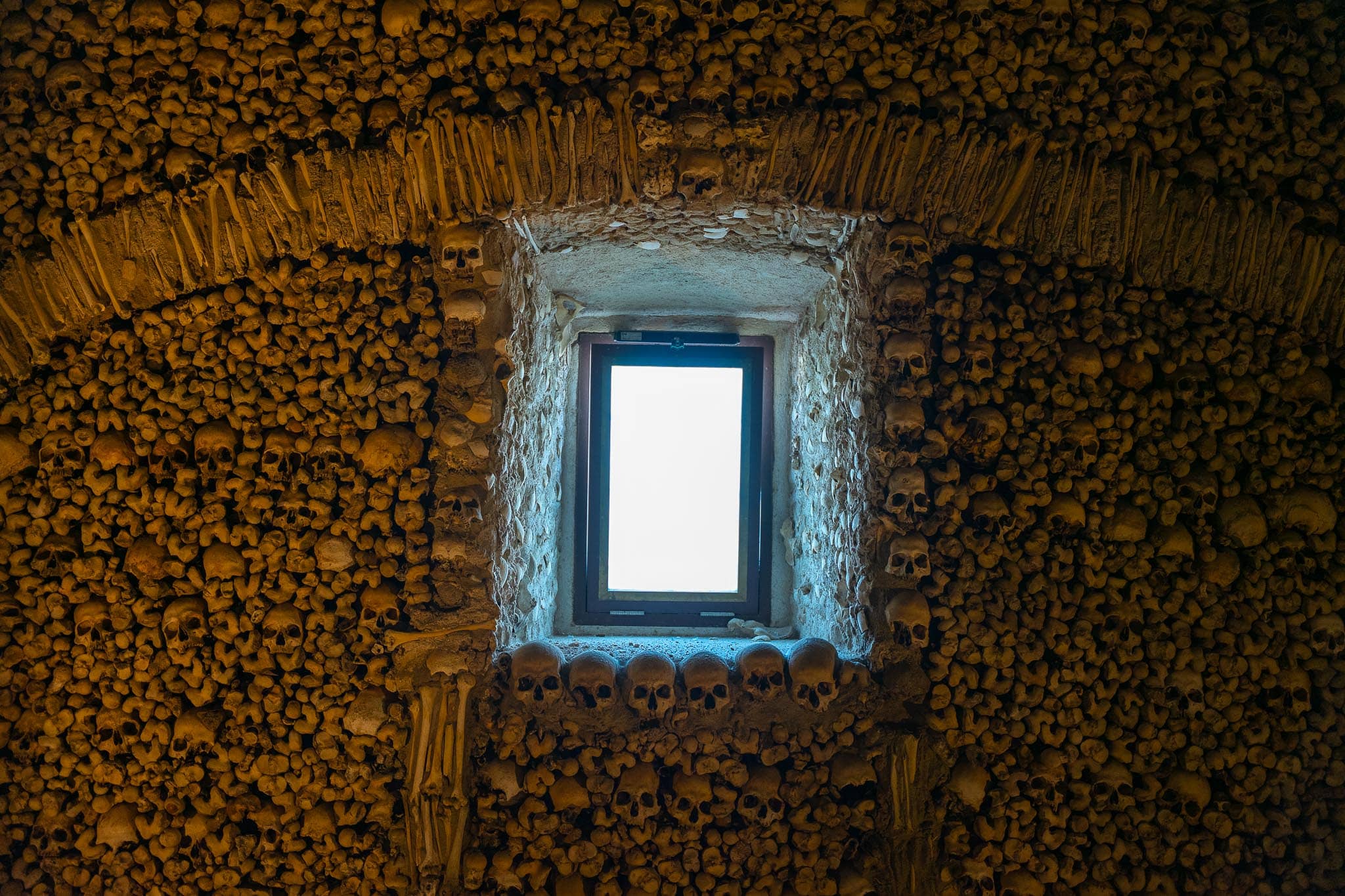
Start with the dead, because Évora does. Behind the plain façade of the Igreja de São Francisco is the Capela dos Ossos — the Chapel of Bones — a small room whose walls and pillars are entirely lined with the bones and skulls of some five thousand people, monks and townsfolk dug up from the overcrowded medieval cemeteries and arranged, in the seventeenth century, into a deliberate, patterned, faintly beautiful reminder of mortality. Over the entrance runs the famous inscription: Nós ossos que aqui estamos, pelos vossos esperamos — “We bones that are here, for yours we wait.” It is not built to frighten so much as to instruct. The Franciscans wanted the comfortable burghers of Évora to walk in, read the line, and adjust their priorities accordingly. It still works. The traveller comes out quieter than they went in.
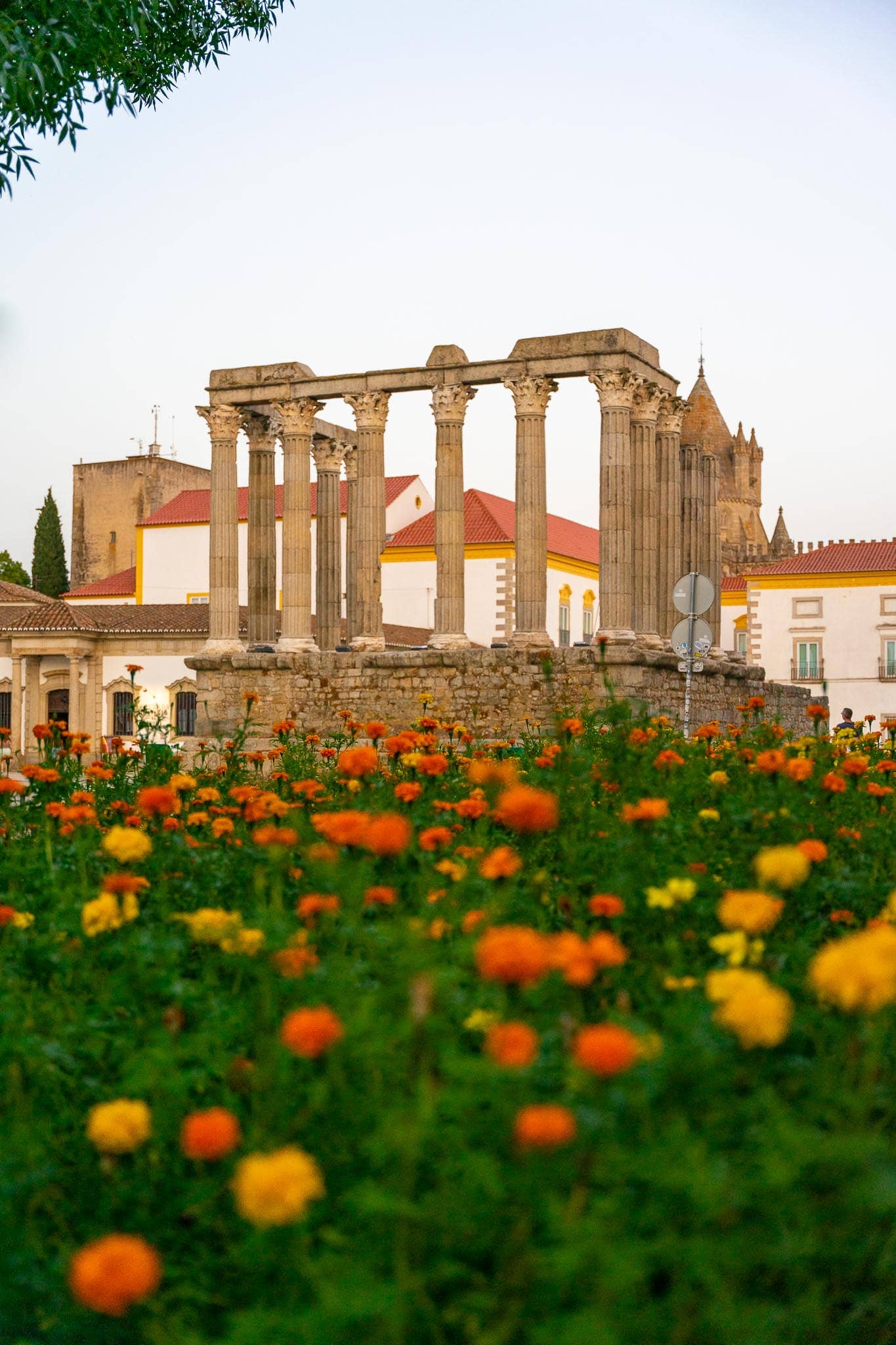
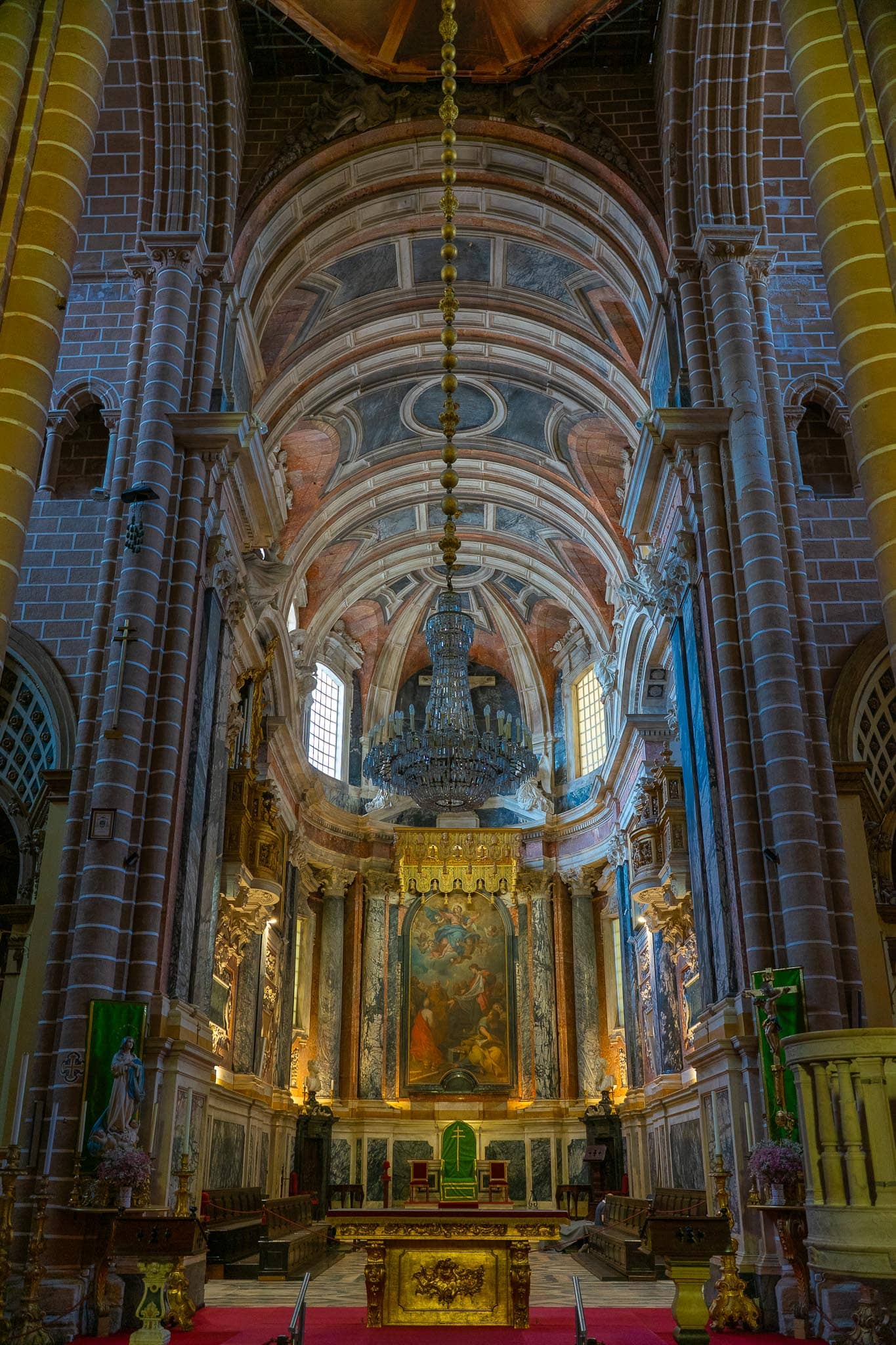
From there the afternoon climbs through the layers. The Catedral de Évora is a great fortress-Gothic cathedral of grey granite, half church and half castle, and worth the climb to its roof for the view back over the white town and the gold plain. And then, at the very top, the Templo Romano — the so-called Temple of Diana, fourteen Corinthian columns of granite and marble still standing after nearly two thousand years, the best-preserved Roman temple on the Iberian Peninsula, owing its survival to the centuries it spent walled up as a butcher's shop and slaughterhouse, which is exactly the kind of indignity that saves a thing. To stand among its columns as the sun drops and the granite goes orange is to feel the whole stacked weight of the town's history settle into one quiet square. Roman, then Christian, then dead, then golden in the last light.
The Morning
The living town, and out by the midday bus
The night belongs to the Alentejo table, which is one of the great reasons to break the journey here at all. This is the region of porco preto — the black Iberian pig fattened on acorns — of bread-thickened açorda and migas, of sheep's-milk queijo de Évora and the big, sun-soaked red wines that the Alentejo now makes as well as anywhere in the country. At a tiny counter like Botequim da Mouraria or a proper table like Dom Joaquim, the traveller eats the plain rich food of the plains and drinks the wine grown in the heat outside the walls, and the town that spent the afternoon on death proves entirely committed to life after dark.
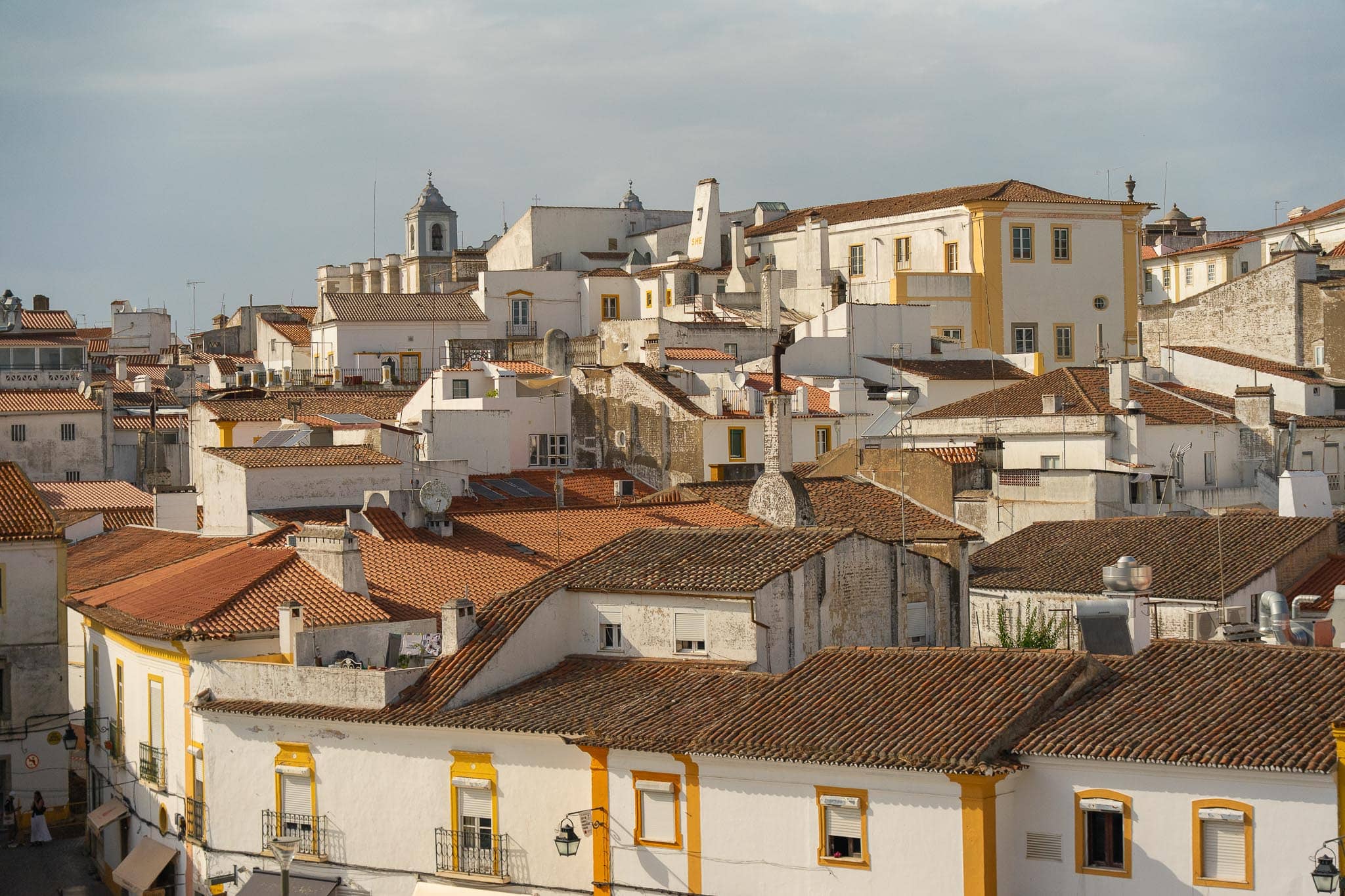
And then the morning, which is the town simply being a town. The Praça do Giraldo, Évora's long arcaded main square with its marble fountain, fills with the ordinary business of coffee and errands; the white lanes radiate off it, the university — one of the oldest in Portugal, Jesuit-founded in the sixteenth century — keeps its tiled classrooms; the great arches of the Água de Prata aqueduct stride right into the edge of the old town and have houses built into them. There is just time, before the midday bus, for a coffee in the square and a last slow lap of the lanes. The constraint does its work: one night and one morning is exactly long enough to love Évora and not quite long enough to be done with it, which is the best note on which to leave any small perfect place. The bus pulls out east, toward the Spanish border and Cáceres.
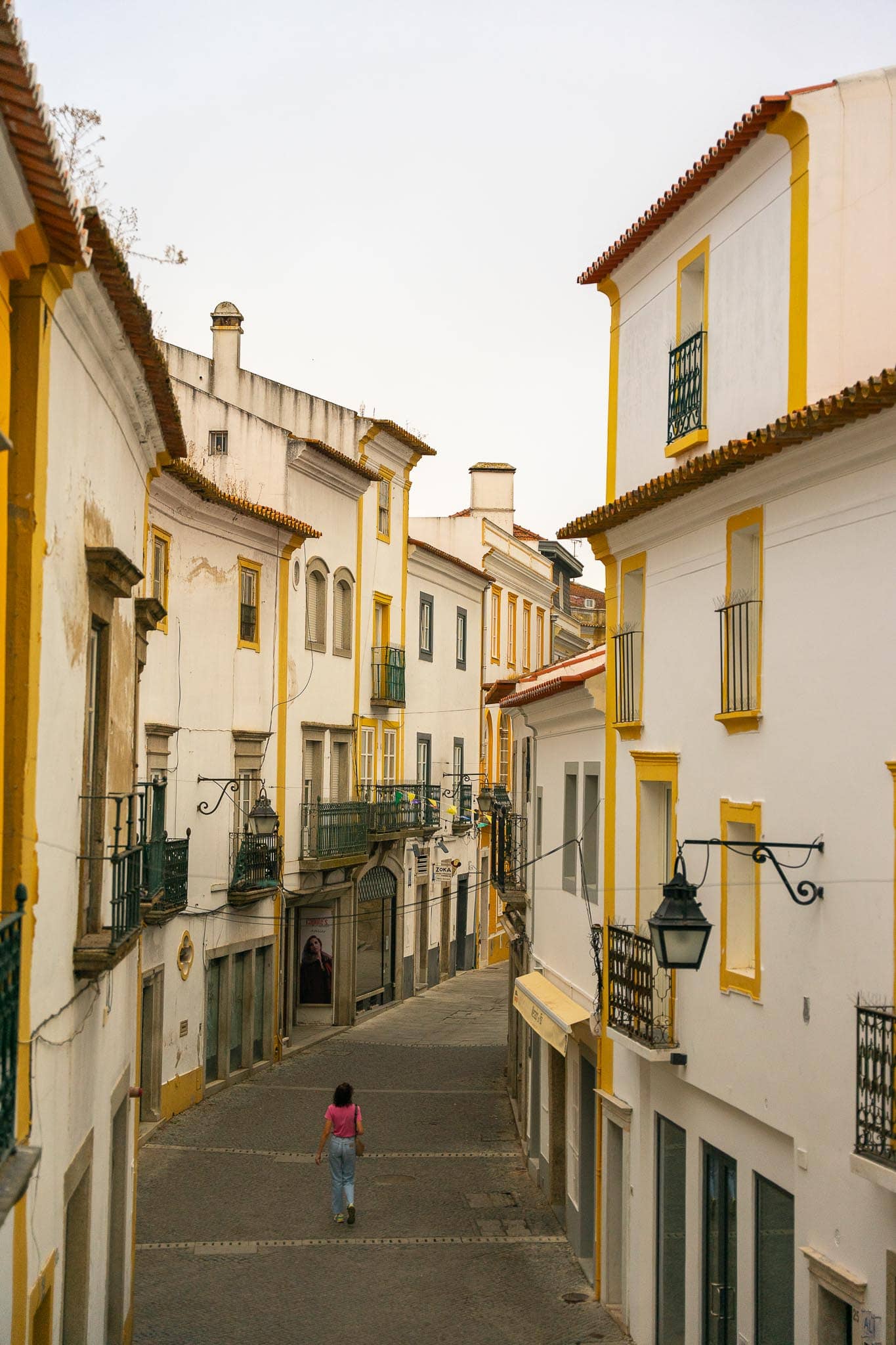
Évora is a town that holds two thousand years lightly, in a space you can cross in twenty minutes — Roman columns, a Gothic fortress-church, a chapel of patterned bones, a Renaissance square, all stacked together and all still in casual daily use. And over the door of the chapel hangs the sentence the whole place seems to murmur: the bones are here, and they are waiting for yours. It is a strange, plain, profound thing to carry out of a town, and it travels well — the reminder that the empires and the cathedrals and the careful patterns we make all sit, in the end, on the same white plain under the same indifferent sun.
The traveller leaves on the midday bus not quite finished with Évora, which is the right way to leave it. The plain rolls past gold and empty; the white town drops below the horizon with its temple on top; and the road runs east, out of Portugal at last, across the border into the harder, hotter, stonier light of Spain.