1 Day in Sintra: The Mountain
of Romantic Follies
One day from Lisbon on a misty wooded hill where kings and an eccentric millionaire built their fantasies — palace as mood, not monument. Come ticketed.
Some links in this chronicle are affiliate links. If you book through one, I may earn a small commission at no extra cost to you.
Half an hour north-west of Lisbon, a wooded mountain catches the Atlantic cloud and makes its own weather, and on that misty green hill a series of kings, nobles and one very rich eccentric built the most extravagant collection of fantasy architecture in Portugal. Sintra is not a town with sights so much as a mountain covered in moods — a Romantic-era dream of what a palace could be if it answered to imagination rather than function, hung with damp forest and wreathed, more often than not, in fog. Byron called it a “glorious Eden” and never quite got over it; the nineteenth-century Romantics treated the whole Serra de Sintra as a stage set for melancholy and wonder, and built accordingly.
The result is a day trip from Lisbon that is genuinely magical and genuinely punishing in equal measure, and the second part needs saying first: Sintra is a logistics problem before it is a pleasure. The palaces sell timed-entry tickets that sell out; the town chokes with day-trippers by mid-morning; the sights are scattered up steep wooded roads that the crowds and the tiny buses fight over. Go without a plan and a ticket and the magic drowns in queues and frustration. Go early, ticketed, and in the right order — or on a tour that handles all of it — and the mountain delivers one of the best days in Portugal.
This is the day done right: up early, the painted palace on the peak, the eccentric's spiral well, the Moorish walls along the ridge, and back down to Lisbon in the evening for a last night of fado.
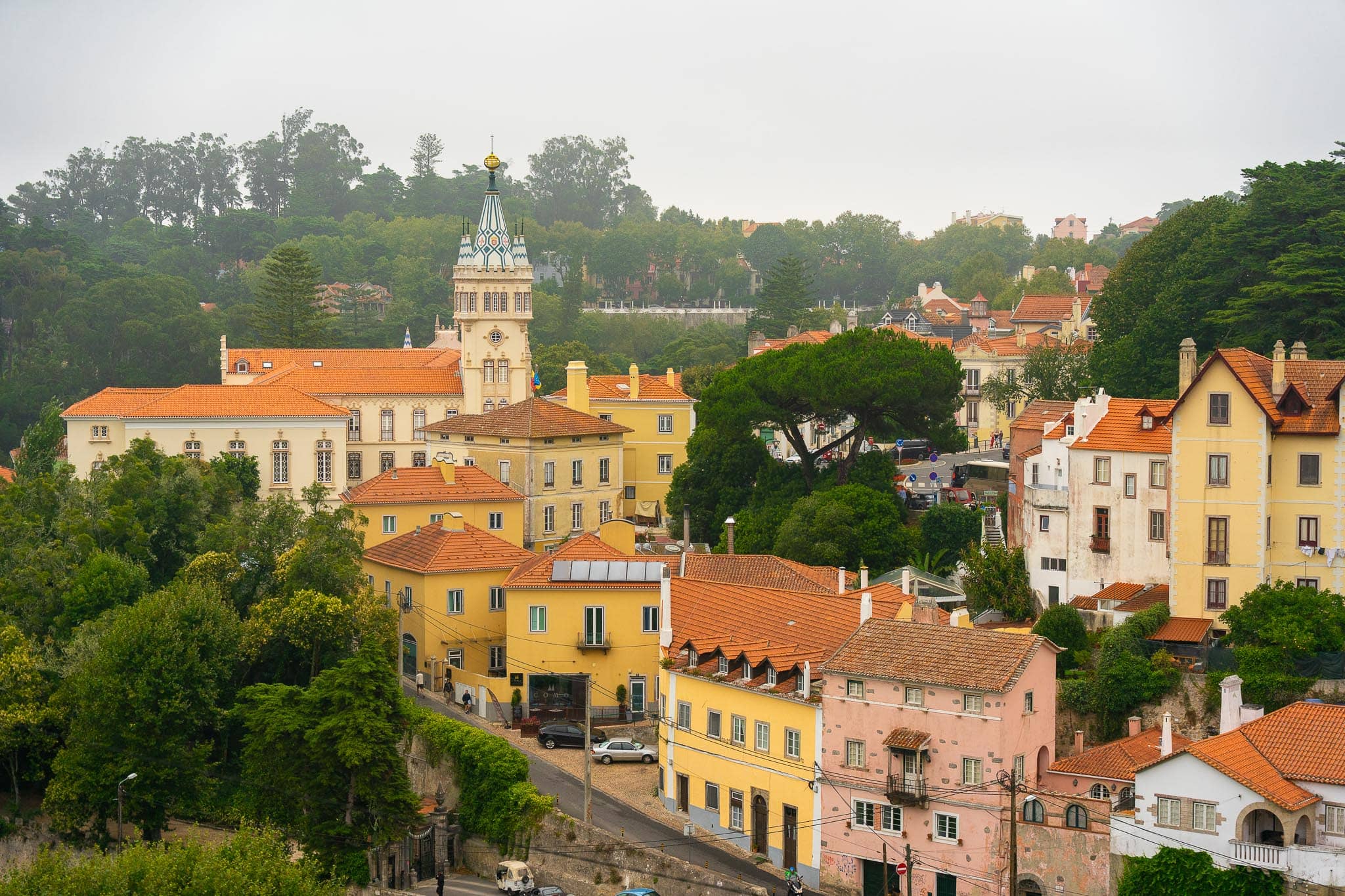
The Peak
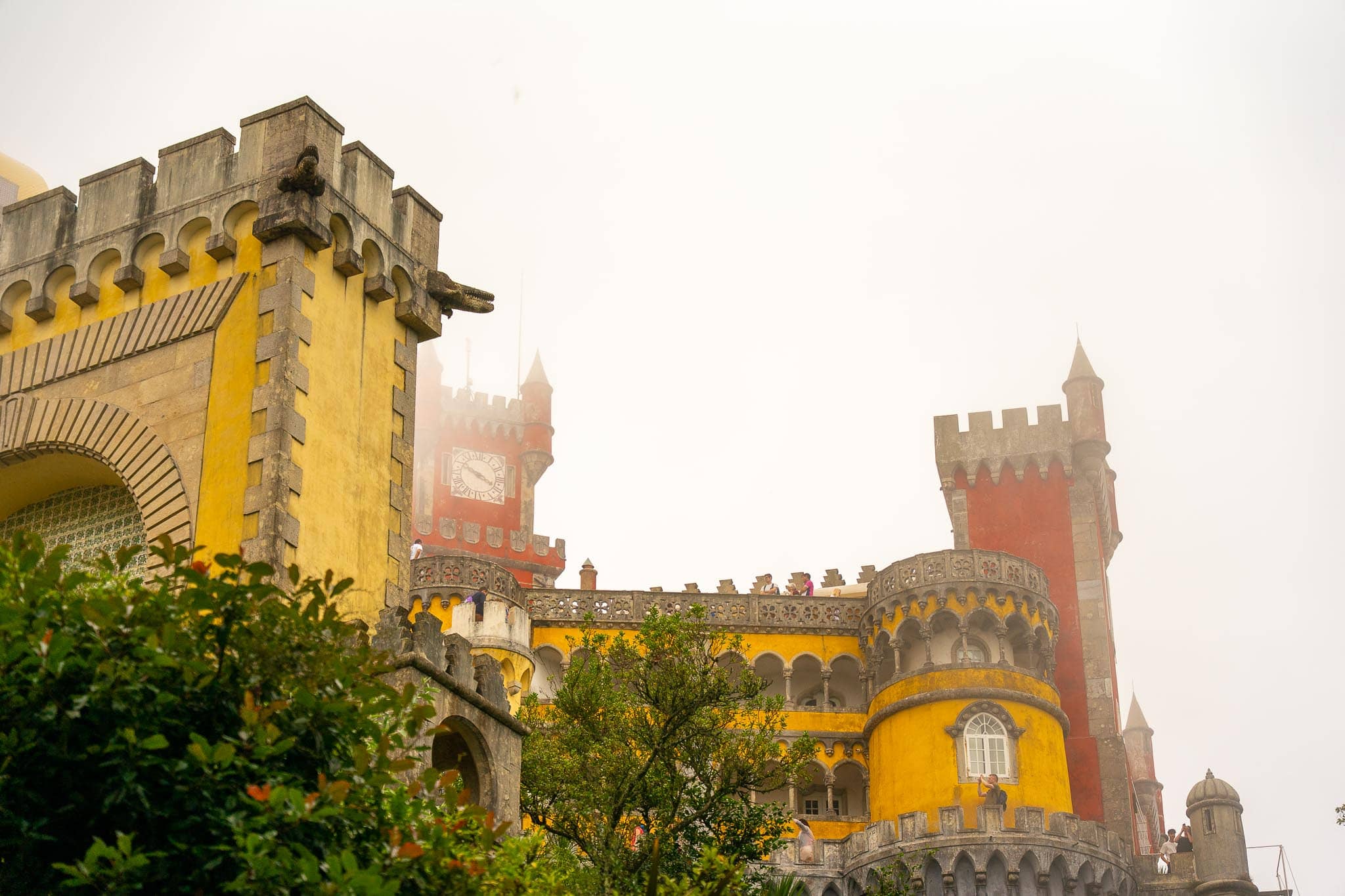
Pena Palace, and the Romantic fantasy on the summit
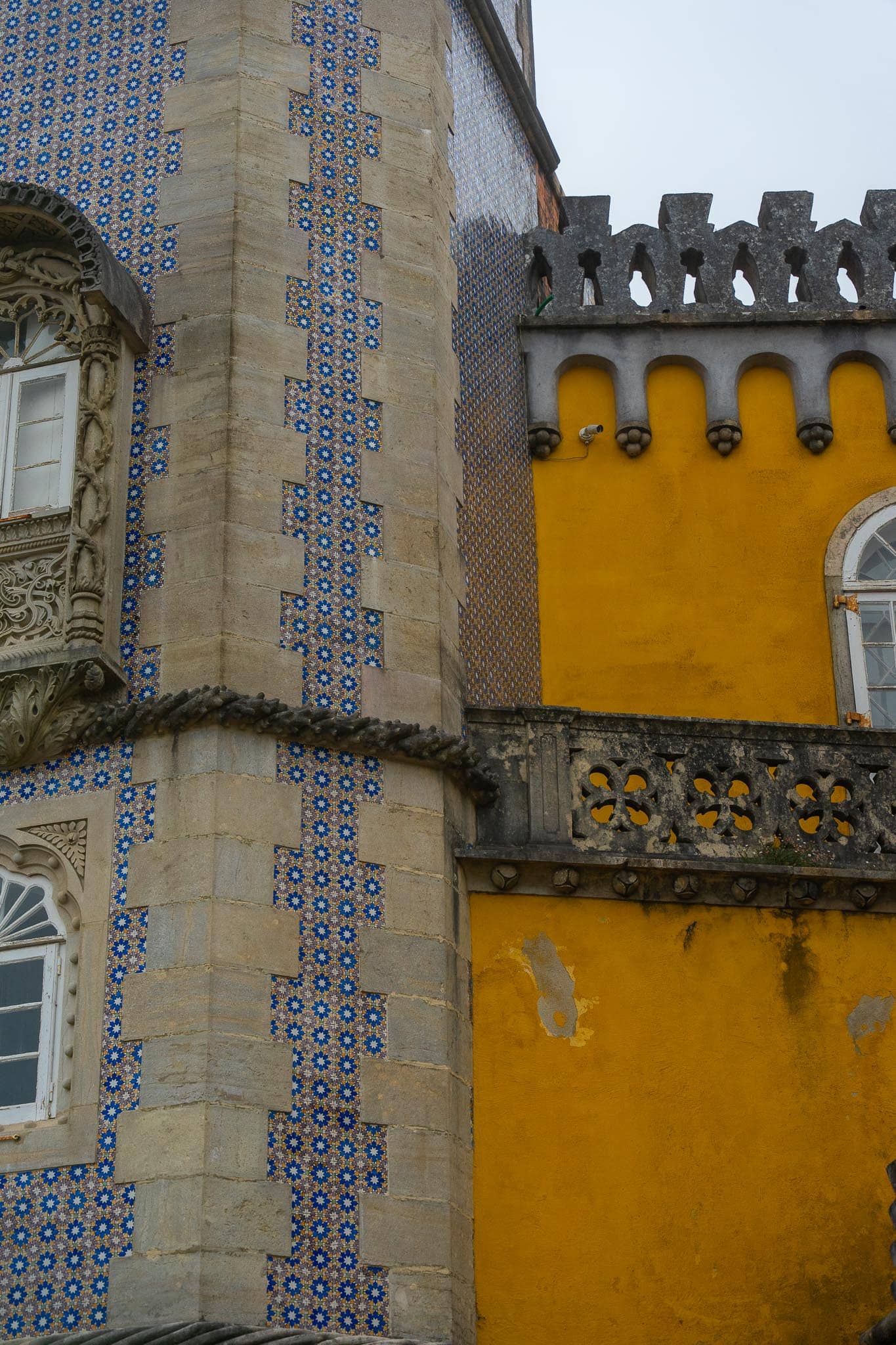
On the highest crag of the Serra sits the thing every photograph of Sintra is of: the Palácio da Pena, a Romanticist fever-dream of a palace painted in canary yellow and blood red, studded with tile, domes, drawbridges, a stone Triton bursting from an archway, and turrets stolen from every architectural era at once. King Ferdinand II built it in the 1840s on the ruins of a monastery, not as a fortress or a seat of government but as a mood — a deliberate, theatrical, gloriously over-the-top expression of the Romantic imagination, perched in the clouds above the world. It is kitsch and it is sublime and it refuses to choose, and on a day when the mist rolls through its towers it is one of the strangest, most beautiful built things in Europe. The surrounding Pena Park is half the point — a vast wooded garden of exotic trees and hidden paths and ferny ravines, planted by the same king as a Romantic wilderness to wander.
Sharing the ridge is the older, darker counterpoint: the Castelo dos Mouros, the Moorish castle, its ruined walls snaking along the crest of the mountain like a smaller Great Wall, dating to the eighth or ninth century and offering, on a clear stretch between cloud, a view down over the whole green Serra to the distant Atlantic. Climbing its ramparts in the drifting fog, with Pena's mad colour visible on the next peak, is to feel the two halves of Sintra at once — the real medieval past and the Romantic dream that was built to look back at it.
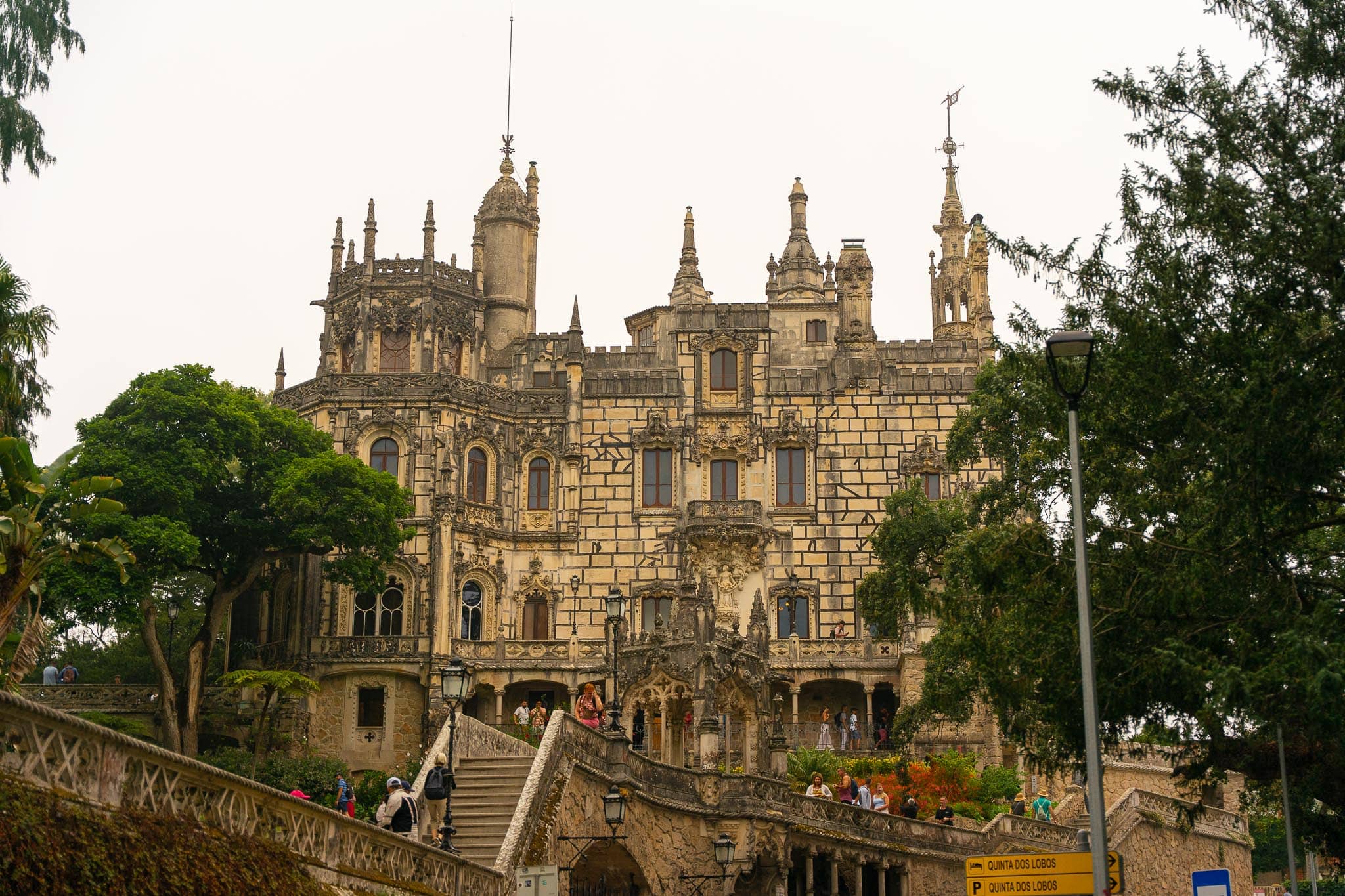
The Well
Quinta da Regaleira and the eccentric's spiral into the earth
Down the hill is Sintra's strangest creation, and its best. The Quinta da Regaleira was the project of António Augusto Carvalho Monteiro, a fabulously wealthy and deeply eccentric collector at the turn of the twentieth century, who built himself a Gothic-Renaissance mansion and then filled its gardens with a coded landscape of grottoes, towers, tunnels, fountains and symbols drawn from the Templars, the Masons, alchemy and myth. The centrepiece is the Poço Iniciático — the Initiation Well — an inverted tower spiralling nine storeys down into the earth, a stone staircase winding around a hollow shaft to a floor marked with a Templar cross, lit only by the green daylight far above. It was never a well. It was built for ritual, for symbolic descent and rebirth, and walking down it is the single most atmospheric thing in Sintra.
The whole garden is a puzzle to be wandered rather than a route to be marched: hidden tunnels connect the well to grottoes and lakes, fountains hide initials and symbols, and the mansion above watches over all of it. Where Pena is a king's public fantasy, Regaleira is a private one — a rich man's coded dream of secret knowledge, built into a hillside and left for the curious to decode a century later. It is the kind of place that rewards the traveller who came for mood over monument, exactly as Sintra demands.
The Practical Mountain
Tickets, transport, and getting it right
Now the part that decides whether the day is a delight or a disaster: the logistics. The sights are scattered up steep, narrow roads, and the only ways up are the overstuffed 434 tourist bus, a tuk-tuk, a taxi, or a tour van — not a casual walk, and not your own car unless you enjoy gridlock and no parking. The palaces use timed-entry tickets that genuinely sell out, sometimes days ahead in summer, so buying Pena and Regaleira online before you arrive is not optional. And the order matters: get to Pena first thing, before the crowds and while the morning light is on it, then work down the hill to Regaleira and the town. Do it backwards and you'll spend the best of the day in a queue.
This is precisely why a great many people, the trip included, simply take a guided tour that bundles the transport, the timed tickets and the order into one solved problem — and often adds Cabo da Roca, the windblown westernmost point of continental Europe, and the seaside town of Cascais on the way back. However you do it, leave time in the town itself for a travesseiro (the flaky almond pastry) at the famous Piriquita, and then take the evening back down to Lisbon — where, on this trip, a table waited at the Clube de Fado in Alfama, the perfect quiet close to a day spent in the clouds.
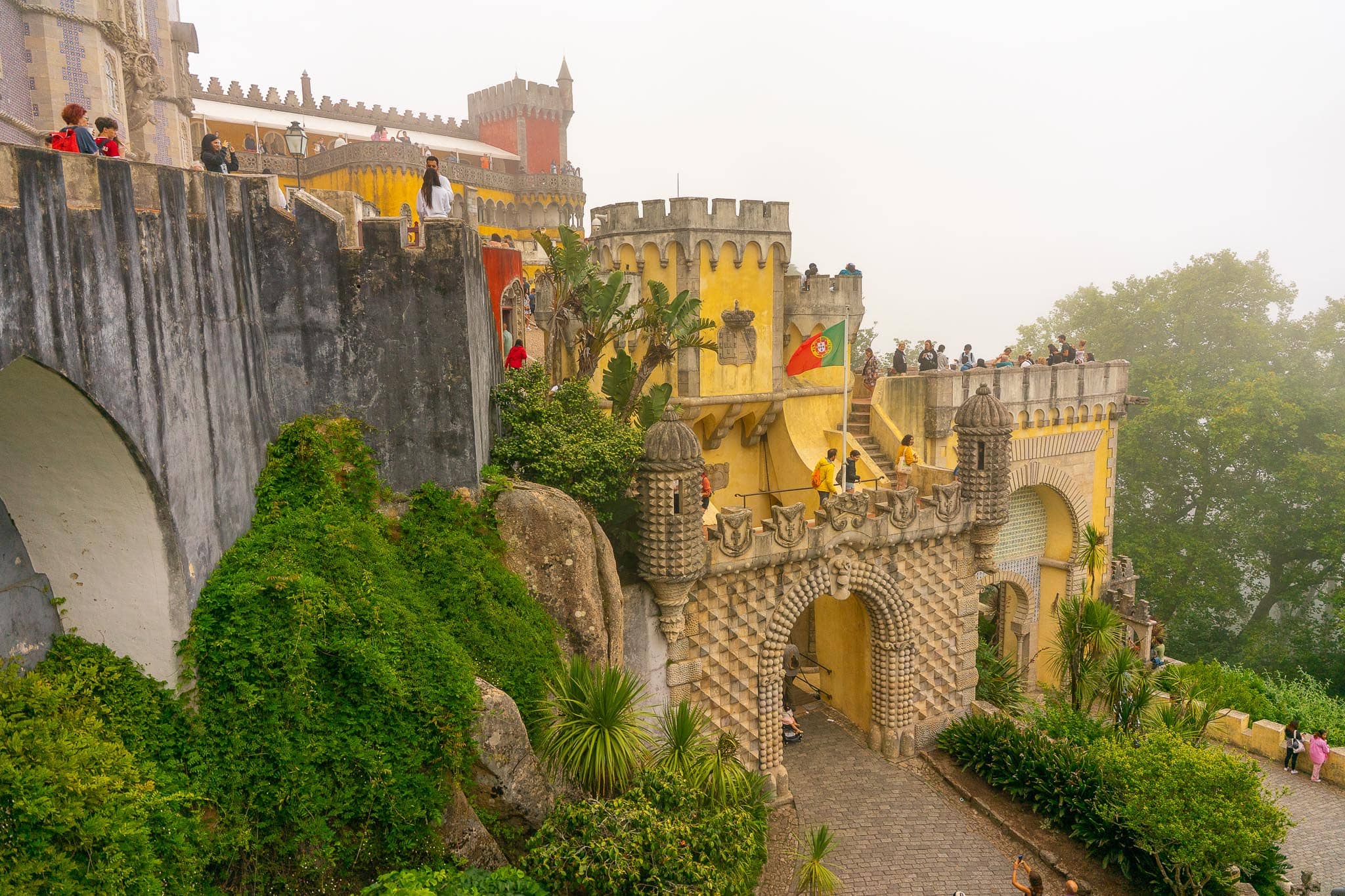
Sintra is the day where the trip trades monuments for mood — where the point is not a single great building but a whole misty mountain of imagination, kings and millionaires given free rein to build their dreams into a wooded hill. Get the logistics right and it is pure enchantment: the painted palace in the cloud, the spiral well descending into the dark, the Moorish walls along the ridge, the fog coming and going through the trees. Get them wrong and it is a day lost to queues. Sintra, more than anywhere, rewards the prepared and punishes the casual — which is its own small lesson about travel.
And then back down the mountain to Lisbon, the cloud left behind on the peaks, the capital warm and loud below, a fado house waiting in Alfama. The mountain of follies recedes; the road goes on. Tomorrow the trip leaves Lisbon for the south — the gold coast of the Algarve — but the strange green dream of Sintra stays, the way the best follies do, somewhere just out of reach.